Lot 216
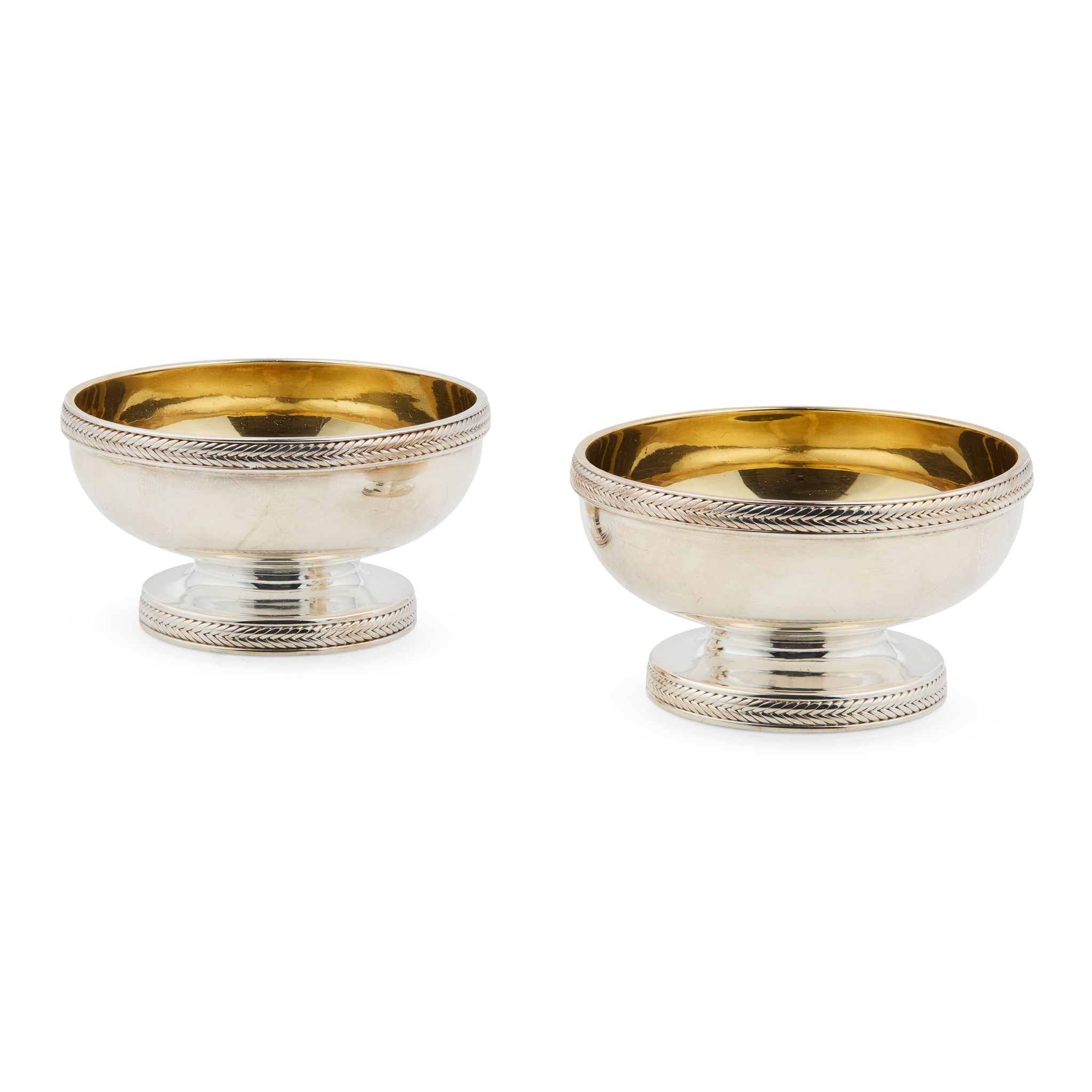
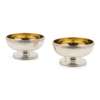
A PAIR OF GEORGE III SALTS
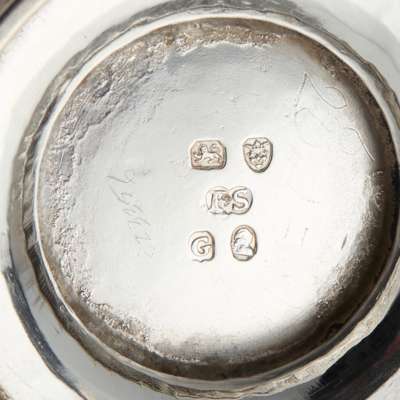
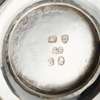
PAUL STORR, LONDON 1802
Auction: 03 March 2026 from 10:00 GMT
Description
Each of hemi-spherical form with a rope-twist border, raised on a short spreading foot with similar rope-twist border (2)
Dimensions
7.5cm diameter of bowl, 6oz (combined)
Footnote
Literature: For a similar example of the rope twist border, please see Penzer, N.M., MacArthur, ‘Paul Storr 1771-1844 Silversmith and Goldsmith’ 1971, pg 149, plate XXXV
Paul Storr (1770-1844)
Paul Storr is deemed one of the most prolific and successful British silversmiths. Working at a time which has often been considered the period that saw the greatest demand in production and trading of silverware, Storr always ensured that exceptional craftsmanship was maintained to the highest level.
Paul Storr registered his first punch on the 12th January 1793 and ten further marks followed, marking various stages in his career. It was his fifth registered mark in 1807 which reflects his ascendency and his personal success. The company 'Rundell Bridge and Rundell' who had been appointed Jewellers, Goldsmiths and Silversmiths to the Crown, and had also attained the Royal Warrant from HRH The Prince of Wales and The Duke of York, scouted Storr and he joined the company.
Important commissions include the replica of the Warwick Vase, now on display at the V & A museum LOAN:GILBERT.829:2-2008. Whilst working with Rundell Bridge & Rundell, the firm was instructed to create ‘The Grand Service’ for the Royal Family commissioned by George IV (1762–1830) when Prince of Wales. It is made up of over 4,000 pieces for dining and is still in use today.
Due to the volume of production at Rundell Bridge and Rundell, Storr’s role became almost supervisory, interacting with the existing staff to convey his work practices. A plate bearing Storr’s mark may not have been worked by his hands, but the hallmark was his and acted as a guarantee of the quality.
Perhaps due to the lack of opportunity to be 'hands-on', in 1819 Storr opened his own shop, and in 1822, formed the company Storr & Mortimer. Throughout his career, his work mostly featured a Neoclassical style.