

Lot 231
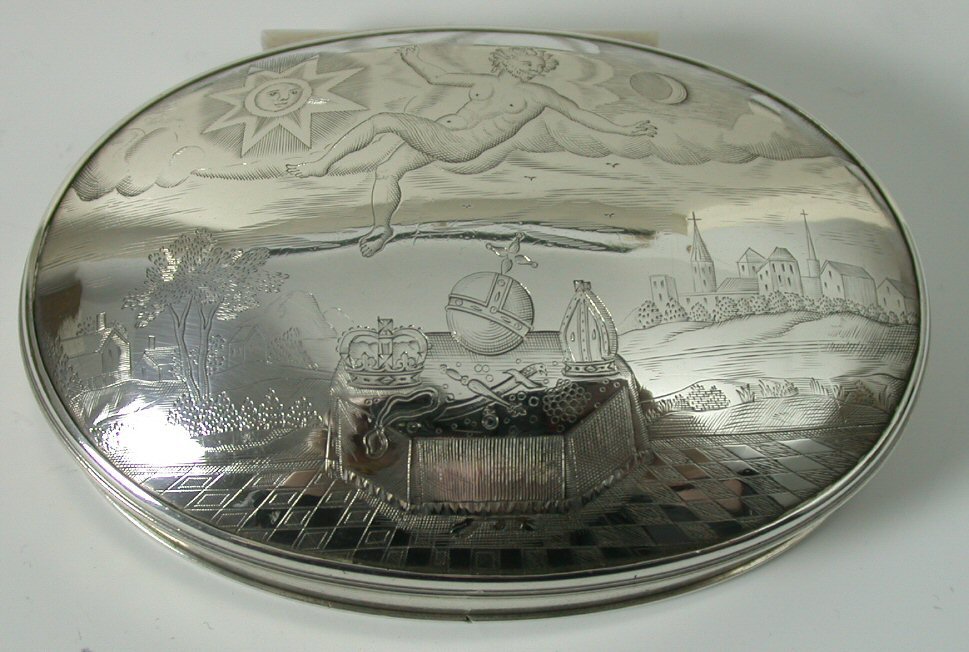
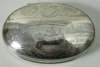
A fine and rare Jacobite snuff box
Auction: 19 February 2004 at 12:00 GMT
Description
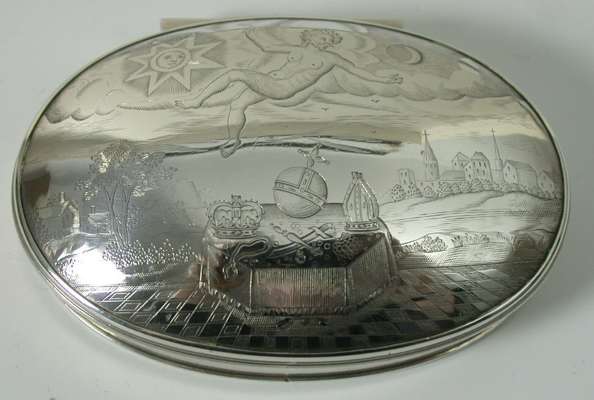
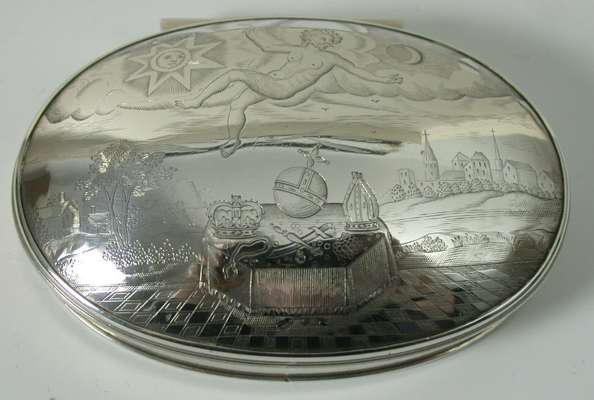
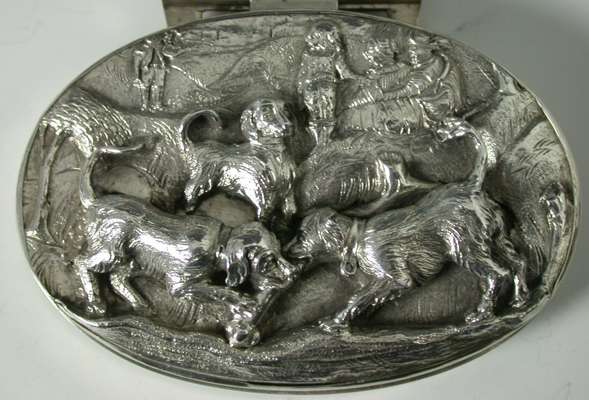
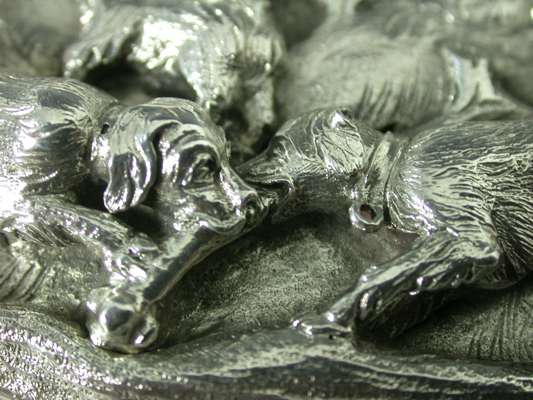
with partial pseudo marks, possibly Dutch, the domed oval lid finely engraved and emblamatic to the Stuarts, the interior with a concealed hinged panel cast and chased with dog's gnawing at bones
Footnote
Literature: Delieb, "Silver Boxes", published by Ferndale, London 1979, illustrated pp 41-42, 45. Exhibited: "The Swords and Sorrows", National Trust for Scotland, London 1996 No 7:1 A tentative Opinion from Prof. J. H. Plumb, Vice Master of Christ's College, Canbridge: The son (pun on the 'sun') of Charles 1 (who is clearly the central figure at the top of the box. the fact that he is unclothed shows that he is in heaven (and, of course, a martyr) will return or emerge (as the moon is doing from the eclipse) from the Boscobel Oak (the oak tree with the Welsh mountains behind, which was commonly used as a symbol for Charles II at the time of the Commonwealth) to his kingdom (indicated by the engraved city on the right) or this might read from Breda (I have not seen an engraving of this city, but it might be related to a city with twin spires) and restore the succession (the crown), royal authority (orb), the church (mitre), bring peace (the spectre laid across the sword)restore the coinage (the bits of gold on the table), and hang (the halter) his enemies. And the rest of the story is told on the chased (inner lid). There is the picture of a peaceful and plentiful countryside and obviously the dogs are gnawing the bones of the king's enemies. The fact of the guineas on the table, suggests, I think, that the box can be dated just after 1696 when the re-coinage by the government of William III created great difficulty for most people and brought about a chronic shortage of cash. Also I think that this emblematic description of restoration of the Stuarts is cast in an historic form so that it could not be regarded as treasonable. It could be argued that it only depicted what had happened in 1660, although the implication, of course is clear enough: what happened once might happen again.