

Lot 354
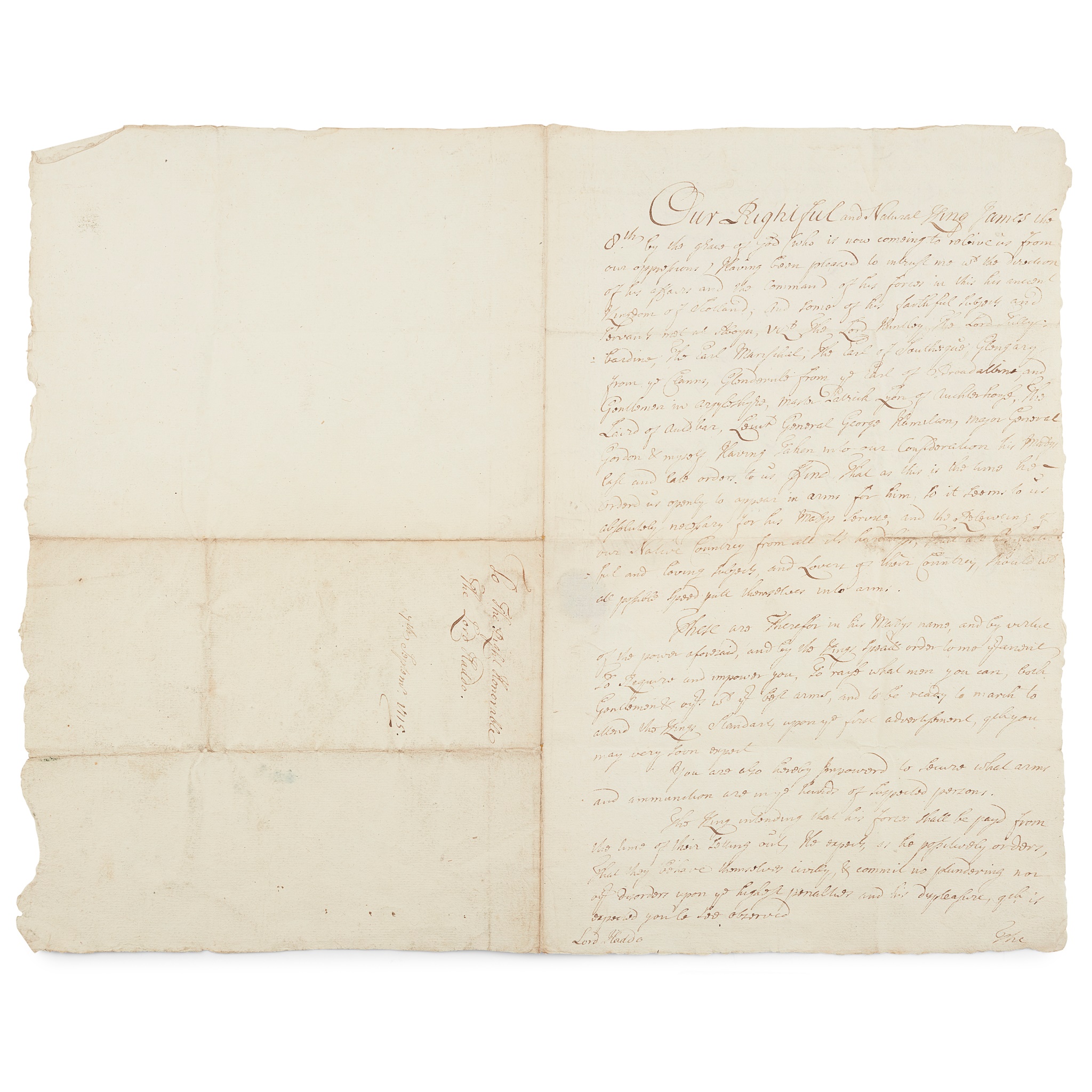
JACOBITE RISING OF 1715; JOHN ERSKINE, 22ND OR 6TH EARL OF MAR, & JACOBITE DUKE OF MAR (1675-1732)
PROCLAMATION OF JAMES FRANCIS EDWARD STUART AS KING JAMES VIII, BRAEMAR, 7 SEPTEMBER 1715
Scottish Works of Art & Whisky
Auction: 17 August 2022 at 11:00 BST
Description
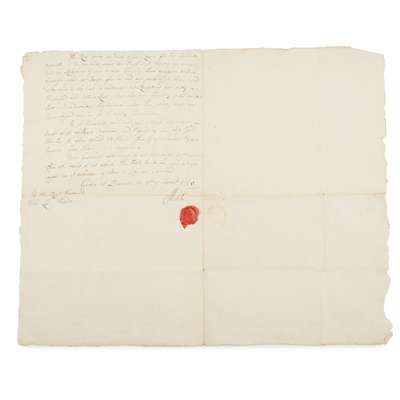
single bifolium written on two sides (in a secretarial hand), with Mar's autograph signature ('Mar') and red wax seal at foot, docketed 'To the Right Honorable the Lord Haddo, 7th Septem[be]r 1715', old folds
Footnote
Note:
The sole identified extant manuscript copy of the document known to posterity as the Earl of Mar's 'letter to the gentlemen of Perthshire', issued in his capacity as commander-in-chief of the forces of 'our rightful and natural king James the 8th' the day after the raising of the Stuart standard at Braemar, and instructing recipients to take up arms in support of the Jacobite cause.
The content of the letter is summarised in a handful of accounts including Robert Chambers's History of the Rebellions in Scotland (Edinburgh, 1829), p. 187, and printed in full in Cowan, The Ancient Capital of Scotland: The Story of Perth from the Invasion of Agricola to the Passing of the Reform Bill (London, 1904), volume 2, chapter 21. In addition to a call to arms, it contains an instruction to 'source what arms and ammunition are in the hands of suspected persons', and a warning to ensure that troops 'commit no plundering nor disorders upon the highest penalties and [James's] displeasure'. It pre-dates by a two days another proclamation, often printed in accounts of the Fifteen since the 18th century and differing substantively only in its second paragraph, which contains the specific instruction to muster at the 'Inver of Braemar, on Monday next'.
This copy is addressed to William Gordon, Lord Haddo (1679-1745), the future second Earl of Aberdeen, who was suspected of negotiating with the Whigs after the Hanoverian succession and during the Fifteen 'let the Jacobites down badly by fleeing to Edinburgh, thus earning the contempt of those who had previously trusted him and indeed in some cases had been "much guided by his sentiments"' (History of Parliament, online). The conduct of Mar himself has been described by one authority as 'marked with a disastrous combination of chronic indecision and strategic incompetence' (Macinnes, Clanship, Commerce and the House of Stuart, 1996, p. 200).