

Lot 498
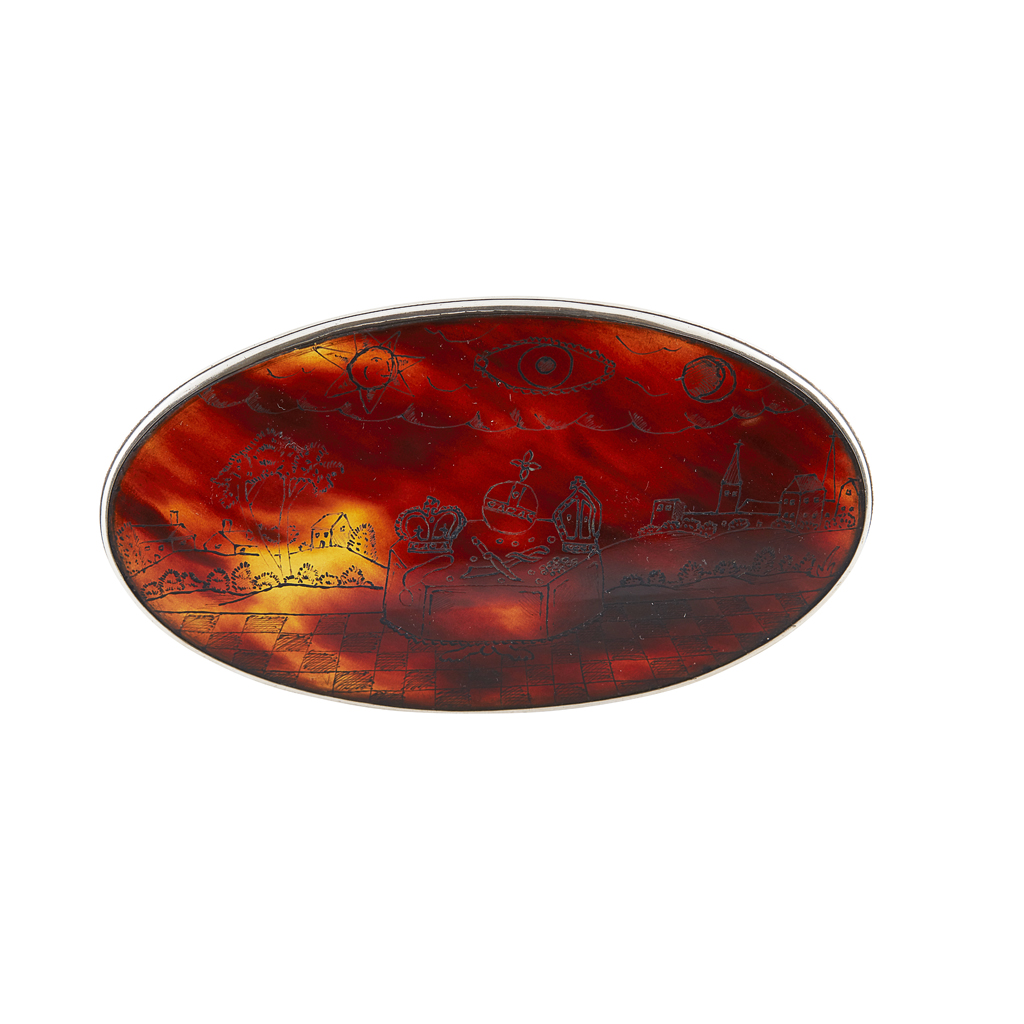
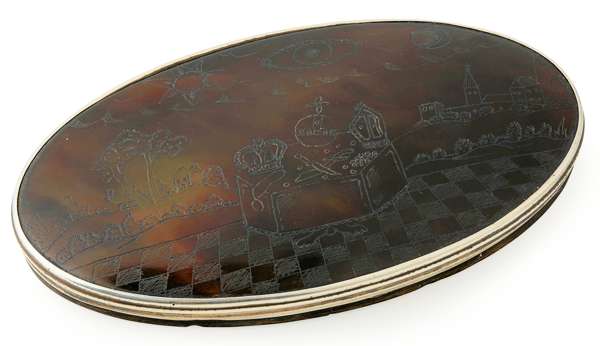
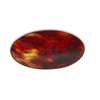
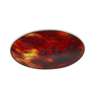
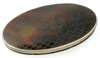
A SILVER AND TORTOISESHELL BOX, ENGRAVED WITH JACOBITE SYMBOLS Y
MID-18TH CENTURY
Scottish Silver & Applied Arts
Auction: 14 August 2019 at 11:00 BST
Description
unmarked, plain silver moulded rims to lid and base, plain tortoiseshell base, the slightly rounded lid with delicately engraved landscape, with a tiled floor, table with crown jewels and a mitre, the sky with sun, moon and eye
Dimensions
12.4cm across
Footnote
Provenance: Scottish Silver and Applied Arts sale Lyon & Turnbull 17th August 2016, lot 495
Literature: For similar examples with this iconography see;
Delieb, "Silver Boxes", published by Ferndale, London 1979, illustrated pp 41-42, 45.
"The Swords and Sorrows", National Trust for Scotland, London 1996 No 7:1
Note: The hidden Jacobite symbolism on this box is not perhaps as obvious as those on glasses and other snuff boxes, however its meaning is deep within the Stuart cause. As discussed by Prof. J. H. Plumb, Vice Master of Christ's College, Cambridge: "The son (pun on the 'sun') of Charles I - will return or emerge (as the moon is doing from the eclipse) from the Boscobel Oak (the oak tree with the Welsh mountains behind, which was commonly used as a symbol for Charles II at the time of the Commonwealth) to his kingdom (indicated by the engraved city on the right) or this might read from Breda (I have not seen an engraving of this city, but it might be related to a city with twin spires) and restore the succession (the crown), royal authority (orb), the church (mitre), bring peace (the spectre laid across the sword) restore the coinage (the bits of gold on the table), and hang (the halter) his enemies. There is the picture of a peaceful and plentiful countryside to the left. The fact of the guineas on the table, suggests, I think, that the box can be dated just after 1696 when the re-coinage by the government of William III created great difficulty for most people and brought about a chronic shortage of cash. Also, I think that this emblematic description of restoration of the Stuarts is cast in an historic form so that it could not be regarded as treasonable. It could be argued that it only depicted what had happened in 1660, although the implication, of course is clear enough: what happened once might happen again".