

Lot 502
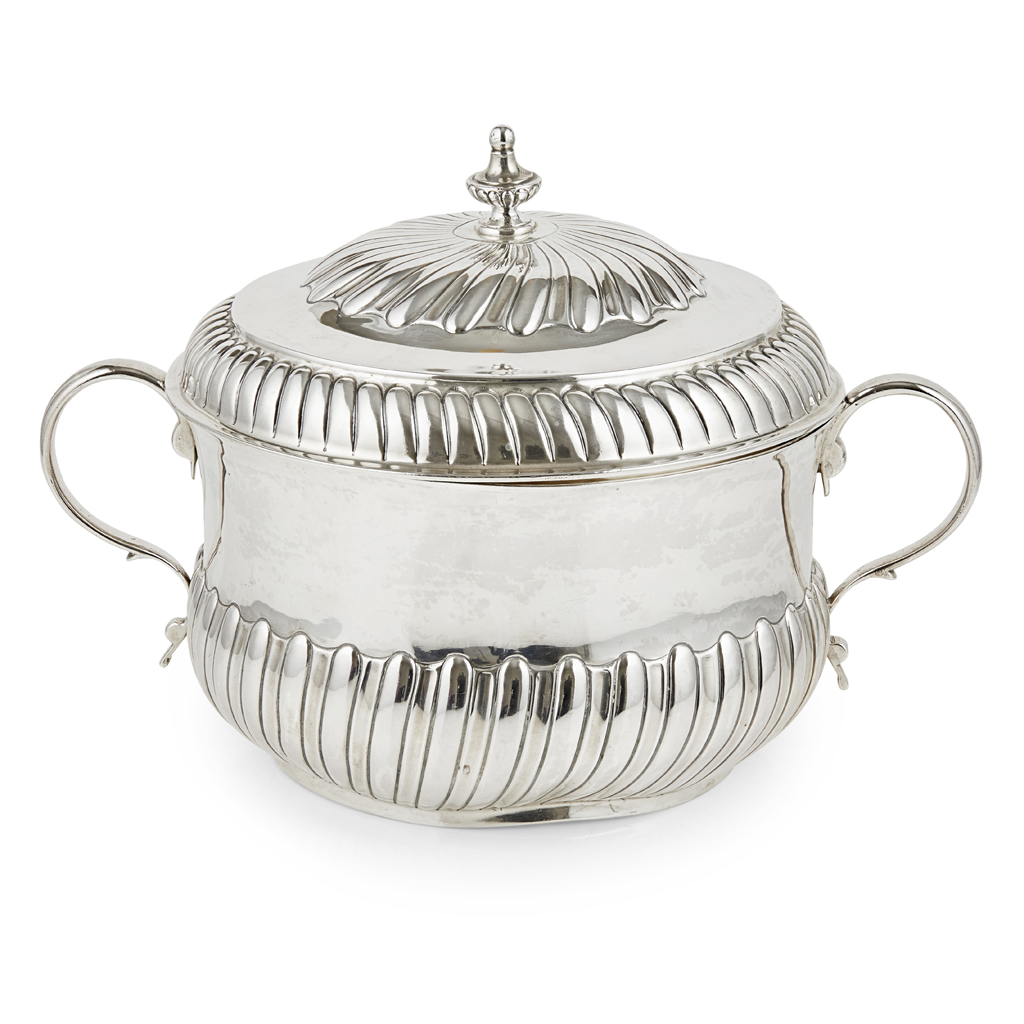
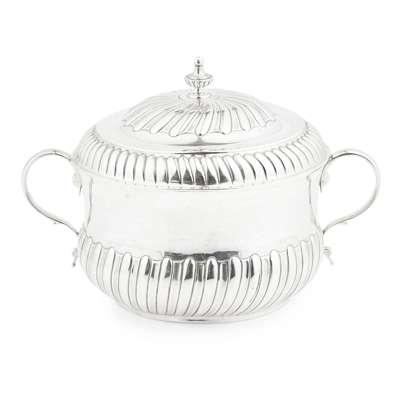
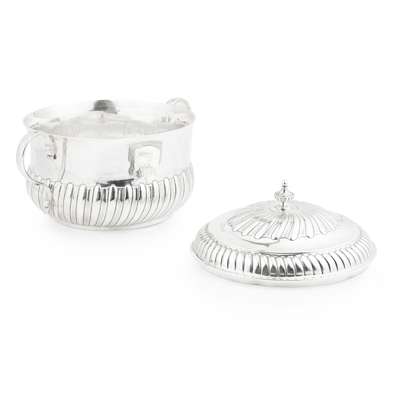
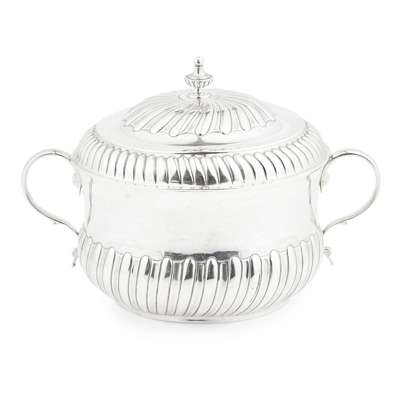
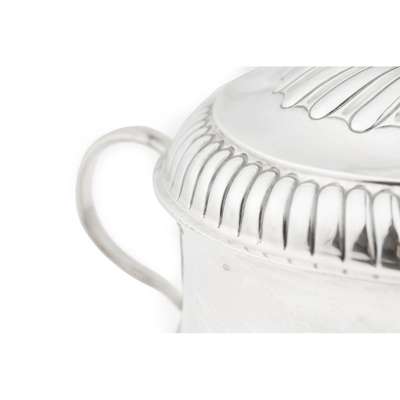
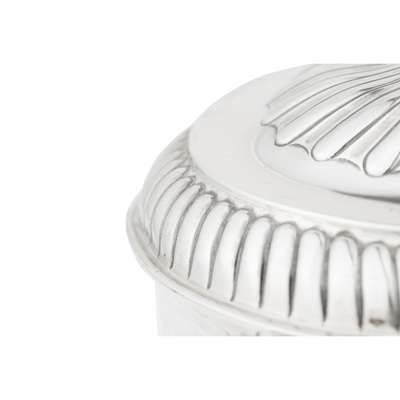
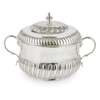
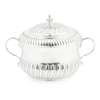
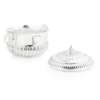
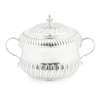
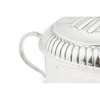
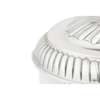
AN IMPRESSIVE GEORGE II PORRINGER WITH COVER
KER & DEMPSTER, EDINBURGH 1755
Scottish Silver & Applied Arts
Auction: 15 August 2018 at 11:00 BST
Description
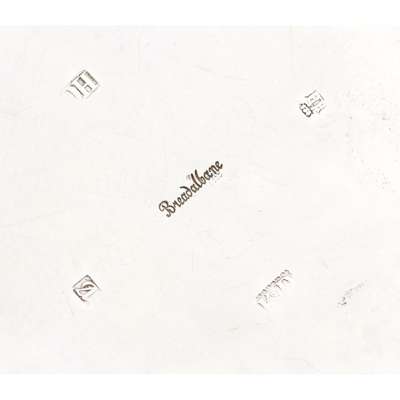
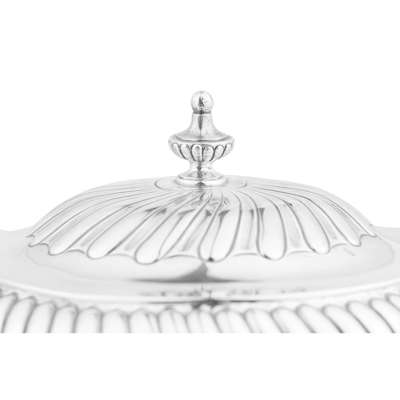
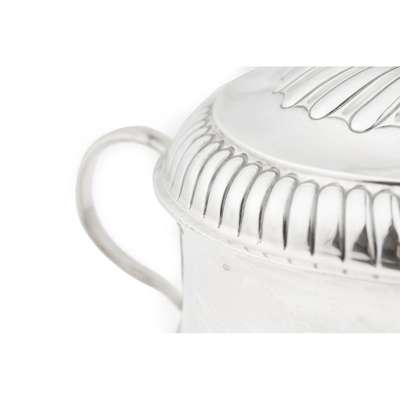
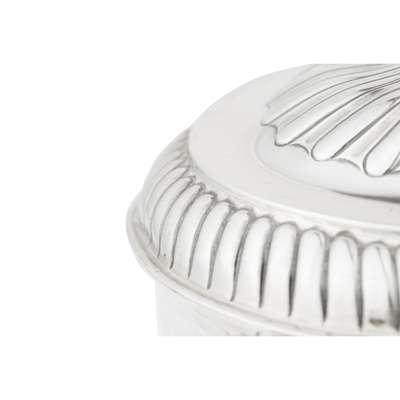
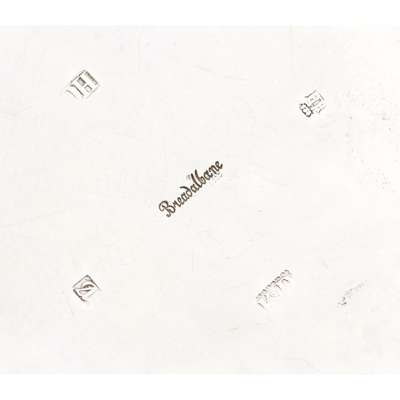
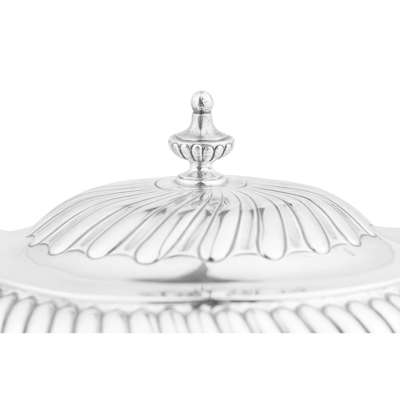
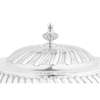
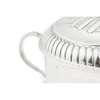
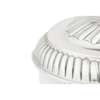
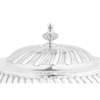
of traditional form, two loop handles, demi-fluted body, with similarly decorated lid and finial of knopped form, later Breadalbane marked to base and cover
Dimensions
22cm high with lid, 36.28oz
Footnote
The rarity of such a piece is due to a combination of two defining aspects; that of craftsmanship and that of provenance.
The word Porringer is derived from the French 'potager', a vessel for stew, and porringers were common throughout the 18th and 19th centuries, but one of this scale of Scottish manufacture rare if not unique.
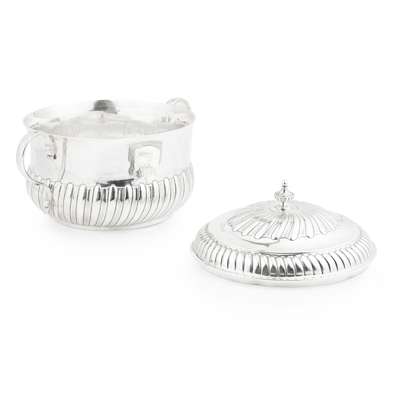
The presence of the cover also enables us to view this item in its entirety to imagine the way it was utilised in the mid 18th century. While many porringers would originally had covers most are now lost or perhaps were not supplied with them in the first instance.
The craftsmen Ker & Dempster are synonymous with Edinburgh silversmith's finest wares. After an apprenticeship with James Ker 1739-1742 William Dempster, married Ker's daughter and set up Ker & Dempster which lasted until William Dempster's death. James Ker himself had many connections with landed families in the borders of Scotland with his Mother related to the Earls of Haddington. A member of parliament for Edinburgh 1747-54.
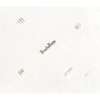
The unmistakeable 'Breadalbane' in script struck incuse confirms without doubt that this originates from one of the earliest and arguably most important collections of Scottish silver.
That of Gavin 1st Marquess and 7th Earl of Breadalbane. His collection, while now dispersed, is perhaps the best known of the period, not by its contents alone, nor auction catalogue as testament, but by the virtually unique applied collector's mark he used on pieces within the collection.
Breadlabane was among the earliest scholars of Scottish silver and helped in the discovery and attribution of many makers and town marks. Many of these marks and his attributions (some now considered erroneous) formed the main reference for the Scottish sections in Sir Charles Jacksons' first (and later) editions of English Goldsmiths and Their Marks in 1905.
Gavin Campbell was born in 1851 and succeeded his father John, 6th Earl in 1871. The succession of his father in 1867 had not been a simple one as he was not descended from the main Breadalbane line and was a cadet branch, the Campbells of Glenfalloch. When considering the importance the family had in Scotland and the lands they held, in excess of 450,000 acres from Perthshire to the Atlantic Ocean, this five-year dispute set legal history. Educated at St Andrews he succeeded his father as 7th Earl of Breadalbane, Earl of Holland; Viscount of Tay and Paintland; Lord Glenorchy, Benederaloch, Ormelie and Weik; and Baronet of Nova Scotia. He was created Baron Breadalbane in 1873; and Earl of Ormelie and 1st Marquis of Breadalbane in 1885. He married in 1872, Lady Alma Imogen Carlotta Leonore Graham, the youngest daughter of the 4th Duke of Montrose. A favourite of Victorian society he held many important roles within the country, notably Lord-inWaiting to the Queen, Treasurer to the Royal Household 1880 - 1885, Privy Councillor 1880, Lord Steward of the Household 1892 - 1895, Lord High Commissioner to the General Assembly of the Church of Scotland 1883 - 1885, A.D.C. to King Edward VII, Keeper of the Privy Seal of Scotland, 1907, Brigadier-General of the Royal Company of Archers - the Royal Body Guard for Scotland, Colonel of the Highland Cyclists Battalion; Colonel of the 5th Volunteer Battalion Royal Highlanders, Chairman of the St. Andrew's Ambulance Association, Deputy Lord Lieutenant of Argyllshire, from 1914 and Member of the Fisheries Board. In 1893 he was created a Knight of the Garter and was also a Knight of Justice of the Order of St. John and a Knight of the Swedish Order of the Seraphim.
His collection was dispersed after his death in various auctions, nay of the most important items now reside in institutional collections. This would appear to be the largest piece which is still in private hands and available to collectors.
Provenance:
'Catalogue of the major portion of the choice collection of antique silver, formed by the late Most Hon. Gavin, Marquess of Breadalbane, K.G., P.C., now the property and sold by instructions of the Right Hon. the Earl of Breadalbane, M.C.' Dowell's Ltd, Edinburgh 30th and 31st May 1935, lot 360