

Lot 498
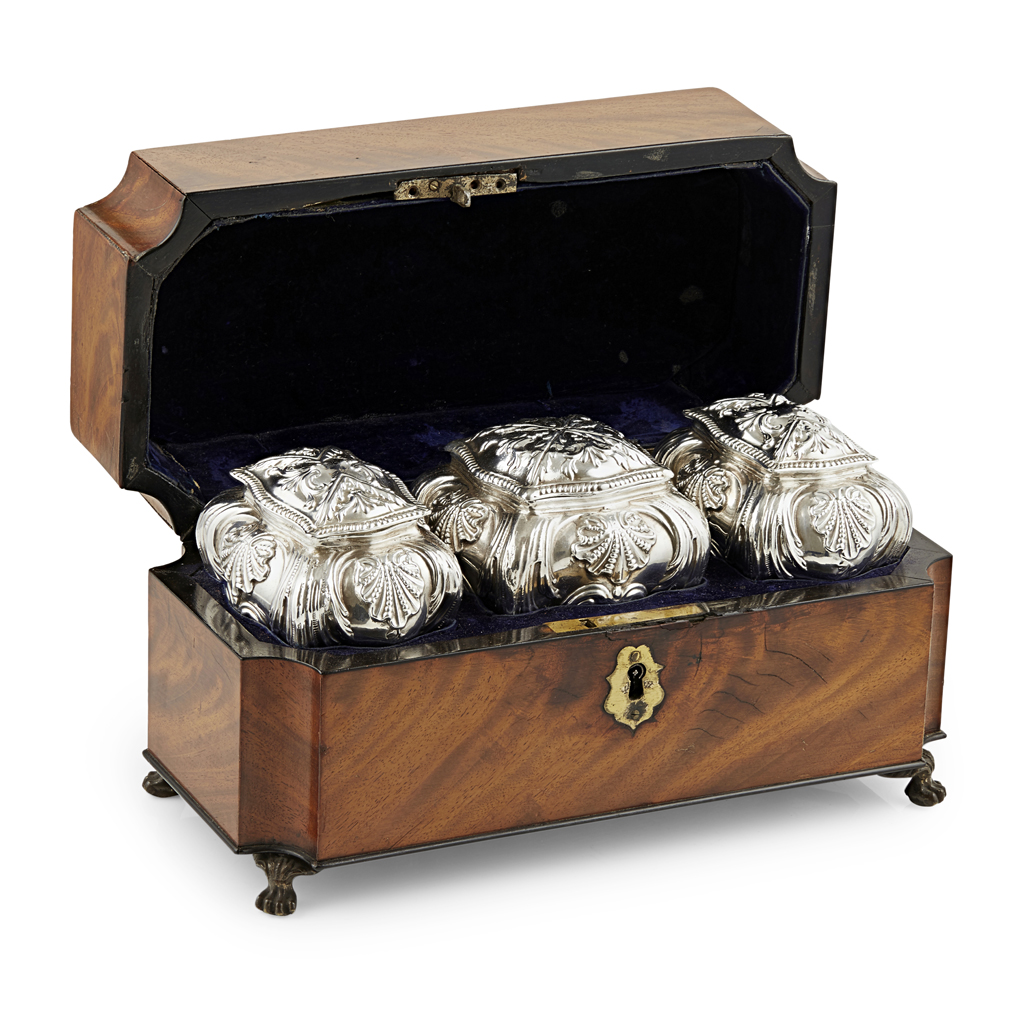
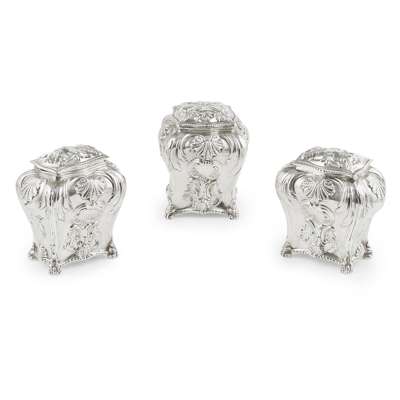
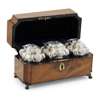
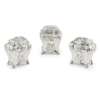
A RARE SET OF GEORGE III TEA CANISTERS AND SUGAR BOX IN ORIGINAL MAHOGANY CADDY
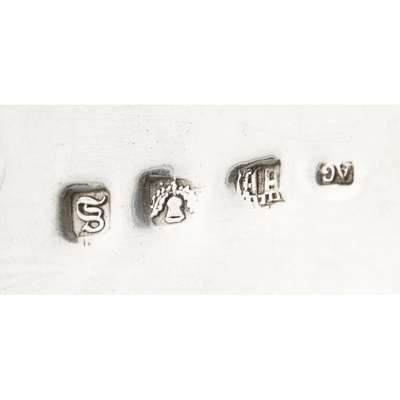
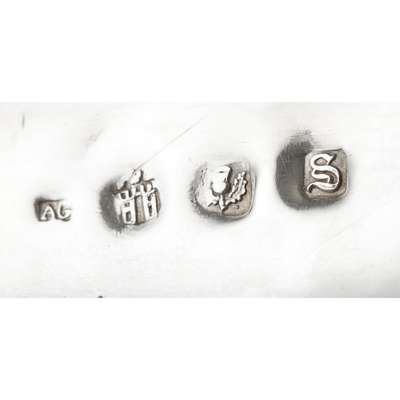
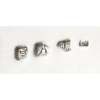
ALEXANDER GAIRDNER, EDINBURGH 1772
Scottish Silver & Applied Arts
Auction: 15 August 2018 at 11:00 BST
Description
each marked to bases, comprising a set of two tea caddies and a sugar box, each of bombe form with bold rococo foliate scrolls to corners and beaded shells clasped to rim, the panels with scroll and foliate formed vacant cartouches with shell and gadrooned rim, each raised on four scroll supports, the slightly domed pull off covers with gadrooned rim and foliate formed panels. Contained in an original flame mahogany veneered caddy of rectangular form with incurved corners, ebonised stringing and brass lock escutcheon, raised on four foliate and paw supports and with hinged scroll handle, all in gilt bronze, the fitted interior with velvet lined apertures for each piece
Dimensions
Caddies 12.7cm high, 7.3oz and 7.5oz, Sugar box; 12.5cm high, 9.4oz; Mahogany caddy; (excluding handle) 19.5cm high, 30cm wide
Footnote
Provenance:
Sotheby's 12th June 1969, lot 94
Bought by Baroccki, £85
Grandtully Antiques, Perthshire circa 1970's
Private Collection
References:
Compendium of Scottish Silver II, R & J Dietert, page 497
Notes:
Produced at the end of the 'Edinburgh's Golden Age of the Goldsmiths art' these caddies show the height of skills practiced by Scottish goldsmiths at the time and expertly portray the rare survival of rococo design in Scotland.
The survival of Scottish silver tea caddies pre 1800 is surprisingly rare. Of the references given the example under discussion being one of only two sets of three and the only set still in their original wooden outer caddy.
While not all examples would have originally been housed in a wooden caddy any silver caddies without a lock, which covers most pre 1800 examples, would likely have been housed in a wooden caddy as the security of the expensive commodity was essential.
It is often mooted that the fashion for rococo design passed Scotland by and that the simple plain lines of the earlier George II / III periods over shone the tastes in Scotland. While rococo is indeed rare and likely not as fashionable with the masses in Scotland items such as these tea caddies expertly show that when offered the opportunity the makers could supply clients who demanded the highest rococo tastes.
Although rare some of the finest mid to late 18th century Scottish tea wares, including important examples for Leith race prizes, tea kettles, coffee urns and rare chocolate pots show these fashionable ideas were being created.
Alexander Gairdner is a maker often overlooked by collectors due to such contemporaries as William Dempster, William & Patrick Cunningham and Patrick Robertson all of whom were supplying the Edinburgh public at the same time and received many important commissions. Gairdner is no less important just perhaps overlooked at a time of strong competition.
He was one of Edinburgh's longest serving goldsmiths working from 1754 (after his apprenticeship to William Aytoun) until his death in 1803, a career of some 49 years perhaps only bettered by the 51 years of James Mitchelson. During this period he took some 14 apprentices, including his son John in 1773.
He acted as Deacon of the Incorporation of Goldsmiths of the City of Edinburgh for one term between 1772 - 1774, interestingly when these caddies were made.
Gairdner also appears to have been one of a very small handful of Scottish goldsmiths who received Royal patronage, this is noted on the occasion of the marriage of the Prince of Wales to Princess Caroline of Brunswick (8th April 1795), The Caledonian Mercury noted that 'Mr. Gairdner, Jeweller to his Royal Highness for Scotland, had a beautiful representation of the Prince's feathers in small lamps on the front of his shop, which had a very fine effect, and attracted much notice'. He also uses a variant of his maker's mark which features Prince of Wales feathers within the punch., This has so far only been recorded on a very fine Freedom box for the Burgh of Dumfries, given to Sir Henry Dundas.