

Lot 422
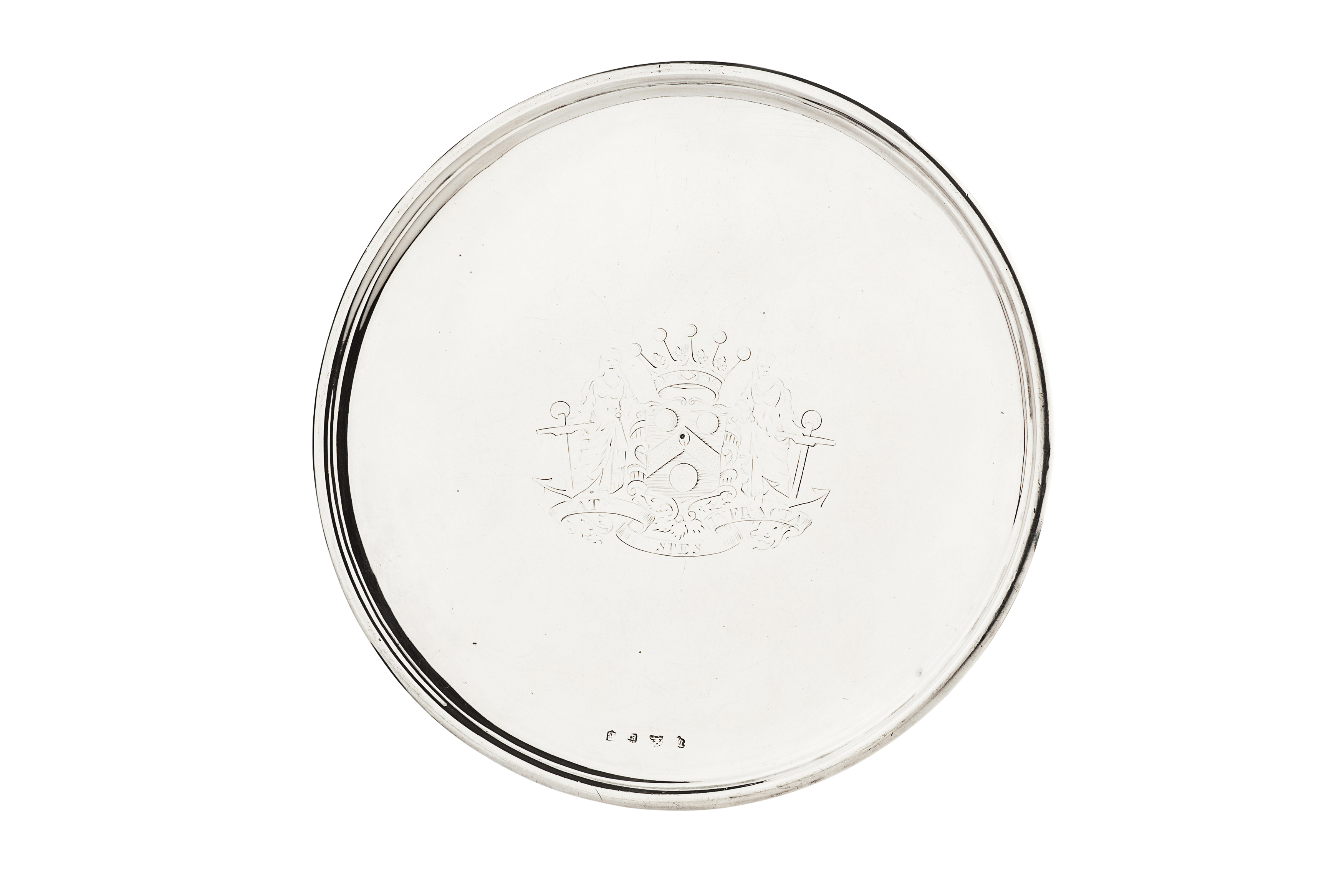
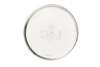
The Hopetoun Tazza - A fine Queen Anne tazza

Auction: 13 August 2014 at 14:00 BST
Description
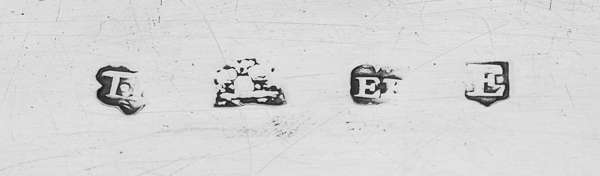
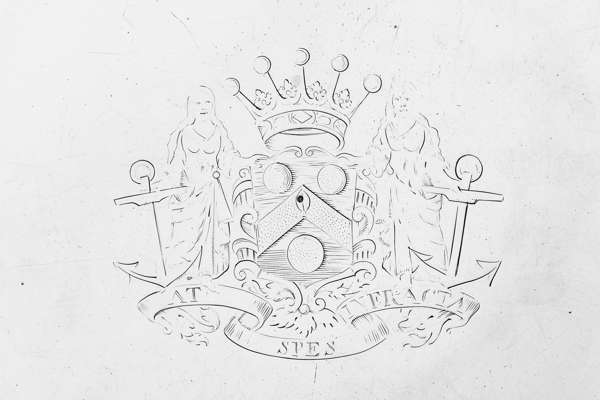
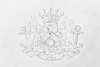
Thomas Ker, Edinburgh 1709, of conventional form, the circular plate with moulded rim and engraved armorial to centre, raised on a flared trumpet foot with stepped rim, the underside of plate engraved with scratch weight '33o5'
Dimensions
plate 27cm diameter, 32.09oz
Footnote
Heraldry:
armorial for Charles Hope, 1st Earl of Hopetoun
Notes:
The Hopetoun family for two generations, Charles and John Hope 1st and 2nd Earls, were perhaps the most important commissioners of silver in Scotland. Their influence on the Edinburgh trade appears to have not only given many valuable and important commissions but raised the challenge of the goldsmiths to new heights to create truly fashionable and important items. As with all family commissions the success of the family closely compares to the commissions and need for silver, indeed this tazza was created at a time of great boom within the family.
In 1699 architect William Bruce was commission by Margaret Hope, Charles's mother, to create Hopetoun House and it was built in its original form between 1699 and 1702. This original Bruce building has been much changed by later work by the William Adam rebuild of 1721.
The building of such a grand statement in a new home would have necessitated much other buying and collecting to fill these grand spaces, none more so than the public rooms such as the dining room. It seems highly likely this tazza, along with much other recorded Hopetoun silver, was commission for exactly this reason. No matter than status of the house the interior and trappings of wealth and artistic nature were key.
Although now, in parts, dispersed through large auctions in 1953 and 1977, the collection of silver held within the house was vast and it epitomises the status that silver brought to families and the much discussed idea of wealth held in silver and status shown. No doubt much was re worked and melted over the decades into new fashionable wares but a number of key pieces are still extant. Important silver bearing this provenance can be seen within institutional collections, including a unique pair of wall sconces and a fine five piece tea service both made in Edinburgh which form part of a wider collection of Hopetoun silver within the National Museum of Scotland collection and a monumental wine cooler and cistern made in London by William Lukin, housed within the Victoria & Albert Museum.
The importance that having a client such as the Hope family cannot be over stated and the status this must have given the Goldsmiths would surely have impacted on their wider business. The interlinked connections of client and maker was key in 18th century Scotland and the influence political and business relationships had is only now being fully understood. No matter these connections the quality of the maker was without question of the greatest importance and a family such as the Hope's gives a further insight into the Goldsmiths status not available solely from surviving pieces. The key makers patronised by the family seem to have not only to have been connected by quality and skill but directly through training. Not surprising in the small world of 18th century Goldsmiths of Edinburgh but it is interesting to note perhaps a direct choice of Hope to follow a 'family' of makers and support it for decades.
This is seen with some of the earliest pieces by James Penman, perhaps the most influential maker of his time, who trained both Harry Bethune and Thomas Ker, in turn who trains James Ker and continuing with successful training and partnership of James Ker and William Dempster. All these makers are closely connected with the Hopetoun story and owe a great debt to this relationship over 50 years.
Charles Hope, 1st Earl of Hopetoun whose arms are represented on this tazza was elevated to the Peerage of Scotland on 15 April 1703 with the titles Baron Hope, Viscount Aithrie and Earl of Hopetoun and latterly made a Knight of the Thistle in 1738, he was also a representative Peer of Scotland.
He succeeded the estate upon his fathers death in 1682 aged 32 when his father was killed on the wreck of the frigate Gloucester.