

Lot 459
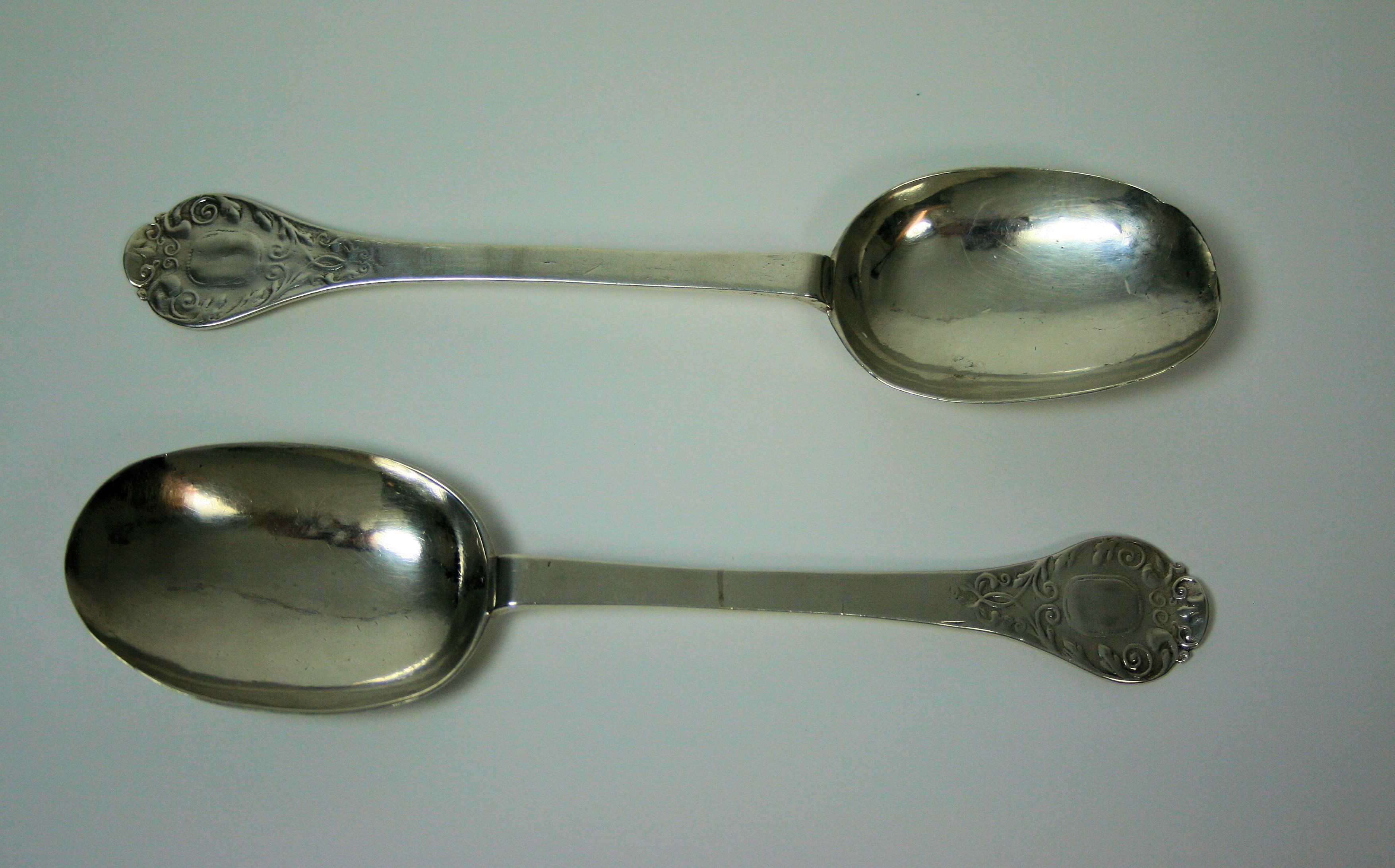
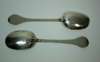
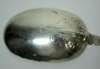
A rare pair of lace backed William III trefid spoons
Auction: 19 August 2013 at 15:00 BST
Description
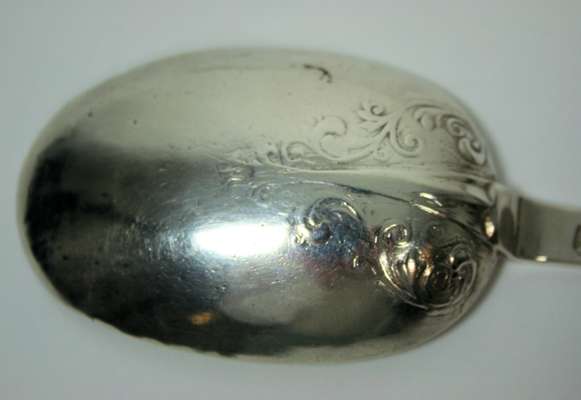
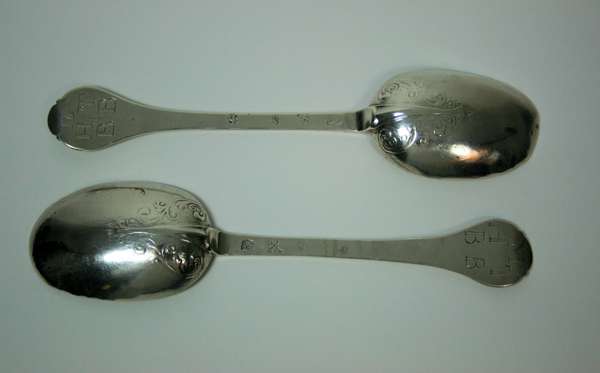
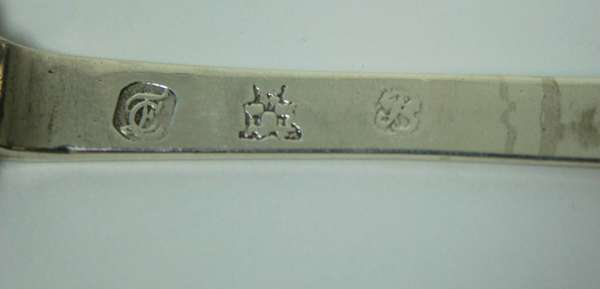
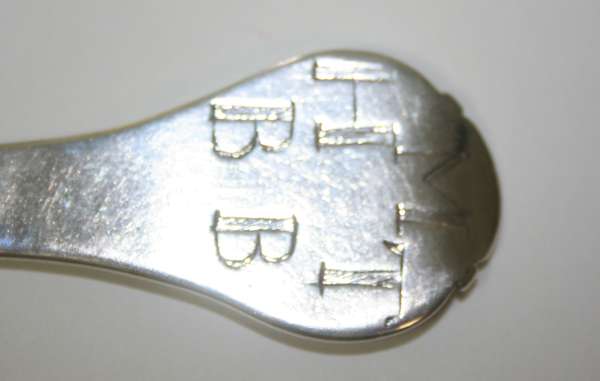
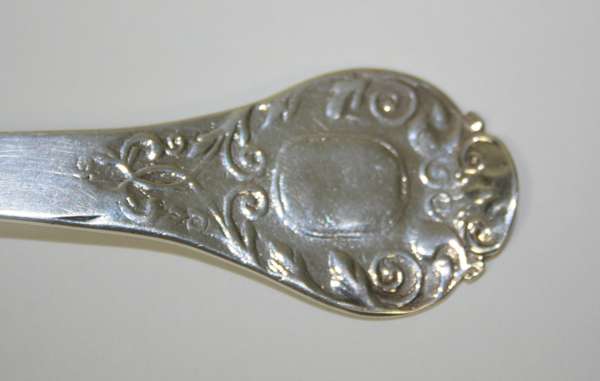
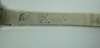
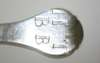
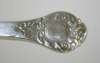
Thomas Cleghorne, Edinburgh 1695, Assay Master James Borthwick, the wide trefid terminals with vacant cartouche, foliate decoration to obverse and engraved initials 'M / HT / BB' to reverse, the moulded rat tails with foliate lace back scroll decoration (2)
Dimensions
20cm long, 53.1g and 53.7g
Footnote
Notes:
As with most patterns of pre 1700 Scottish spoons, lace back trefids show some comparison with their English counterparts, although much rarer. Scottish Trefids fall into various sub sections with two basic types of decorative examples; lace back (such as this) and acanthus back, both are scarce compared to the plain examples
This pair of spoons appear to have come from an original set of six, now split; with two in a private collection and a further pair held by the National Museum of Scotland (ex. Christies 26th July 1960, lot 146), all bearing the same initials and marked similarly (at least two lacking date letters).
The slightly unusual positioning of the hallmarks, with date letter much removed from the other punches, is noted in other spoons post 1681 (with the introduction of the date letter) and does appear to have been a quirk of early marking.
The engraved initials are typically in the Scottish style with 'M' above for Minister, in this case relating to Rev. Hugh Thomson and his wife Barbara Barr.
Rev. Hugh Thomson was trained at the University of Edinburgh and licensed by the Presbytery of Ayr in 1688, and ordained in 1691. He married Barbara Barr and had one son and daughter.
A man of great zeal and character his life is well recorded, it is known that 'sometimes preaching four or five hours at a time, and seldom less than two, and as might be expected, with very little preparation'. Not only was he a respected minister but gained some notoriety practicing as a Doctor as well, but not charging for his skills. In partnership with his son, he took this side line further and his son sold the medicines they produced. This income afforded Thomson the Hill of Kilmuars property that after he was demitted in 1712 he would continue to preach from.
His will to preach after his successor, John Miller, had been appointed obviously caused consternation and it paved the way for the first dissenting meeting house in Ayrshire to be formed.
A man of great character and obvious strength he was a man not to be meddled with or taken lightly.
On a visit to Kilmarnock market he had a well recorded altercation with a blacksmith selling horseshoes. He said jocularly, when told the price of his horse-shoes, "so much for these! I could twist them with my fingers." "Twist them, then" said the artisan, "and you shall have the price of your own making." Taking one, he did so, and twisted it almost with as great ease as did Samson, when he "broke the new ropes that were upon his arms." The smith stood aghast, and considering his customer as "no cannie," gave the shoes on his own terms, glad to get quit of him'