

Lot 135
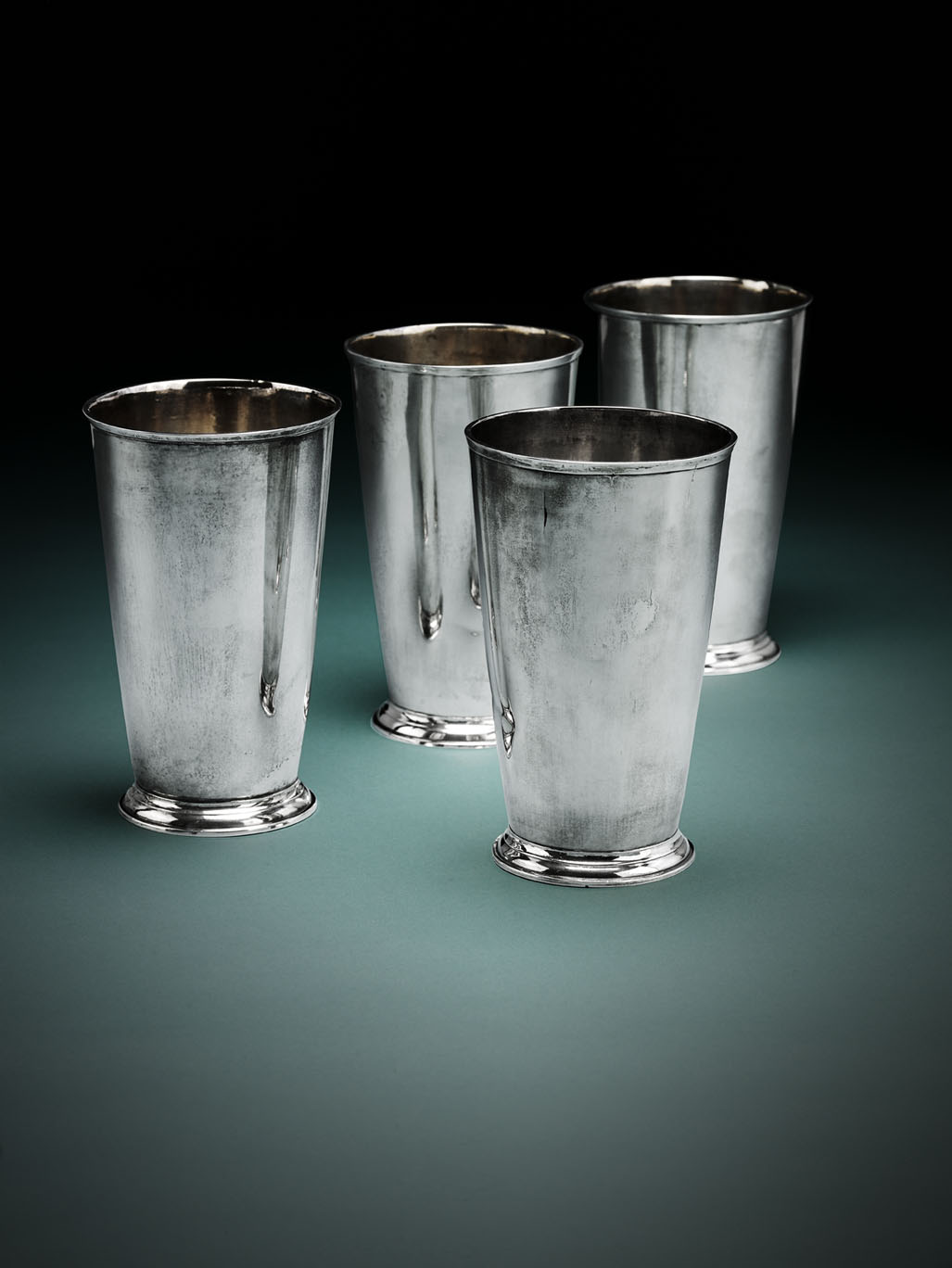
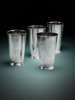
Aberdeen - a rare set of four Scottish provincial communion beakers
Auction: 13 February 2008 at 11:00 GMT
Description
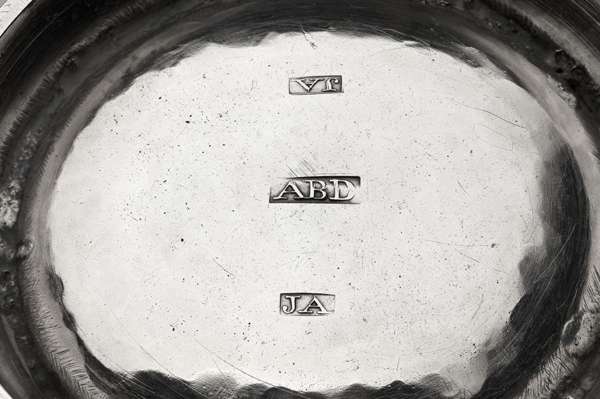
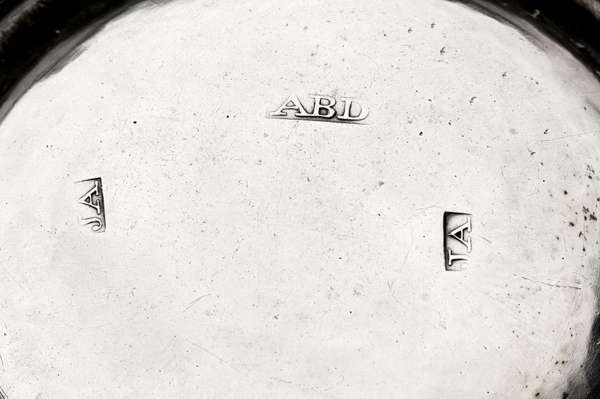
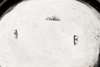
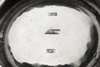
by James Abercrombie of Aberdeen, circa 1740-1750, marked to base JA, ABD, JA, of tapered cylindrical form with simple moulded rim and a applied moulded reeded foot rim (4)
Dimensions
diameter of rim 10cm, diameter of foot 7.8cm , 16.5cm high combined weight 49oz
Footnote
Provenance: Property of a North East Gentleman.
The Aberdeen maker John Abercrombie first appears in the Hammermen records with his admission as a watchmaker Burgess on 29th September 1726. He went on to rise through the rankings to become Deacon no less than five times between 1734 and 1751. Due to the strict rules of the Hammermen's Association, as a watchmaker he would not have been allowed to make silver or gold plate, so it seems likely that he employed a journeyman to make his watch cases and any other items of plate. It was a common practice of the period that items would be produced in a related workshop but carry the retailer's mark.
The advancing Jacobite armies in Scotland in the 18th century play a strong role in the history of Scottish silver and plate. An arriving Jacobite troop would often demand the use of homes, and land for billets. They collected any money or valuables to help the cause and also tried to recruit new soldiers for the army, a practice that alienated a great number of the local people, and caused the larger towns and cities of Scotland to take preemptive actions to protect their property and wealth. The formation of militias across Scotland saw the skilled workers and tradesmen of Scotland taking up arms to protect their towns. James Abercrombie showed his loyalist feelings by enlisting as an ensign for the newly formed Aberdeen Volunteers on the 10th April 1746.
The disappearance of early Scottish silver and plate during the Jacobite occupation is well recorded. As a case in point, in 1732 a full inventory of the church plate held by St Nicholas Church, Aberdeen, lists:
Two silver cups presented by 'Paull Inglis, maerchant burgess of Aberdeine' in 1629
A great silver cup gifted in 1642 by the 'Provost Ballies and Counsel'
Two cups procured in 1650
A silver cup 'mortified be the deceist William Troup' in 1667
A silver cup procured by the Town Council in 1676
Two silver basins procured in 1682
Eight silver chalices (quharof two gilt)
Four silver cups
Four silver porringers for receiving alms
Two large silver-hafted knives, for carving the holy bread.
None of these pieces can be found in the next inventory of church plate within Aberdeen, by Reverend Thomas Burns for his seminal work 'Old Scottish Communion plate' in 1898. It appears that they disappeared during the five month occupation of the city by the Jacobite army, when they "extorted taxations, levy money, quartering money, and what else they thought proper, the inhabitants being under the necessity of convening and deliberating had to satisfy the demands made on the town". Such taxes and demands would have been hard to bear and the value of silver contained within these wares would surely have satisfied the demands of the Jacobites for some time.
This devastation led to the commissioning of a substantial amount of new sacramental plate after the '45 rebellion, from 1750 onwards production picks up greatly. It is very likely that the communion beakers being offered in this lot were made by Abercrombie to replace the set removed from St. Nicolas's Church in Aberdeen.
The form and date of these tapered beakers form is typical of Aberdeenshire and the North east. The beaker form travels as far West as Inverness but is only seen south of Aberdeen in unusual circumstances. A form strongly influenced by trade links between the North east ports and continental Europe, this beaker form of drinking vessel is standard across the Continent.
The fact that these beakers are completely without inscription or engraving is slightly unusual. In the majority, communion cups of this period either bear an inscription or crest representing the generosity of the donating family. It has been suggested that the ceakers may have been commissioned by the church (or paid for by subscription from the congregation) rather than donated by a single individual or family. The cost of engraving has always been a large part of the cost of commissions and the decision to leave these plain could be a more commercial choice rather than taste for simple design.
Marked work of any type is rare by Abercrombie, mainly consisting of a small amount of flatware. Two other examples of holloware have been attributed to his hand:
Pair of communion beakers from St Clement's Aberdeen, marked to the base JA, ABD, Q. with presentation inscription "Given to the church of footdee / By voluntary contribution of the congregation / The Rev. D john Thomson minister / 1798" [Now in the collection of Aberdeen Art Gallery and Museum]
A newly ascribed officers cross belt plate for the Peterhead Militia, marked to the reverse with makers mark struck twice. This had previously been ascribed to John Argo of Banff but the maker's marks match that of the communion beakers on offer here [In the collection of the National Museum of Scotland].
Scottish provincial communion cups or beakers are rare within the market place. At present, these are the only Aberdeen examples to be offered at auction. All other examples are held within the Kirk session or institutional collections.
References: 'The Goldsmiths of Aberdeen , 1450 - 1850' Dr James, page 66
'The History of the Aberdeen Volunteers' Ronald Sinclair
'Compendium of Scottish silver' R & J Dietert
'Old Scottish Communion Plate' Rev. T Burns
'View of the Diocese of Aberdeen' Spalding Club
'Aberdeen Burgh Records' Burgh Records Society