

Lot 99
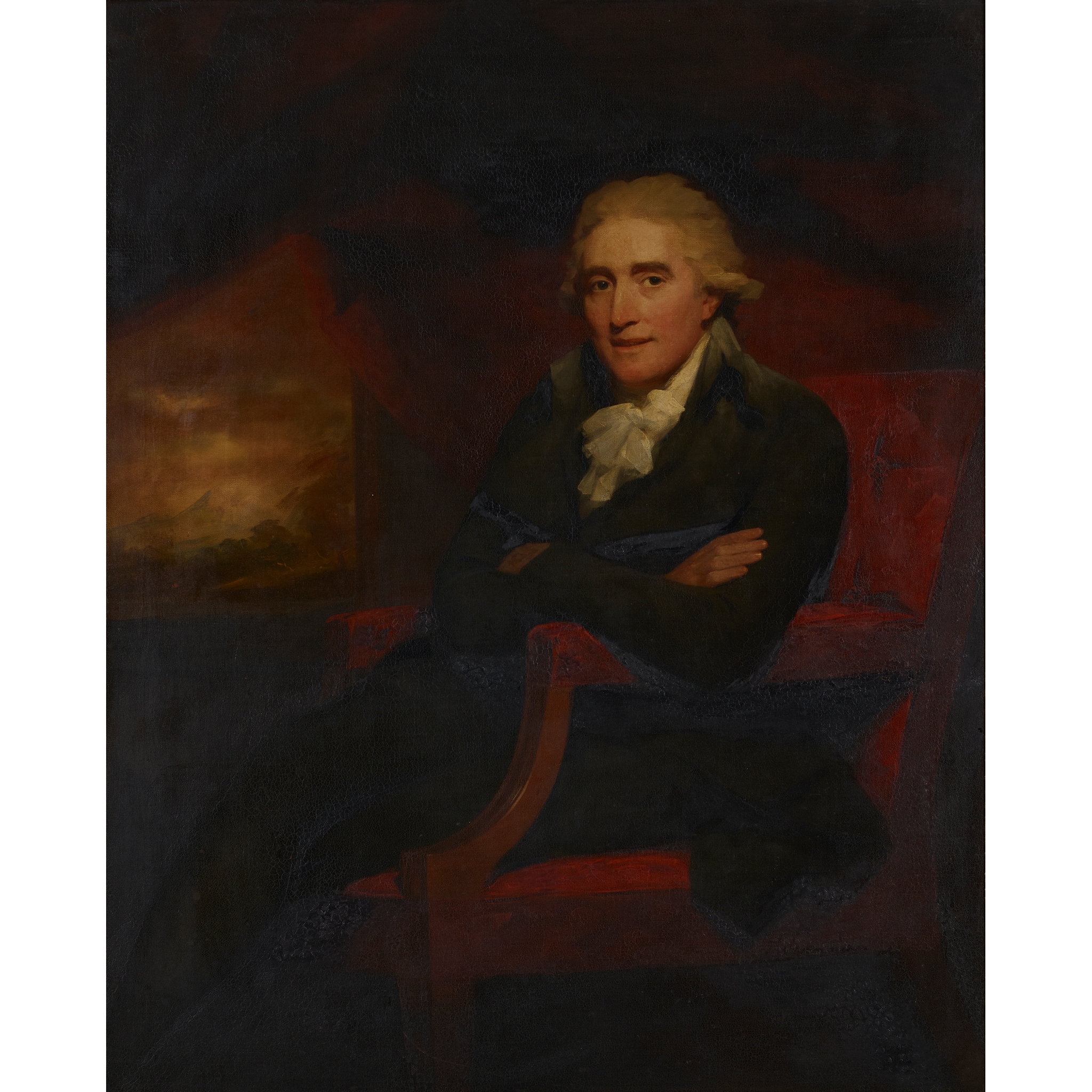
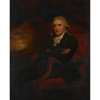
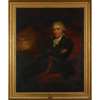
SIR HENRY RAEBURN R.A. (SCOTTISH 1756-1823)
PORTRAIT OF THE HON. HENRY ERSKINE O’ ALMONDELL (1746-1817)
Scottish Paintings & Sculpture
Auction: Evening Sale ft. A Century of Scottish Colourists Part II | Lots 90 to 169 | Thursday 03 December 2026 from 6pm
Description
Oil on canvas
Dimensions
127cm x 101.5cm (50in x 40in)
Provenance
Mrs Wilbraham Tollemache by 1873
Campbell Munro Esq., by 1895 and by descent to Sir Torquil Munro o’ Lindertis
His sale, Christie’s, London, 25 September 1942, lot 52 (sold for 1,600 guineas to Brown)
Exhibited:
Burlington House, London, 1873 (lent Mrs Wilbraham Tollemache)
Grafton Galleries, London, Scottish Old Masters Exhibition, 1895 (lent by Campbell Munro Esq.)
Literature:
David Mackie, A Complete Critical Catalogue of the Scottish Portrait Painter Sir Henry Raeburn RA (1756-1823), phd thesis, University of Edinburgh / University of Cambridge, 1994 / 2026, no. E15.
Footnote
David Mackie's entry about this painting reads as follows:
Lawyer, politician and orator. Second son of Henry David, 10th Earl o’ Buchan (1710-1767), younger brother of David Steuart, 11th Earl (qv). Henry David Erskine, 12th Earl o’ Buchan (qv) was his son.
There was wide disagreement among earlier writers on the portrait’s date. Caw 1901 was certainly wrong when he gave c.1805. In Caw 1908 he seems to suggest a date in the vicinity of 1814, if not later. The latest date which could be established in the past was 1800, when the painting was copied by J.E. Woolford. But Helen Smailes’s recent dating of Ward’s engraving to 1797 has now provided a firm date after which the Munro version could not have been executed. The publication of Ward’s engraving was announced in the Edinburgh Evening Courant of 8 July 1797 (see Engravings). Before the date of the engraving was known, the author suggested a date 1795-1800. A date for the painting as early as 1793 still seems possible, given the portrait’s sense of action and psychological engagement with the viewer.
The primary status of the Munro version is clear throughout the composition: the painting is richly detailed even in the graining of the wood of the chair, in its upholstery and in the neck-linen. These elements and numerous others are reproduced in Ward’s engraving with great fidelity. The Wolfe Murray version is a slight imitation by comparison.
Cunningham 1829, p. 227, said of the portrait that it ‘preserves all the fire and grace of the noble original’. It is certainly one of Raeburn’s most attractive and most oft-repeated compositions, but it is not known which version Cunningham knew.
Please note Mackie's entry includes further literacy references not quoted under ‘Literature’ above.
