

Lot 163
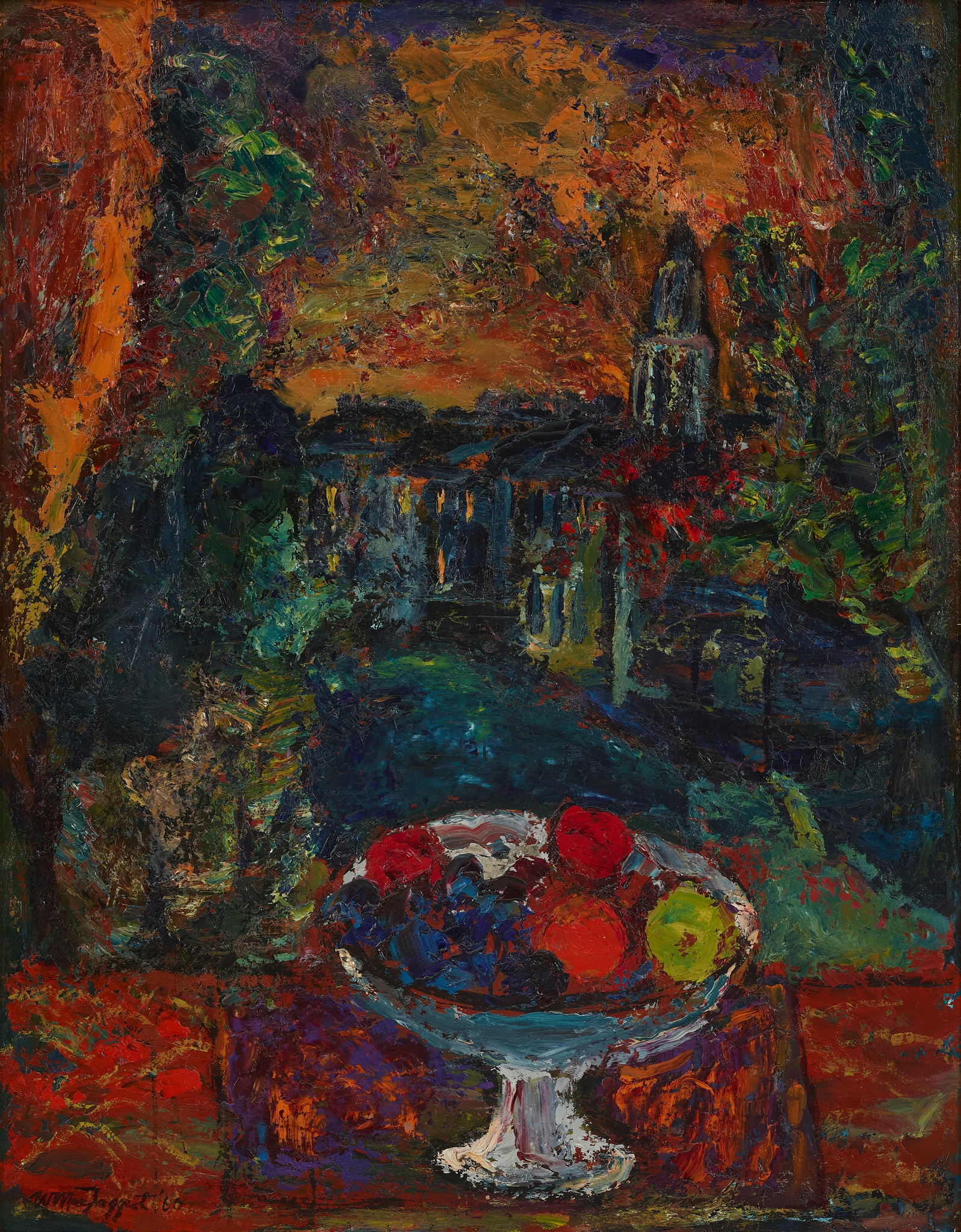
SIR WILLIAM MACTAGGART P.P.R.S.A., R.A., F.R.S.E., H.R.S.W. (SCOTTISH 1903-1981) §
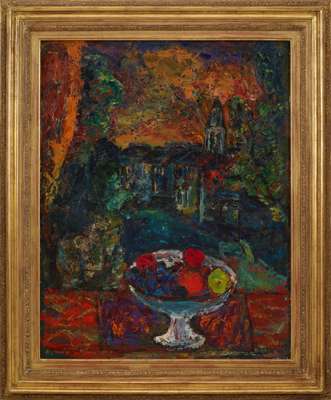
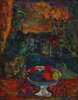
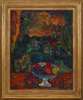
THE GLOAMING
Scottish Paintings & Sculpture
Auction: Evening Sale ft. A Century of Scottish Colourists Part II | Lots 90 to 169 | Thursday 03 December 2026 from 6pm
Description
Signed and dated '60, oil on board
Dimensions
91cm x 71cm (36in x 28in)
Provenance
The Stone Gallery, Newcastle upon Tyne
Duncan Miller Fine Arts, London, from where purchased by the present owner
Exhibited:
Royal Scottish Academy, Edinbugh, Annual Exhibition, 1961, no. 217
Commonwealth Institute Art Gallery, London, 14 Scottish Painters, December 1963 - January 1964, no.14
Scottish National Gallery of Modern Art, Edinburgh, Sir William MacTaggart Retrospective Exhibition, 1 - 30 June 1968, no. 45
Scottish National Gallery of Modern Art, Edinburgh, William MacTaggart 1903-1981, 14 February - 10 May 1998, no. 29 (repr.col.pl.19)
Footnote
As the grandson of William McTaggart (1835-1910), one might feel that Sir William MacTaggart would have ended up either living in his grandfather’s shadow or painting in a similar manner. This, however, was not the case. MacTaggart paved his own way, creating works that are unique and distinctive due to his choice of subjects, application of paint, and, vibrant, jewel-toned palette.
MacTaggart’s early works, produced while travelling and living in the south of France, were heavily influenced by French modernism and Post-Impressionism, most notably by Paul Cézanne. His embrace of a new palette defined by light, intense colour, and sharp shadows differentiated him from many of his contemporaries. At the time, art was dominated by idyllic landscapes and a naturalism where brushstrokes were meticulously blended so that the surface of the canvas appeared smooth and polished.
MacTaggart, however, was always searching for something deeper. As he entered his mature period from the 1950s, his practice underwent further development. Rejecting the bright, sun-bleached tones of southern France, MacTaggart shifted to a darker, more dramatic colour palette. This new phase saw him thickly layering deep reds, fiery oranges, dark blues and purples, colours that define works like The Gloaming. During this period, MacTaggart became fascinated by nocturnal scenes, capturing the fleeting movement of time when day turns to night. He painted sunsets that lit up the skies in a blazing orange, and captured the deep, velvet blues of nightfall.
This approach to the colour and application of paint was influenced by German Expressionism and Nordic masters like Emil Nolde and Edvard Munch, leading to an effect that his friend H. Harvey Wood, likened to the inner glow of medieval cathedral stained glass. It was a technique ideally suited to achieving MacTaggart’s aim: to capture within his work a profound sense of mood.
While his subject matter and palette differed significantly from his grandfather's, MacTaggart left a lasting influence on Scottish art. As an important member of the Edinburgh School and a natural leader among his peers, he served as President of both the Society of Scottish Artists and, later, the Royal Scottish Academy from 1959 to 1969. Summarising MacTaggart's impact as leader, Sir William Kininmouth RSA wrote in his obituary: "His Presidency was marked by the affection and esteem in which he was held by his fellow Academicians."
Ultimately, Sir William MacTaggart’s legacy lies in his rare ability to bridge two worlds. He was a modernist who brought the passion of European Expressionism to Scotland, yet he was also a leader who modernised the very institutions that initially resisted such change. By steering Scottish art away from conservative constraints and towards the power of atmosphere itself, MacTaggart ensured that his generation did not merely follow European trends and instead defined an independent Scottish modernism that continues to inspire artists today.
