Lot 168
ALAN DAVIE C.B.E., R.A., H.R.S.A. (SCOTTISH 1920-2014) §
YORU NO.3, OPUS NO.752
Scottish Paintings & Sculpture
Auction: Evening Sale ft. A Century of Scottish Colourists | Lots 88 to 168 | Thursday 04 June 2026 from 6pm
Description
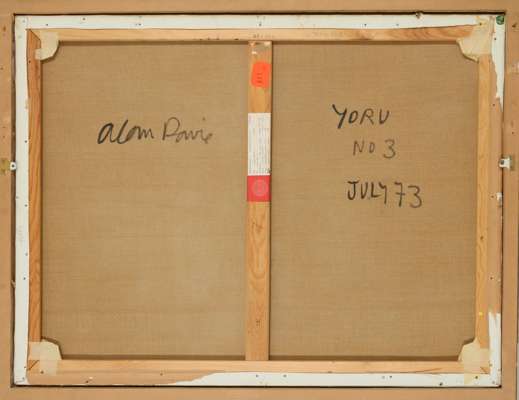
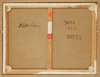
Signed, inscribed and dated July '73 verso, oil on canvas
Dimensions
76cm x 101.5cm (30in x 40in)
Provenance
A gift from the artist to Peter Gimpel
The Estate of Peter Gimpel
Gimpel Fils Gallery, London
Exhibited:
Gimpel Fils, London, New York and Zurich, Alan Davie: Paintings 1973, A Series of Small Oils, 1974, no.5
British Council, British Colour (touring exhibition), 1977, no.7
Footnote
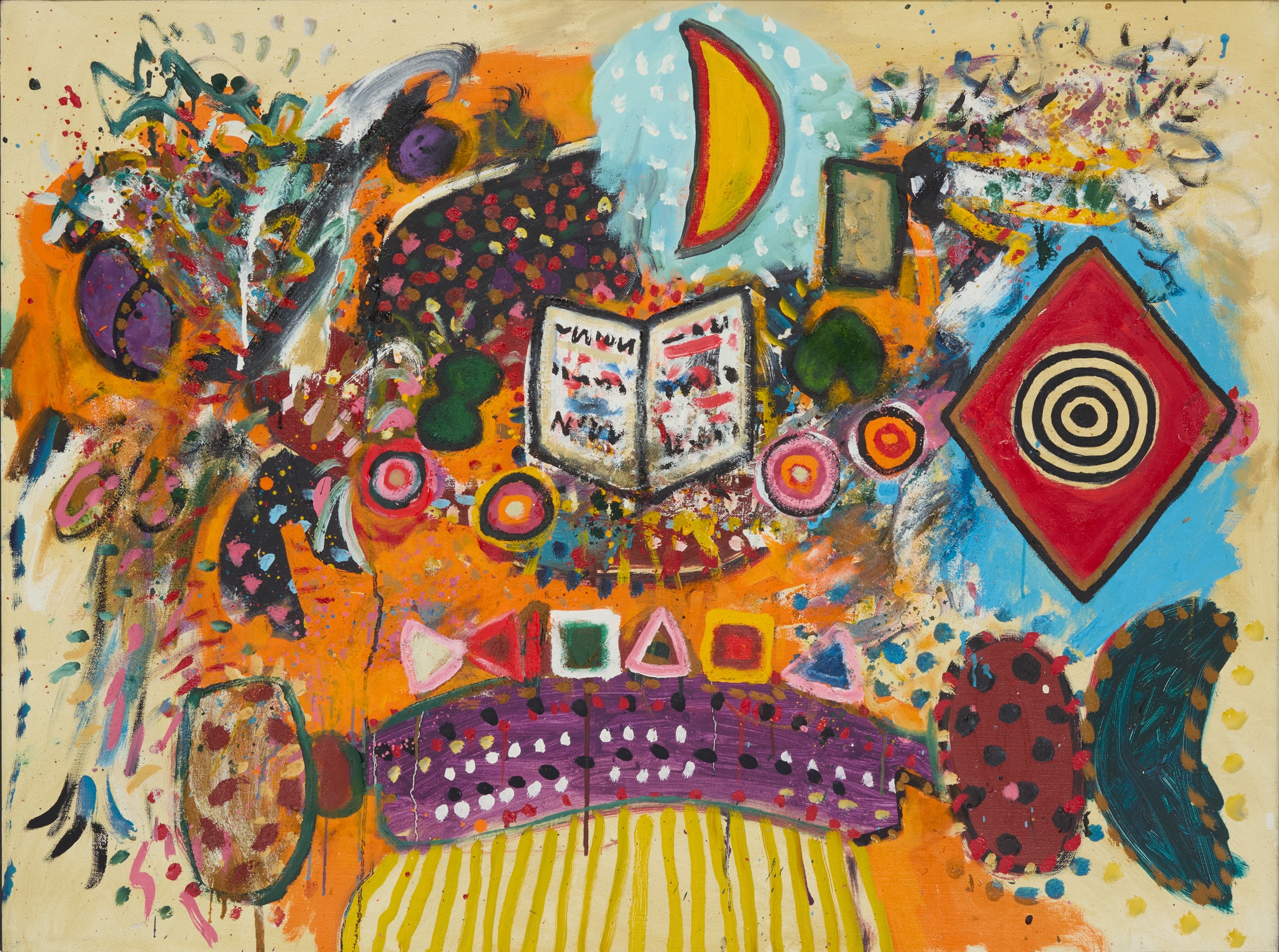
Yoru No.3, Opus No.752, painted in 1973, belongs to Alan Davie’s mature period and exemplifies the distinctive qualities of his practice. A leading figure in Post-war British art, Davie developed a highly individual style shaped by his engagement international modernism, music, and spirituality. Following his training at Edinburgh College of Art and subsequent travels, he encountered artists such as Jackson Pollock and Paul Klee, whose influence can be seen in his fusion of gestural abstraction and symbolic imagery. His parallel career as a jazz musician further informed his approach, with his painting practice conceived as an improvisational and expressive act.
The title is revealing: “Yoru,” the Japanese word for “night,” suggests themes of the subconscious, dreams, and inner vision, while “No.3” indicates a work within a broader thematic sequence. “Opus No.752,” drawn from musical terminology, positions the painting within Davie’s ongoing creative output and reinforces his perception of painting as analogous to musical composition.
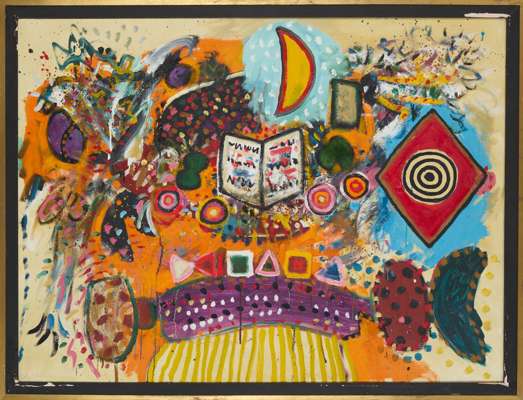
Visually, the work presents a dynamic and densely populated surface, animated by a vivid orange ground overlaid with abstract forms, symbols, and gestural marks. A central open book provides a loose focal point; its pages filled with indecipherable markings that suggest a personal symbolic language rather than literal text. Surrounding geometric motifs - including circular “target” forms, a diamond shape, and repeated elements - evoke ritualistic imagery, while a crescent form alludes to the moon, reinforcing the nocturnal theme. The absence of conventional perspective and the floating arrangement of forms create a dream-like, almost hallucinatory quality. Davie’s energetic handling of paint, evident in drips and layered textures, reflects the influence of Abstract Expressionism, while the rhythmic repetition of forms and contrasts of colour evoke the structure of music.