Lot 138
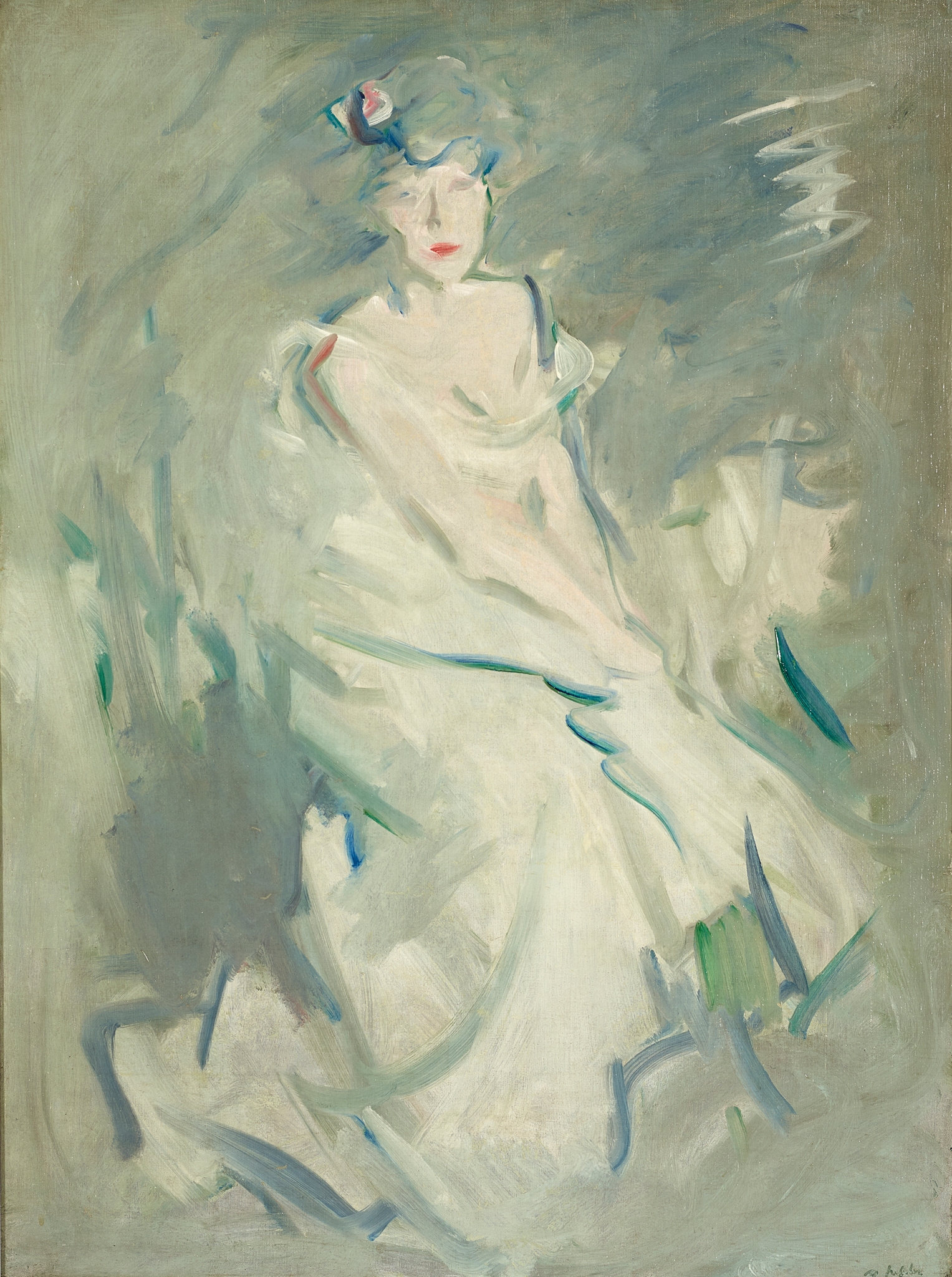
SAMUEL JOHN PEPLOE R.S.A. (SCOTTISH 1871-1935)
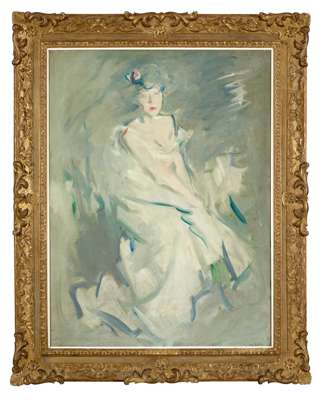
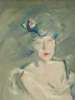
THE WHITE DRESS
Scottish Paintings & Sculpture
Auction: Evening Sale ft. A Century of Scottish Colourists | Lots 88 to 168 | Thursday 04 June 2026 from 6pm
Description
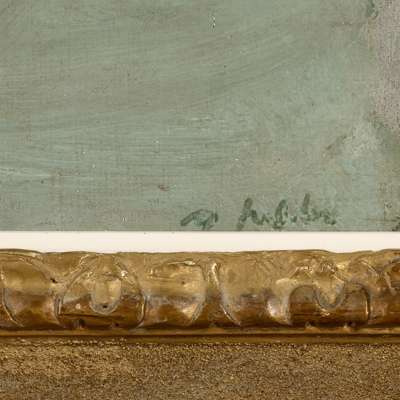
Signed, oil on canvas
Dimensions
101.5cm x 76cm (40in x 30in)
Provenance
The Artist and thence by family descent
The Scottish Gallery, Edinburgh, from where acquired by the present owner in 2005
Exhibited:
Possibly Aitken Dott & Son, The Scottish Gallery, Edinburgh, Memorial Exhibition of Eight-Three Paintings by S. J. Peploe RSA (1871-1935), April and May 1936, no.60 (as ‘Girl in White’, 1909, lent by the Artist’s widow, Mrs Margaret Peploe)
Possibly The Lefevre Gallery, London, Paintings by S. J. Peploe, May 1948, no.2 (as 'The White Dress, 1906)
Scottish National Gallery of Modern Art, Edinburgh, S. J. Peploe 1871-1935, 26 June – 8 September 1985, no. 44, reproduced in black and white p.39 (as ‘The White Lady, c.1908’)
The Scottish Gallery, Edinburgh, 20th-century Scottish Paintings, 2005, no.3
Scottish National Gallery of Modern Art, Edinburgh, S. J. Peploe, 3 November 2012 - 23 June 2013
The Scottish Gallery, Edinburgh, S. J. Peploe’s Studio Life at 150, 30 September – 23 October 2021, no.4, reproduced in colour p. 45 (as ‘The White Dress, c.1908')
Footnote
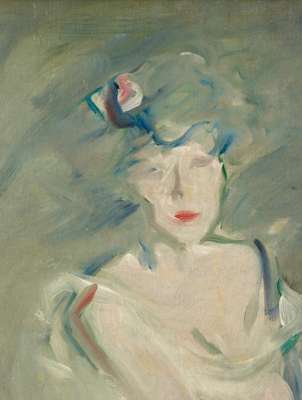
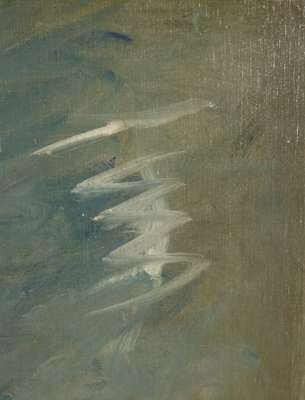
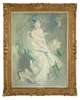
The White Dress comes from a glorious series of paintings made by S. J. Peploe, one of the Scottish Colourists, whilst he was working in the former studio of the leading Scottish portrait painter Henry Raeburn (1756-1823). It shows Peploe at his most vivacious, depicting his celebrated model, Peggie McCrae, in an image of elegance and sophistication realised through free and virtuoso brushstrokes on an imposing scale.
Peploe moved studio from 7 Devon Place near Edinburgh’s Haymarket station, to 32 York Place in the city’s Georgian New Town, in 1905. The latter had been built for Raeburn in 1795 and he designed an unusually large window in the north-facing studio at the rear of the first floor, with views over the Firth of Forth to Fife. It was flanked by an intricate system of shutters which enabled the occupant to control the light that entered the room.
In notes that Peploe’s wife, Margaret Mackay, prepared to assist Stanley Cursiter in the writing of his 1947 monograph about the artist, she wrote:
‘Sam moved again, this time to Raeburn’s house [at] 32 York Place. He liked to change his studio every five years so to get a new shape of room, different lighting – a complete change. The new studio was a beautiful room with a big window, it had a lovely white marble Adam mantlepiece. Sam had the walls distempered a very pale pinkish grey. On the floor he put a black polished linoleum. There was a white sofa, a chair or two, his nice bureau, a throne and easel.’ (S. J. Peploe Archive, National Galleries of Scotland Archive, GMA A112/2/1)
As Alice Strang has explained:
‘Peploe’s new bright and spacious surroundings had an immediate impact on his work and he began to paint in a lighter key, employing a looser, less disciplined technique and large canvases … using a new model Peggy [sic] Macrae, he embarked on a series of celebrated figures studies … which reveal an interest in James NcNeill Whistler (1834-1903) … In Peploe’s images of Macrae, her elegance and beauty are secondary to the sense of execution, as he emphasised colour harmony and sweeping line.’ (Alice Strang et al, S. J. Peploe, National Galleries of Scotland, Edinburgh, 2012, pp.19-20).
The White Dress illustrates Margaret’s description of Peggie as an ‘extremely charming, graceful and attractive girl. Sam painted her a lot. She also sat for F. C. B. Cadell, Stanley Cursiter and Pittendrigh Macgillivray the sculptor … She was unique as a model. She became any character one suggested.’ (op.cit.)
Peploe’s professional standing developed apace during the three years he spent at 32 York Place. The first of his works was acquired for a public collection, when Still Life (Culture Edinburgh acc.no. CAC4/1964) was purchased by the Scottish Modern Arts Association in 1907. The following year, he showed in London for the first time, in various group exhibitions and in 1909 he had his second solo exhibition, at The Scottish Gallery in Edinburgh. In 1910, he and Margaret married and moved to Paris where a new chapter in his career began.
Several works from the same series as The White Dress are in public collections, including Lady in a White Dress in the Fleming Collection (acc.no. FWAF/RF26) and Peggy McCrae in Kirkcaldy Galleries (acc.no. KIRMG:317). The latter formerly belonged to Peploe’s major patron, the Kirkcaldy linen manufacturer John Waldegrave Blyth (1873-1962). Such was the importance and interest of the series’ theme to Peploe, that he was to return to it in the 1920s in paintings such as Girl in the White Dress in The Burrrell Collection (acc.no. 35.587).
The White Dress remained in Peploe’s family into the next generation, descending to his son, the artist Denis Peploe (1914-93) who gave it to his wife, the musician Elizabeth Barr (1936-2025). It was selected for inclusion in both major exhibitions of Peploe’s work staged by the Scottish National Gallery of Modern Art, in 1985 and 2012.