Lot 115
GEORGE HENRY R.A., R.S.A., R.S.W. (SCOTTISH 1858-1943)
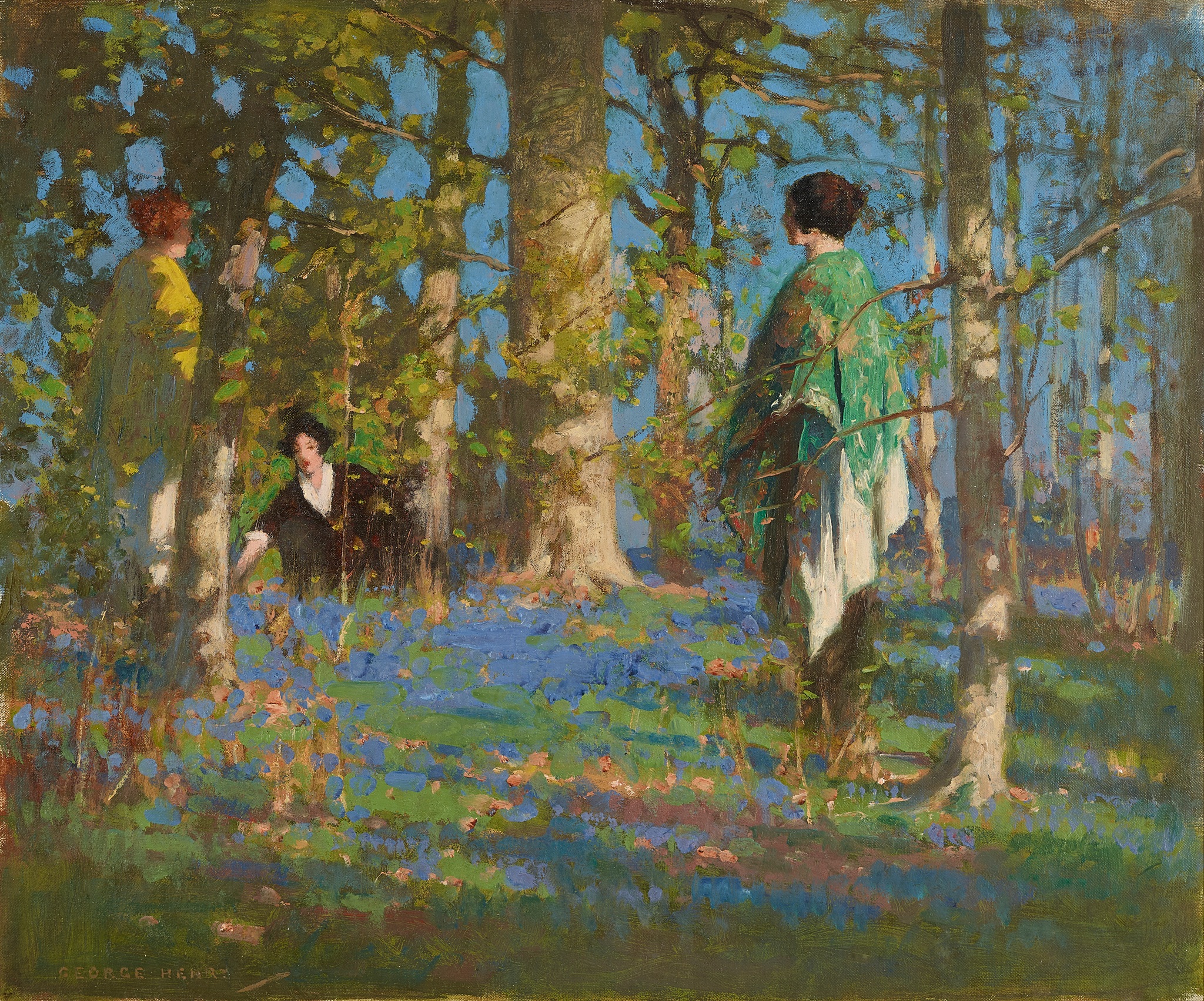
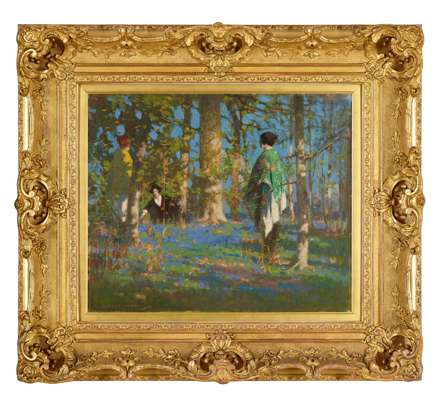
GATHERING BLUEBELLS

Scottish Paintings & Sculpture
Auction: Evening Sale ft. A Century of Scottish Colourists | Lots 88 to 168 | Thursday 04 June 2026 from 6pm
Description
Signed, oil on canvas
Dimensions
51cm x 61cm (20in x 24in)
Footnote
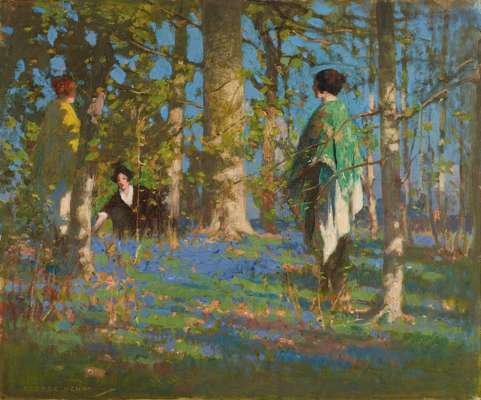
In a woodland beneath a canopy of trees, lit by dappled sunlight, three women can be seen among a carpet of bluebells. Each woman wears a bright shawl, suggesting that the shaded forest canopy blocks the balmy warmth of the late spring sun from fully filtering through the leaves. Bluebells are deeply rooted in British folklore, often associated with fairy dwellings, and this whimsical notion has been cleverly transferred onto the canvas by Henry through his harmonious colour palette, the bright red hair of the figure on the far left, the cool blues and greens of the woodland, the earthy browns, and his play of light. The question of who these women are, creates a sense of mystery within the work, harking back to the enchantment of the forest.
George Henry (1858–1943) was born in Ayrshire and studied at the Glasgow School of Art. Whilst his career saw him travel far and wide, including a formative period in Japan alongside his close friend and fellow artist Edward Atkinson Hornel (1864–1933), it was in Kirkcudbright that many of his most celebrated works were painted. While this painting is likely set within a Galloway woodland, Henry’s lasting fascination with Japanese culture is unmistakable. It can be seen in the patterned shawl worn by the woman in green in the foreground, the bold blocks of colour in the other two shawls, and the women’s elegant up-do hairstyles. The figures’ clothing is similar to the green kimono featured in Geisha and Rickshaw, in which Henry depicts a figure walking through a traditional Japanese street, complete with a wagasa and rickshaw in the background.
Henry’s whimsical tone is further present in By the Lake, where a solitary girl sits at the water’s edge surrounded by yellow foliage. Sunlight shimmers across the lake, while the rich golden yellows and lush greens, combined with Henry’s loose, impressionistic brushwork, fill the painting with a poetic and atmospheric quality.
Ultimately, Henry’s woodland scenes are more than a simple depiction of figures in nature, they are an exploration of atmosphere, folklore and visual harmony. Through his careful composition, layered setting, and subtle references to both British and Japanese influences, he invites the viewer into spaces that feel both real and otherworldly. The anonymity of the figures, combined with the enchanting setting, ensure the paintings retain a sense of mystery, encouraging curiosity from the viewer.