Lot 106
MAURICE WILLIAM GREIFFENHAGEN R.A. (BRITISH 1862-1931)
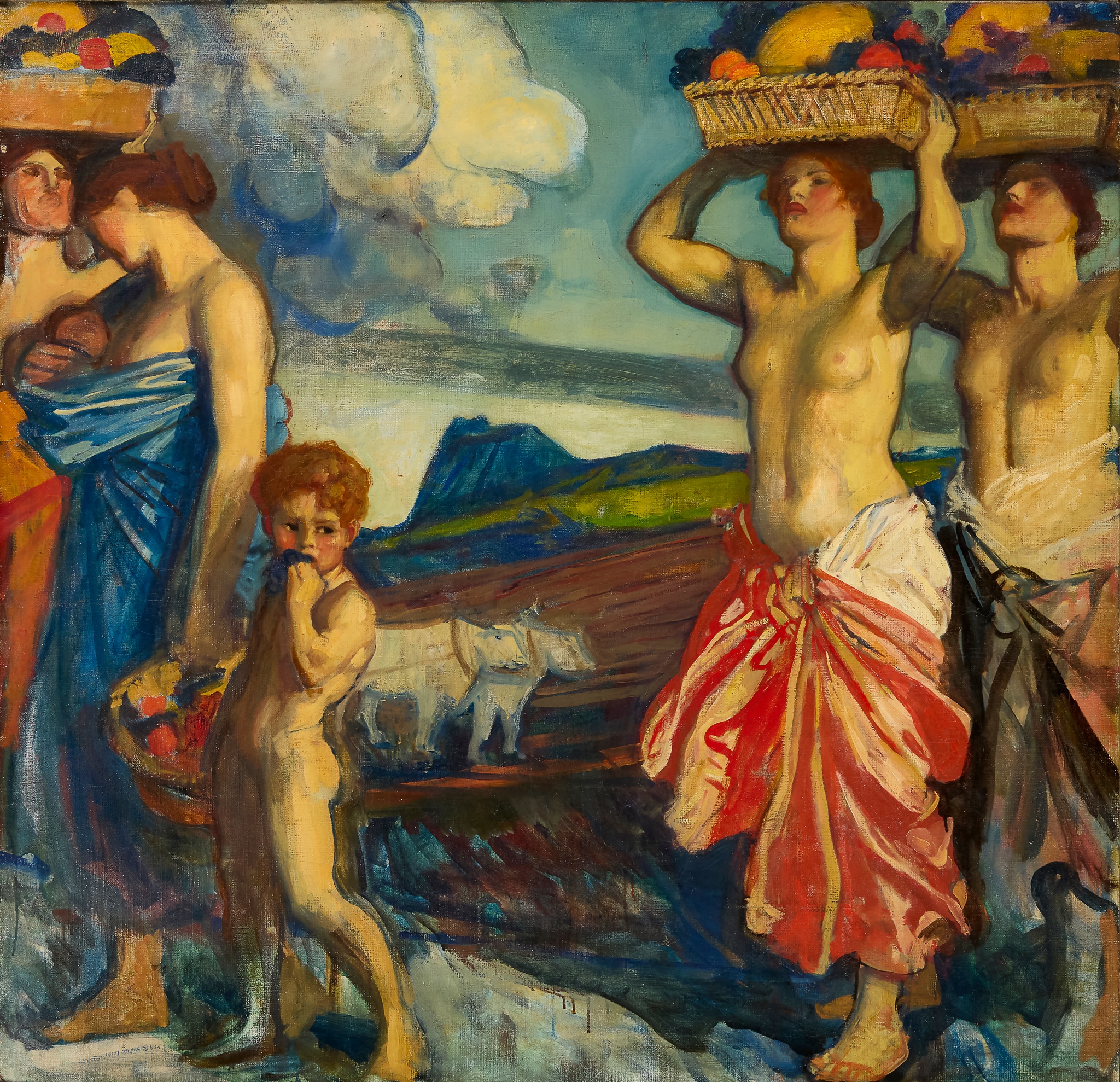
THE FRUIT HARVEST
Scottish Paintings & Sculpture
Auction: Evening Sale ft. A Century of Scottish Colourists | Lots 88 to 168 | Thursday 04 June 2026 from 6pm
Description
Oil on canvas
Dimensions
122cm x 127cm (48in x 50in)
Provenance
Sotheby's, Belgravia, Fine Victorian Paintings, 30 March, 1982, lot 55
Footnote
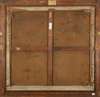
This painting bears a label verso of the Fine Art Exhibition Bureau, London stating that painting is a ‘Study for Harvest.'
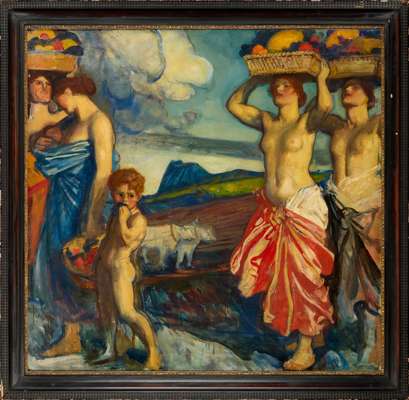
Maurice William Greiffenhagen’s work often explores idealised beauty through romantic imagery, and this painting, The Fruit Harvest, is a strong example of that. The artwork depicts a group of semi-nude women in a lush, open landscape, accompanied by a newborn baby and a small child, all arranged in a way that feels at once natural and carefully staged. The women carry baskets of exotic fruit such as melons, oranges, and apples, suggesting themes of abundance and fertility, while the child provides a sense of innocence.
The landscape appears Mediterranean, however, it is likely not intended to represent a specific or even real place. This highlights Greiffenhagen’s interest in creating imagined worlds, where human life exists in harmony with nature. The figures appear as idealised forms, emphasising grace, beauty, and composition over realism. Their poses feel almost sculptural, and Greiffenhagen has carefully arranged them across the canvas like a decorative frieze.
The painting is less about narrative and more about mood and symbolism. The inclusion of fruit, flowing drapery, and the natural setting all suggest ideas of fertility, harmony, and the cycles of life. The nudity, while prominent, is presented in an idealised and classical manner, aligning with late Victorian traditions in which the human body is viewed within mythic or pastoral contexts rather than through overt realism. The sky and landscape are executed with soft, blended tones that create atmosphere rather than precise detail.
Compared to Greiffenhagen’s more dramatic works, this painting feels calmer and more decorative. It emphasises balance and tranquillity over emotional intensity, inviting the viewer into a dreamlike world where everyday labour is transformed into something poetic. Overall, the work reflects a desire to escape modern life and instead celebrate a idealised vision of beauty, nature, and human connection.