

Lot 1
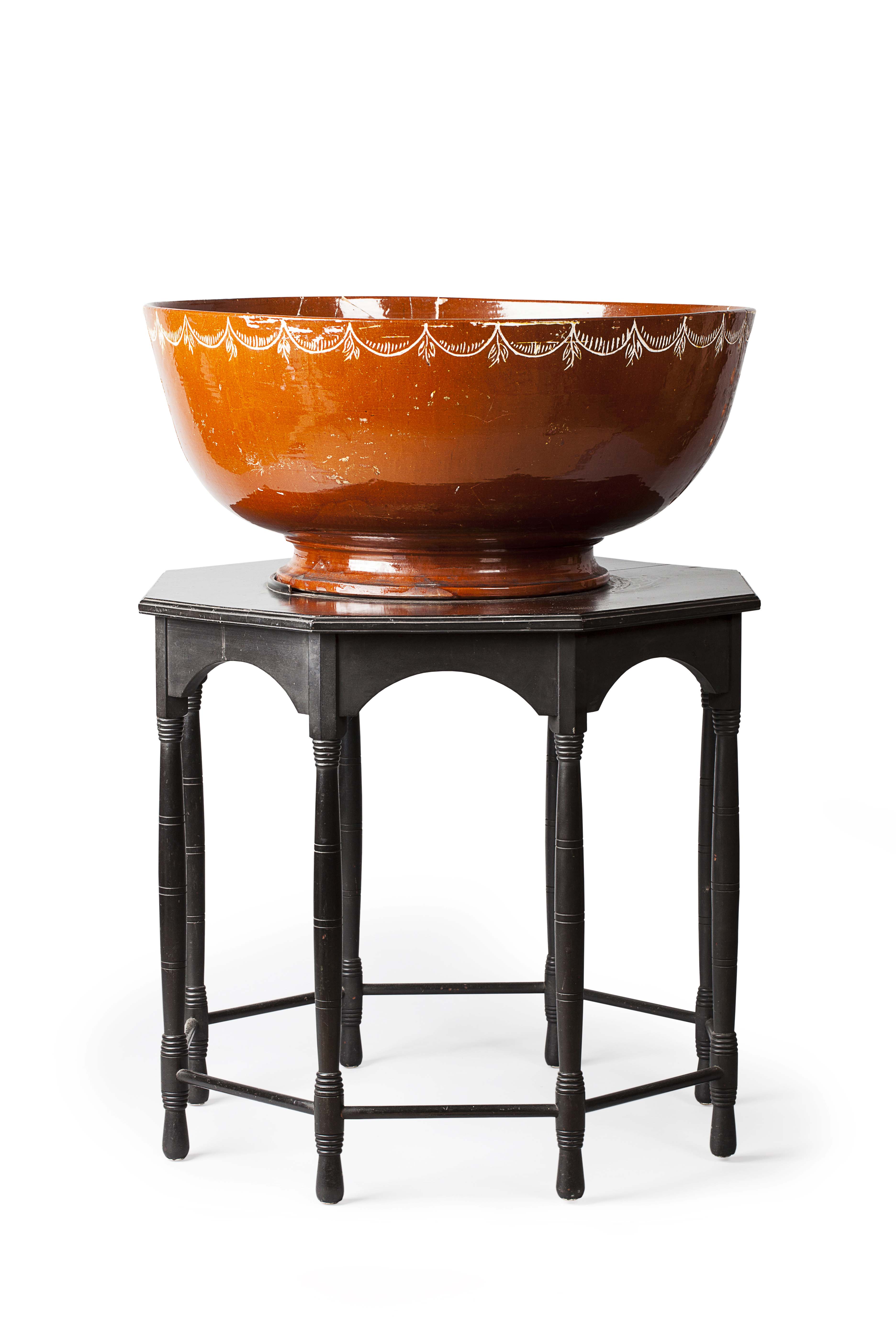
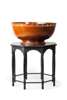
A LARGE & RARE PRESTONPANS CEREMONIAL LEADGLAZED REDWARE PUNCH BOWL
SIGNED AND DATED 1776

Scottish Applied Arts & Wemyss
Auction: 12 August 2015 at 12:00 BST
Description
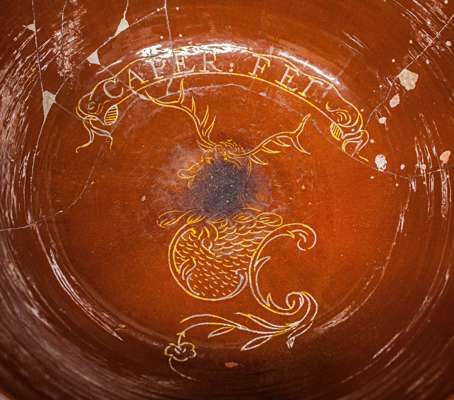
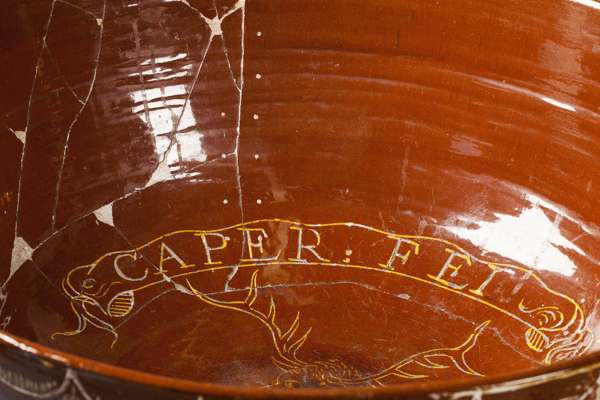
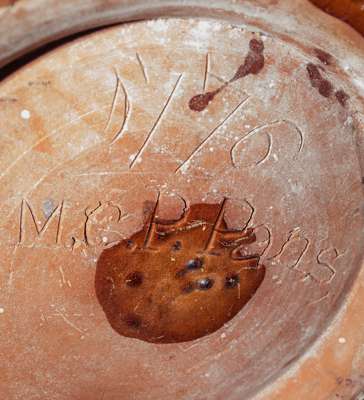
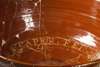
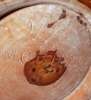
decorated with incised white slip-filled decoration, depicting a heraldic crest to the interior with motto CAPER FEY, and on its exterior with swags and tassels to the rim, the base inscribed 'M.C., P. PANS, 1776' in part below a glaze patch (broken and repaired); with ASSOCIATED LATE 19TH CENTURY EBONISED TABLE STAND, the octagonal top raised on turned legs linked by stretchers (2)
Dimensions
bowl, 78cm diameter
Footnote
Provenance: Dollerie House, Crieff
Note: This large punch bowl is believed to have come to Dollerie House in 1829, when Anthony Murray 10th of Dollerie married Georgina Murray of Ochtertyre. It is thought that Georgina brought much in the way of dowry and possessions upon her betrothal, including this piece. She was the great-granddaughter of George Mackenzie, 3rd Earl of Cromartie, whose family crest is depicted to the well of this punch bowl. Mackenzie was known for joining the Jacobite rebellion in 1745, with whom he served until April 1746 when he was arrested and taken prisoner following his prominent role in the Battle of Littleferry. Although he received a pardon and was not sentenced to death, he forfeited his peerage, estates and wealth which reduced him to extreme poverty, before his death in 1766. Mackenzie's youngest daughter, Lady Augusta married into the Murray family of Ochtertyre in 1770, and it is believed that this bowl passed to the Murray family through this connection.
The words 'Caper Fey' are a corruption of 'Cabar Feidh', which refers to the stag's head (or more correctly 'the deer's antlers') of the arms of the Mackenzie of Kintail and later the Earls of Seaforth. It was the 'by-name' of the Chiefs of Mackenzie. James Boswell in his 'A Letter to the People of Scotlan on the present state of the nation' (Edinburgh 1783) states on page 30 '….The caper-fey (the deer's head, of the crest (sic) of the Mackenzie's) was displayed….'
At the period this bowl was made there were three potteries in Prestonpans, one making coarse redwares and two whiteware potteries which also produced redwares. Given its size and quality, we can be fairly sure that this bowl which is in a more refined redware was thrown either at the 'Old Kirk Pottery' owned by William Cadell or the 'Bankfoot Pottery' owned by his nephew, also a William Cadell. That such an important bowl was produced in a local redfiring clay is not surprising as it would have been almost impossible to fire a vessel of this large size either in creamware or white salt glazed stoneware.