

Lot 198
Furber, Robert



Rare Books, Maps & Manuscripts
Auction: 4 September 2013 at 12:00 BST
Description
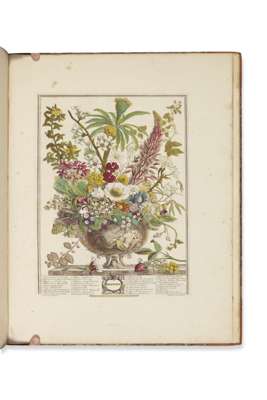
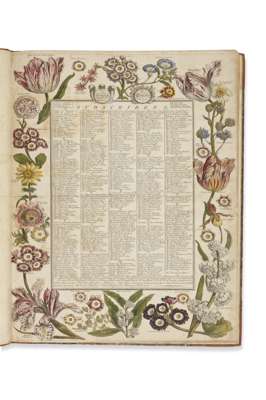
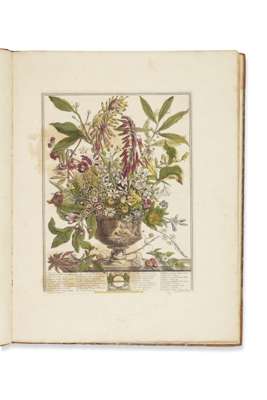
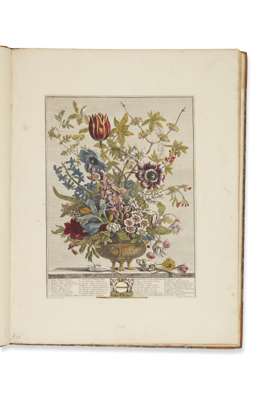
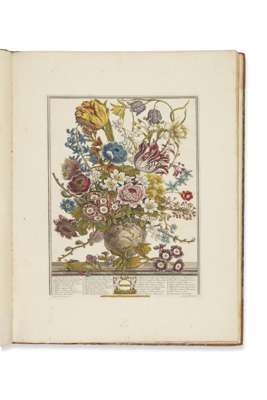
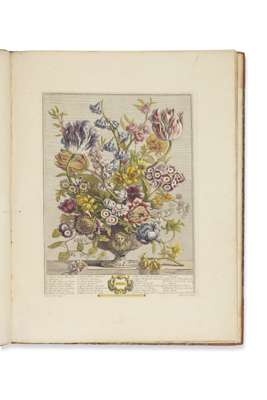
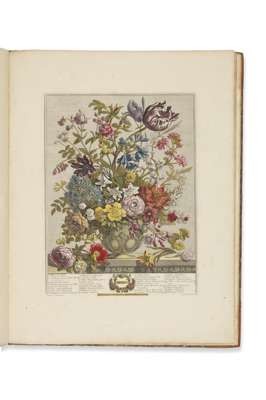
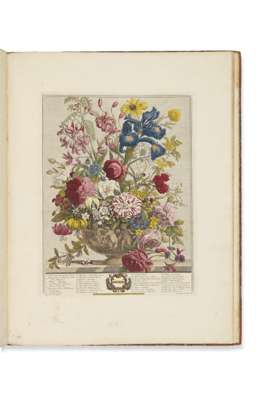
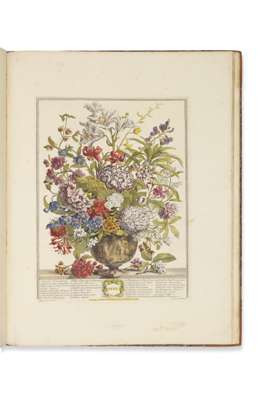
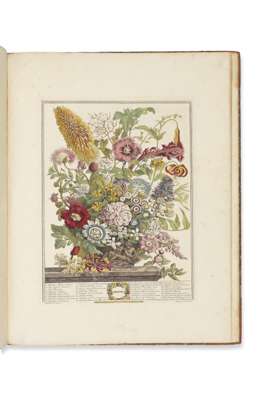
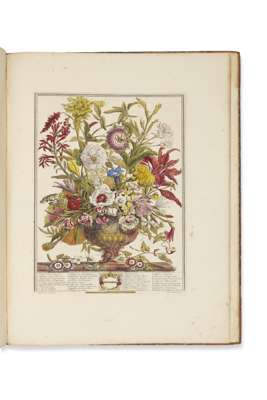
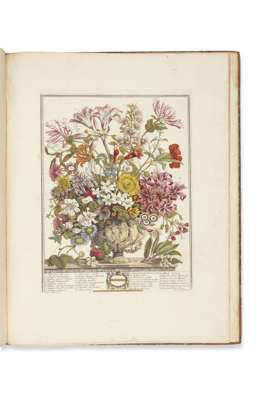
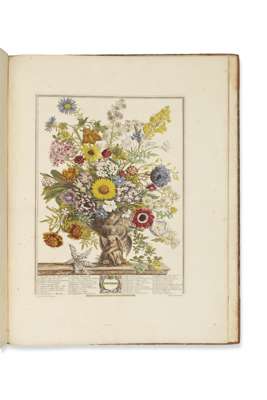
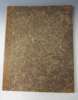
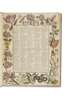
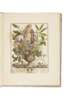
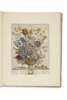
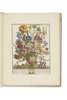
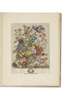
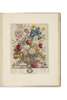
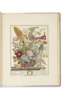
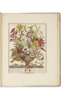
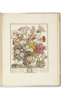
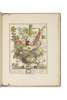
Twelve months of flowers. [London: 1730-32] Large folio, page dimensions 58.7x46cm, hand-coloured engraved list of subscribers within a floral border serving as title-page, 12 hand-coloured plates designed by Ptr Casteels and engraved by H. Fletcher showing flower arrangements, 19th century half calf with marbled sides, subscribers' list slightly dust-soiled and strengthened at margin on verso (with tiny loss of neatline at fore-edge), "January" plate slightly stained, a few small unobtrusive marginal repairs to interleaved blank leaves, some light spotting (predominantly marginal), occasional marginal pencil marks and the small letters "S-M" written in ink in one margin, around 2cm square area of final plate rubbed away, engraved areas predominantly clean, covers slightly rubbed, neatly rebacked and corners neatly repaired [Henrey 733; Dunthorne 113; Nissen 674]
Footnote
Note: In 1732, Robert Furber published Twelve Months of Flowers, described by Wilfrid Blunt as a "…de luxe plant catalogue…" It is difficult to picture the true extravagance of the work from this description. The catalogue is a large folio and is often thought of as the first illustrated nurseryman's catalogue in England, with thirteen intricately hand-coloured plates. These comprise a list of subscribers and twelve leaves showing elaborate flower arrangements of species which bloom in each particular month. Each flower is accompanied by a small number, which is referenced with the name of the plant at the foot of the page. Claus Nissen's bibliography, Die Botanische Buchillustration, counts four hundred illustrated flowers. When it is taken into account that each engraving has been laid out as a still-life composition, arranged carefully within vases, in the manner of a Dutch flower painting, and then each flower on every page of every copy of the work has been carefully hand-coloured, the outstanding calibre of this 'catalogue' begins to take shape.
Furber was a nurseryman, based in what is now the London district of Kensington (although this was outside the city in the 1730s) and it was from this very catalogue that the wealthiest of patrons would order new plant material. A list of 450 subscribers to the catalogue is headed by 'His Royal Highness Frederick, Prince of Wales' and 'The Princess Royal' and features names such as the Duchess of Queensbury, the Earl of Pembroke and the Marquis of Tweedale. Robert Furber had an impressive clientele and his 'de luxe' catalogue is testimony to this. Indeed, in the early 1730s, when William Kent was laying out the garden for Carlton House, newly sold to the Prince of Wales, Furber was brought in to supply some of the flowers (although Richard Butt was the primary supplier of trees and shrubs). However, the catalogue does not feature any prices for flowers, and it has been suggested that the reason is simply that this would have been considered distasteful by the subscribers.
Furber's catalogue also reveals the contemporary trends in flowers: there are twenty-six varieties of auricula illustrated, making it the most popular flower. The anemone comes in second, and the hyacinth and rose follow. 'Exotic' plants also feature: twenty-five American plants are depicted, including a Virginia aster. The flowers often take their names from the names and titles of varying members of upper class society: for example, in 'April', one can find a 'Duke of St Albans auricula'. In 1719, this naming trend had led to a comment in Richard Bradley's New Improvements of Planting and Gardening:
The numerous Varieties of these Flowers are all distinguished by the Names and Titles of Great Men; and I have often thought of a Pleasant Expression of a Friend of mine concerning these Flowers and their Extravagant Prices, "That the Auriculas increased so fast, and the Great and Wise Men decreased so fast, that in a short time this Tribe of Plants would want Men of note to take their Names from.
Information from: Blunt, Wilfrid and Stearn, William T. The art of botanical illustration; Dunthorne, Gordon. Flower and fruit prints of the 18th and early 19th centuries; Nissen, Claus. Die botanische buchillustration… ; Laird, Mark. The culture of horticulture...; Hervey, John. Early gardening catalogues