

Lot 152
Mount Wilson Solar Observatory
Rare Books, Maps & Manuscripts
Auction: 7 September 2011 at 12:00 BST
Description
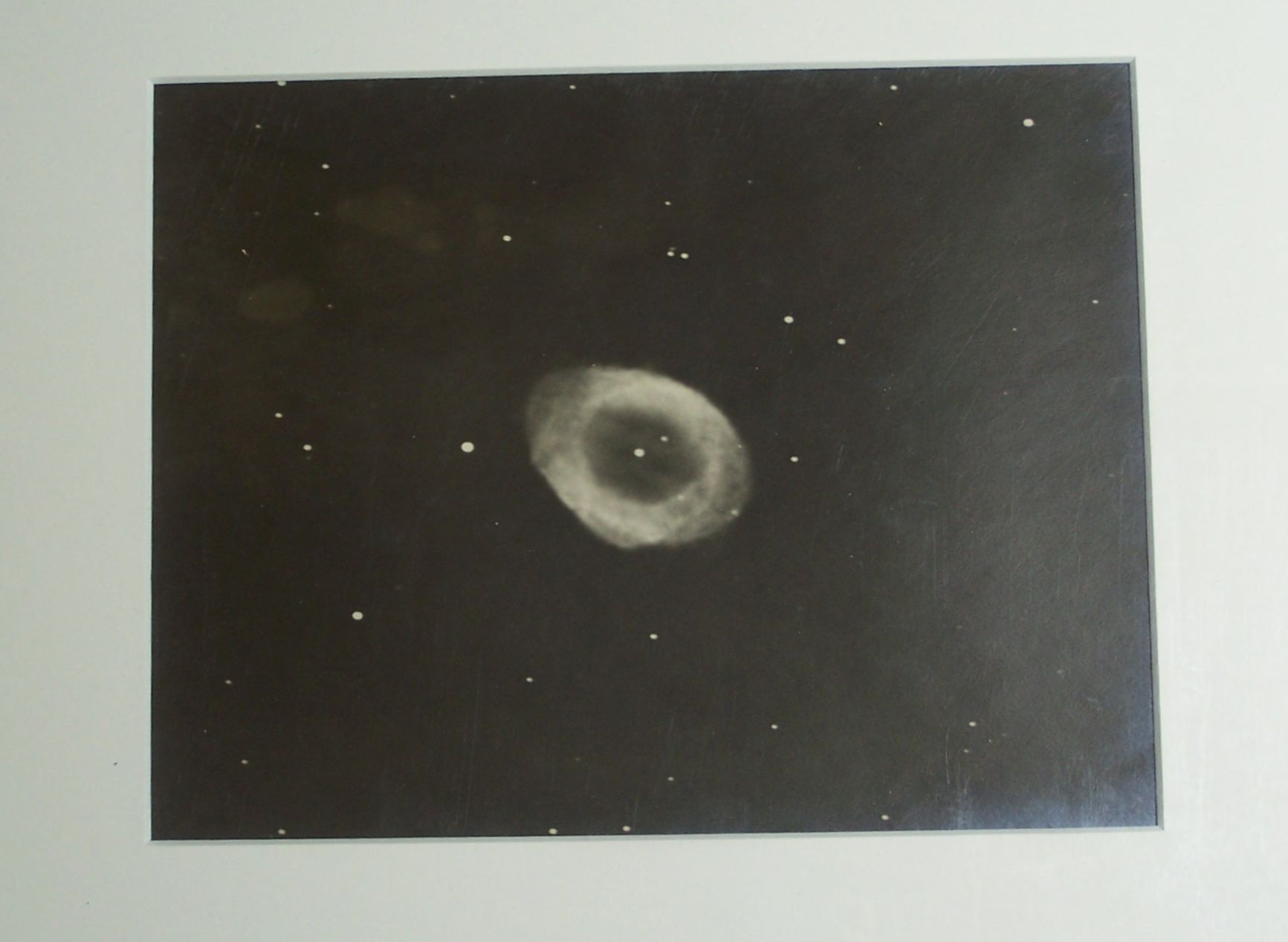
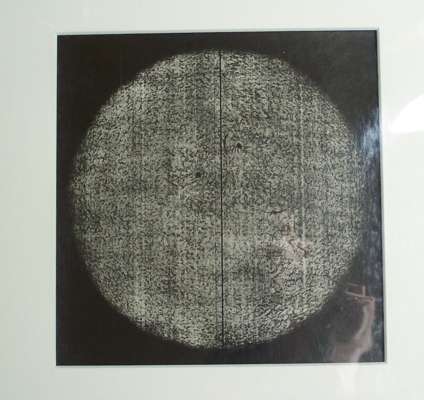
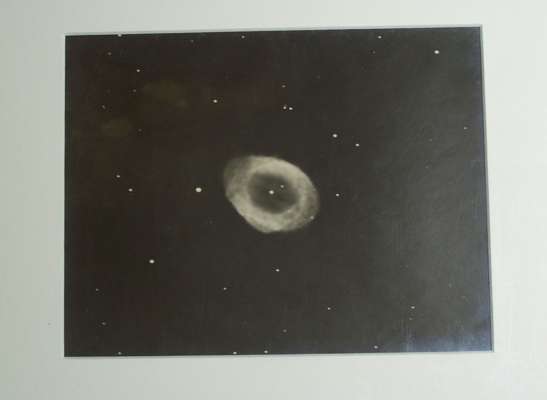
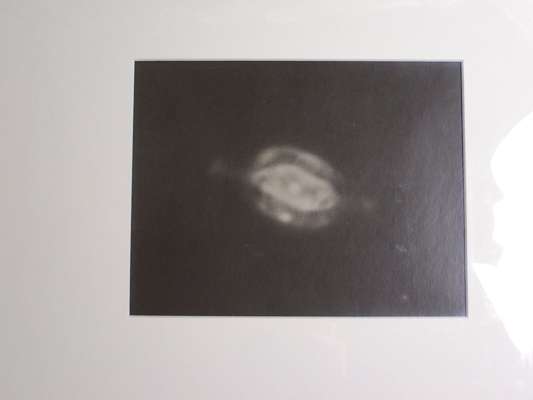
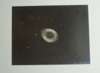
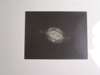
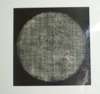
Planetary nebula, the sun and ring nebula in Lyra. Three studies, 1908-1921, 19 by 24cm, 19.5 by 19.5cm, and 19 by 24cm respectively, comprising 'G 33. Planetary Nebula N.G.C. 7009, exposure 3 ½ hrs., July 13, 1912', 'B 7. The Sun, October 7, 1908. Ha Hydrogen' and 'Ring Nebula in Lyra. Made with 100" Hooker Telescope', silver bromide prints, the first two titled and credited to Mount Wilson Solar Observatory on printed labels on the reverse, the third titled in pencil on the reverse (3)
Footnote
Literature:
Planetary Nebula' illustrated L. Rudaux & G. de Vaucouleurs 1948, p. 364.
Ring Nebula reproduced L. Rudaux & G. de Vaucouleurs 1948, p. 365, with the caption 'La Nébuleuse Annulaire M 57 de la Lyre est le prototype des Nébuleuses planétaires. Observatoire du Mont-Wilson, Télescope de 2m, 50, pose 1 heure, 1921'.
Note: The Mount Wilson Observatory was established in 1904 by George Ellery Hale, with funding by the Carnegie Board of Trustees. Born in Chicago in 1868, Hale was fascinated by space from an early age, building his own telescope when just a child. As a student in 1890-91, he invented the Spectrohelioscope, an instrument which would revolutionise knowledge of the Sun's activities.
The Planetary Nebula of this lot was taken by George W. Ritchey who, prior to working at the Mount Wilson Solar Observatory, had already collaborated with George Ellery Hale at the Yerkes Observatory, William's Bay, Wisconsin. Ritchey built the 60 inch (1m 50) telescope and later the large 100 inch (2m 50) telescope at Mount Wilson. Planetary Nebula was first observed by Sir William Herschel in 1782. In 1850 it was named 'Saturn Nebula' by Lord Ross in his work Observations on Nebula because, looking at it through his 182cm telescope, Ross saw it as a miniature replica of the planet Saturn.