

Lot 416
Rackham, Arthur
Rare Books, Manuscripts, Maps & Photographs
Auction: 28 January 2015 at 11:00 GMT
Description
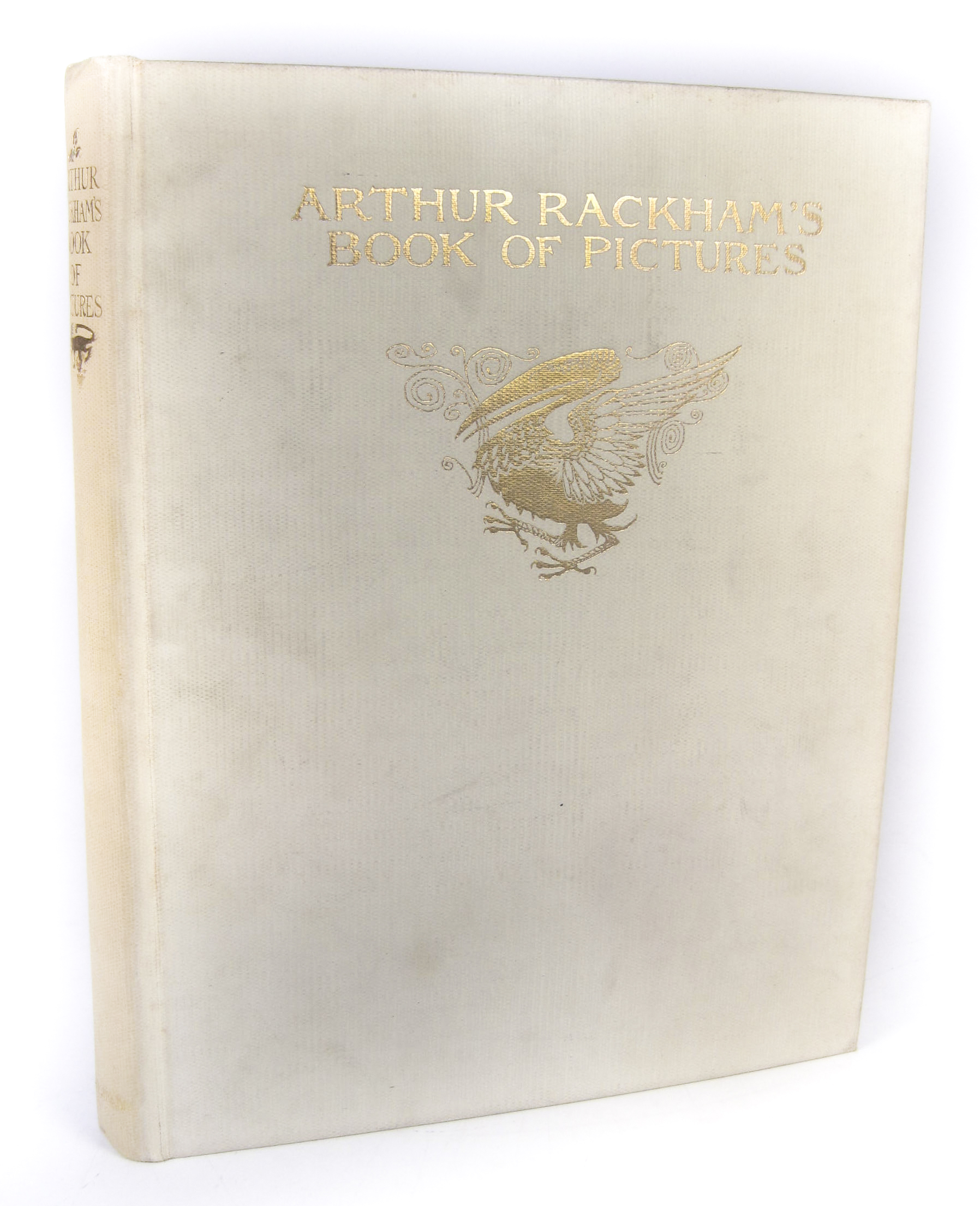
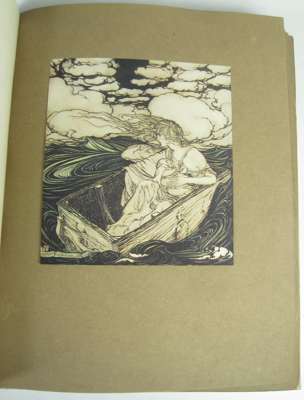
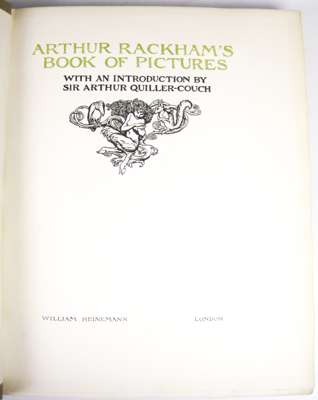
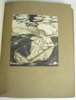
Arthur Rackham's book of pictures... London: William Heinemann, [1913] 4to, number 726 of 1030 copies signed by Arthur Rackham, 44 tipped-in colour plates by Rackham, original cloth gilt
Footnote
Note: The most famous and arguably the most important figure in the 'golden age of illustration' was Arthur Rackham, born in London in 1876. Despite displaying artistic talent at school, he became a clerk at the age of 18, studying at the Lambeth School of Art in his spare time. In 1829 he left this employment for the uncertain world of illustrating; working regularly as a reporter for the Westminster Budget he was able to tackle the burgeoning book market. His first illustrations, which were for non-fantasy subjects, were distinctly traditional. During the 1890s several books followed on subjects such as hunting, fishing and sports, as well as two children's books, but all were executed without the wonderful style he was to become famous for. Then in 1900 he illustrated The Fairytales of the Brothers Grimm, a work in which he evidently pushed himself and imparted his personality. It would be another five years before he could truly unleash his unique expression, and although projects during these years were for mundane subjects, his style was developing.
His work then blossomed with 51 painted colour plates for Rip van Winkle (see lot 444), filled with the traits he was to become renowned for. Possessing a form of expression perfectly suited to the Victorian society, he was able to convey a sense of thrill without an unnerving threat and beauty that was not lewd. His techniques had a deft touch that gave his work a mischievous charm: forests of looming trees and grasping roots; sensuous yet chaste fairy maidens; backgrounds steeped with hidden imagery, and all executed with soft muted watercolours defined by a black ink line.
After Rip van Winkle his career was hugely successful, notably with Peter Pan in Kensington Gardens (se lot 432) and Alice's Adventures in Wonderland (see lot 418). His pages have preserved a sense of Victorian society: its ethos and nostalgia for childlike magic. The antithesis of the industrial advances that would enable mass production of illustrated books, his work is a reminder of the innocence that would be lost after the First World War.