

Lot 66
Chapman, Frederik Henrik af
Rare Books, Manuscripts & Photographs
Auction: Rare Books, Manuscripts & Photographs | 09 May 2007
Description
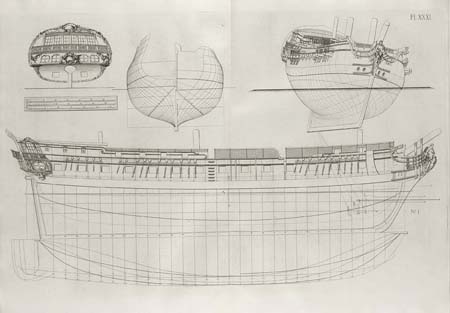
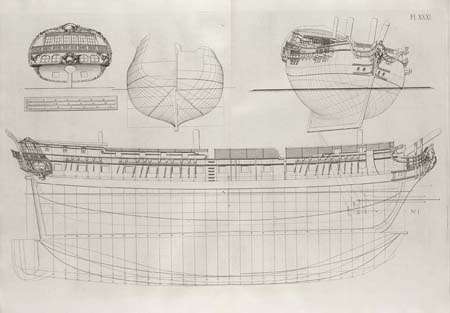
Architectura navalis mercatoria. Stockholm, 1768, folio (53 x 40cm.). First edition, double-page engraved title, double-page engraved dedication leaf, 3 double-page leaves of index of the plates in Swedish, French and English, and 62 double-page engraved plates (each plate 53 x 76.5cm), paper watermarked J. Honig & Zoon and C. & I. Honig, late nineteenth century black morocco-backed marbled boards, lettered in gilt on spine, binding slightly rubbed
Footnote
Note: An exceptionally clean copy of the most famous eighteenth century work of naval architecture.
Frederik Henrik af Chapman, universally acknowledged as the father of naval architecture, was born in 1721, the son of a British Naval officer who had joined the Royal Swedish Navy in 1716, and an English mother, Susanna Colson, the daughter of a London shipwright. He spent long periods in France, Germany, Denmark, the Netherlands and England studying naval architecture before eventually settling in Sweden where he devoted himself to naval architecture and ship building. In 1765 he took leave of absence from his work as chief naval architect for the Swedish Archipelago Fleet based at Sveaborg (off Helsinki) to devote himslf for two years to Architectura navalis mercatoria which, in Chapman's view, exemplified the best and most interesting vessels of the time. The 62 copper engravings depict vessels and craft from both Sweden and abroad. Some were designed by Chapman himself, but many of them were vessels or types which he had encountered on his travels or seen around him, and which had attracted his interest. The book covers everything from warships to cargo boats and small fishing craft, and the plates are remarkable for their clarity, detail and beauty. The text describing the plates was not published until seven years later as one of the chapters in a book entitled Tractat om Skeppsbyggeriet.
A very rare work, only four copies held by British institutional libraries (Cambridge, Glasgow, British Library and University of London).