

Lot 279
Stapleton, Thomas
Rare Books, Manuscripts & Photographs
Auction: Rare Books, Manuscripts & Photographs | 09 May 2007
Description
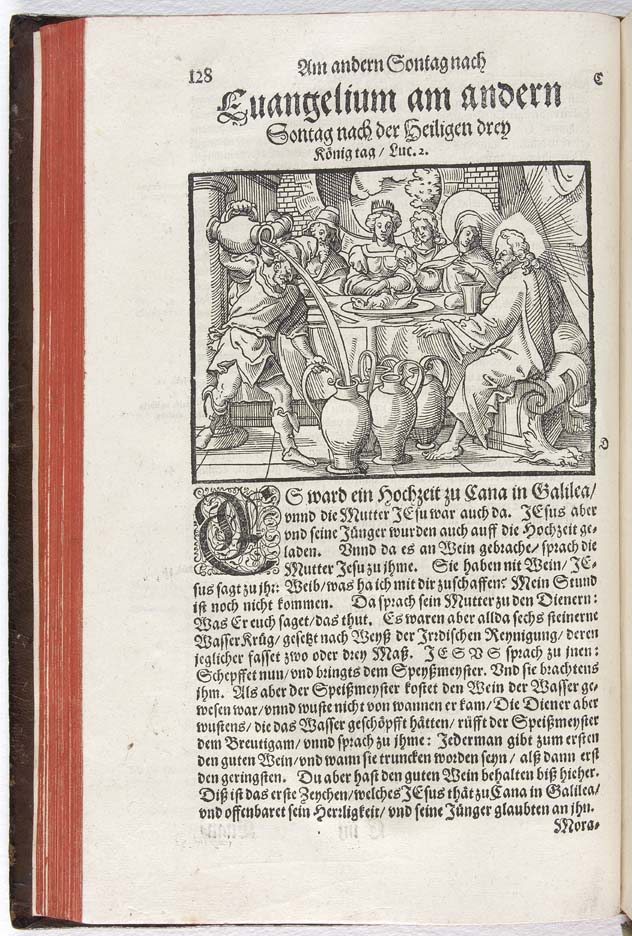
Promptuarium morale, Das ist Sittliche Speisskammer darinnen heylsame Lehren, Gottselig... Ingolstadt: Wolffgang Eder, 1597, 2 volumes in 1, folio, Gothic letter, woodcut printer's device on both title-page of Justice (slightly different) within frame, red and black title on first, numerous calligraphic initials, grotesque head and tailpieces, 52 1/3 page biblical woodcuts, three repeated, one signed 'HF', 1 full-page of the Crucifixion, contemporary mottled calf, joints slightly rubbed, spine richly gilt, six raised bands, edges tooled, marbled endpapers, two green silk page markers, very minor marginal foxing not touching text, at beginning and end, small ink stain in Ee5 of volume I affecting a few letters on verso, little tear and tiny wax stains in t6 of vol. II with loss of a couple of letters on verso
Footnote
Note: Allison & Rogers 1 1243 (variant); Shaaber S 343. Not in Adams, BM STC German Books, Gillow or Milward.
First German translation of this monumental theological work in two parts by Thomas Stapleton (1535-98), of Winchester and New College, Oxford, one of the most skilful controversialists of the Elizabethan Age. Originally published in Latin in Antwerp in 1591, it contains commentaries on the Epistles and Gospels for the different seasons of the liturgical year, with a particular view to preparing the 'concionatores' or priests to deal with the heresies of the time and especially Lutherans, in their sermons. The pages are adorned with numerous woodcuts illustrating biblical events such as the Wedding in Cana or the Women at the Holy Sepulchre, possibly by Hiéronymus Fondesendi from Mecheln, according to the initials 'HF' (Nagler III 908), Flemish painter and engraver on wood of the 16th century (Benezit IV p. 420).
Provenance: 18th century ms ex libris of "J. Ritter" on first title-page, other signatures crossed out. Jean Daniel Ritter (1709-1775), German scholar, of a noble Dutch family, was professor of philosophy in Leipizig and of history and law in Wittemberg.