

Lot 189
Rousseau, Jean-Jacques
Rare Books, Manuscripts & Photographs
Auction: 16 January 2008 at 11:00 GMT
Description
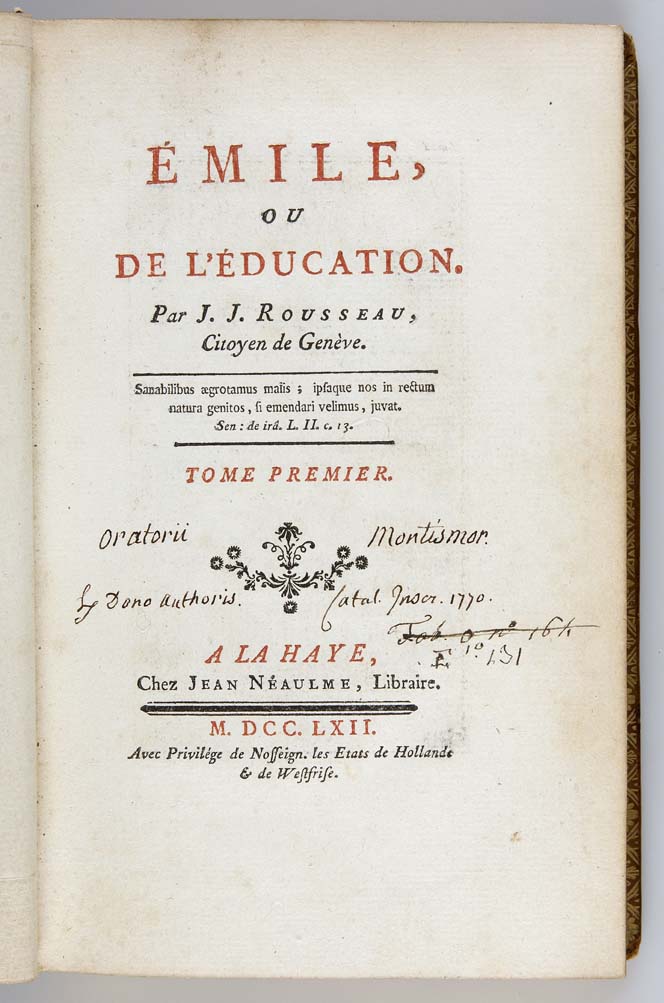
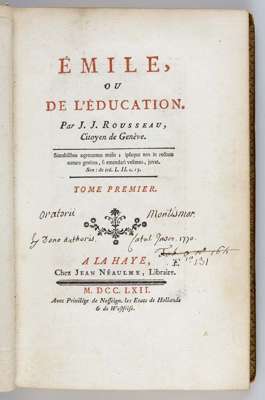
Émile, ou de l'éducation. The Hague: Jean Néaulme, [i.e. Paris, Nicolas-Bonaventure Duchesne], 1762, 4 volumes, 8vo, first edition, presentation copy from Jean-Jacques Rousseau with autograph letter from the author tipped in at beginning, title-pages printed in red and black, 2 privilege leaves and one errata leaf for vols. 3-4 bound at the end of vol. 1, half-title in volume 2-4 as called for, 5 engraved plates after C. Eisen by J. D. de Longueil, L. le Grand and J.-J. Pasquier, volume 3 with blank leaf Z4, with the four usual cancels in volumes 1 and 2, variant Thétis plate with no title (added by hand), contemporary French mottled calf, triple gilt fillet on sides, spines gilt, g.e., rubbed, upper cover of volume 1 detached, corner of H6 volume 3 burnt not affecting text
Footnote
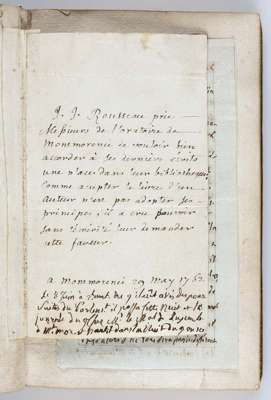
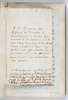
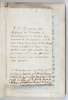
Note: With an unrecorded letter from Jean-Jacques Rousseau to Monsieur de Muly [Maley], Supérieur de l'Oratoire à Mommorenci [Montmorency]: "J.J. Rousseau prie Messieurs de l'oratoire de Mommorenci de vouloir bien accorder à ses derniers écrits une place dans leur bibliotheque; comme accepter le livre d'un auteur n'est pas adopter ses principes, il a cru pouvoir sans témérité leur demander cette faveur. A Mommorenci 29 Mai 1762", with a short note at foot in a later hand
With a near contemporary transcript of a letter dated 16 Jan. 1763 from Rouseau to Baudoin-Cyprien-Antoine Dumoulin, published in Correspondence Complet de Jean Jacques Rousseau, Tom. 15, p.41, the original in Avignon, Bibliotheque Calvet, MS2702, folio 52-53.
A rare presentation copy of the first octavo edition printed in Paris, published in late May 1762, concurrently with the 12mo edition. According to Jo-Ann McEachern the greater part of the duodecimo was imposed and printed before the octavo printing. However the preface and titles were printed initially in the octavo format, and it was the octavo that Rousseau received first and was the first to be distributed on 23 May 1762.
Rousseau's educational treatise expounded his personal deist views, earning him the wrath of both clergymen and philosophers. The Parlement of Paris condemned both book and author, forcing Rousseau to flee France. However, despite the religious controversy it provoked, Emile fostered the Romantic movement's heightened appreciation of nature and strengthened the concept of the "noblesse sauvage." J.A. McEachern Bibliography of the writings of Jean-Jacques Rousseau, vol. 2:1a; cf. Tchemerzine 10.46
Provenance: Three titles with contemporary inscription "Oratorii Montesmor, ex dono authoris, Catal. invent. 1774, Tab. O11, 16, E1.131"