Lot 132
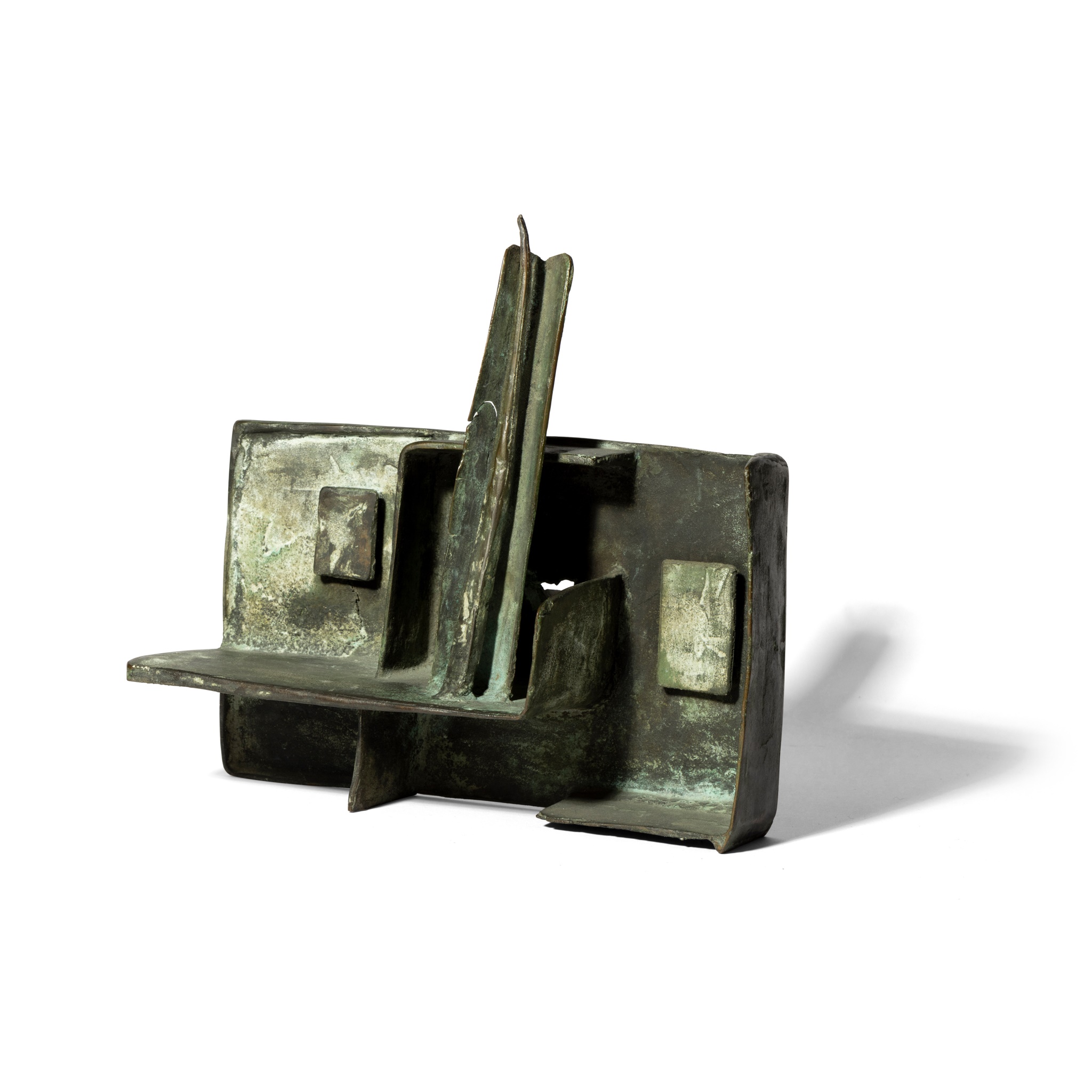
Geoffrey Clarke R.A. (British 1924-2014) §
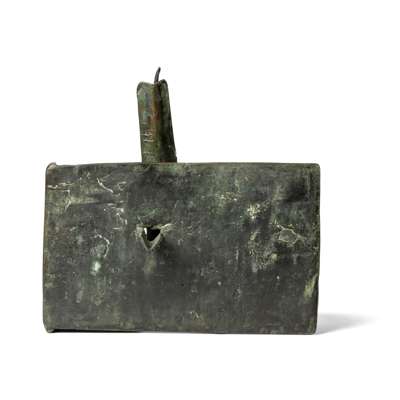
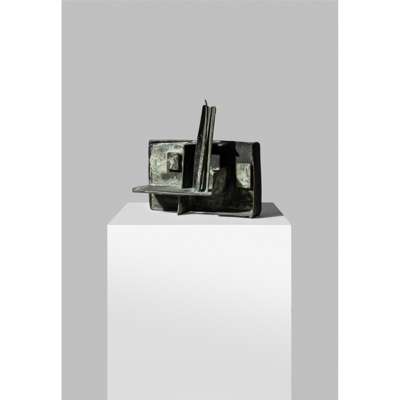
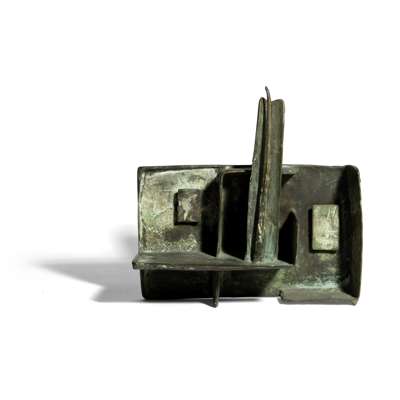
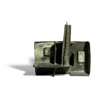
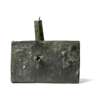
Façade (Man as a Fortress), 1958 (S151)
Auction: 28 April 2023 at 11:00 BST
Description
edition of 4, bronze
Dimensions
28.5cm high, 29cm wide, 11cm deep (11 1/2in high, 12in wide, 4 3/4in deep)
Footnote
Literature
LeGrove, Judith, Geoffrey Clarke Sculptor: Catalogue Raisonné, London: Pangolin & Lund Humpries, 2017, p. 62, cat. no. S151, illustrated;
LeGrove, Judith, Geoffrey Clarke: A Sculptor's Materials, Bristol: Sansom & Company, 2017, p.129, illustrated.
Exhibited
Arts Council Touring Exhibition, Sculpture in the Home, 1958, no. 10 (another cast);
James Hyman Fine Art, London, Henry Moore and the Geometry of Fear, November 2002 - January 2003, no. 15 (another cast);
Pangolin, London, Geoffrey Clarke: A Decade of Change, September - October 2013 (another cast);
Pangolin, London, Conjunction: Lynn Chadwick & Geoffrey Clarke, October - November 2013 (another cast).
Judith LeGrove, Geoffrey Clarke's biographer, has written about this sculpture, describing it as '...a work in bronze: a rectilinear construction, with walls and a mast, cast in summer 1958...He constructed sections from wax sheet, from which moulds were made, casts taken, and the components welded as a potential edition of four. Some casts were smoother and more regular than others indicating a degree of variation...welcomed by Clarke...Despite its apparent abstraction, the sculpture literally had a heart: a cut-out barely concealed behind its protective spike. Clarke circled the issue of naming ('I think that the actual association of the word 'Man' in the title may lead to the spout shape being misunderstood!! How about 'Façade', 'Barrier' or 'Shield'?')...He clearly envisaged the work as a 'symbol for man'...In so doing he was radically rethinking the figure.' (Judith LeGrove, Geoffrey Clarke: A Sculptor's Materials, Sansom & Company, Bristol, 2017, p.129)
Innovative sculptor Geoffrey Clarke (1924 – 2014) experimented readily with materials throughout his lifetime, moving away from a figurative focus which for many years dictated his study to a more abstract direction. His fearless experiments and bold sculptures epitomised the vivacity of the post-war art scene in Britain. A graduate of London’s Royal College of Art, Clarke was acknowledged as one of the few British sculptors who actively encouraged the practice of cooperation and synergy between sculptors and architects. Characteristically monumental and large in scale, his output notably included the combined use of aluminium, stained glass, mosaic and enamel.
Taking advantage of the post-war architectural boom, Clarke was known in his early years for his iron, wire and plaster works. One of the first artists to use welding in his sculptures, Clarke experimented readily with processes, trialling different modes of making which were both more cost and time effective. Often building an initial ‘skeleton’ in his sculptures, his process was undeniably influenced by anthropomorphism. Reducing the human figure to a curvilinear sculpture in his work, this technique remained in line with the rise of sculptors looking to develop a more meaningful sculptural language.
In 1952, Clarke’s fame was cemented when he was selected by the Arts Council for the inclusion in the landmark exhibition of British sculpture at the Venice Biennale. Attaining several subsequent awards in the years which followed, Clarke rapidly became one of the most frequently commissioned architectural sculptors of the mid-twentieth century. A notable public commission being his work on the windows of Coventry Cathedral, which showcased his stained-glass abilities.