Lot 50
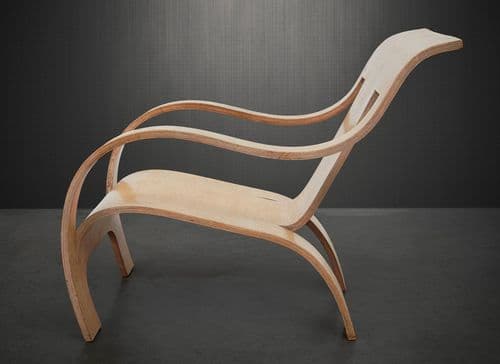
GERALD SUMMERS (BRITISH 1899-1967) FOR MAKERS OF SIMPLE FURNITURE
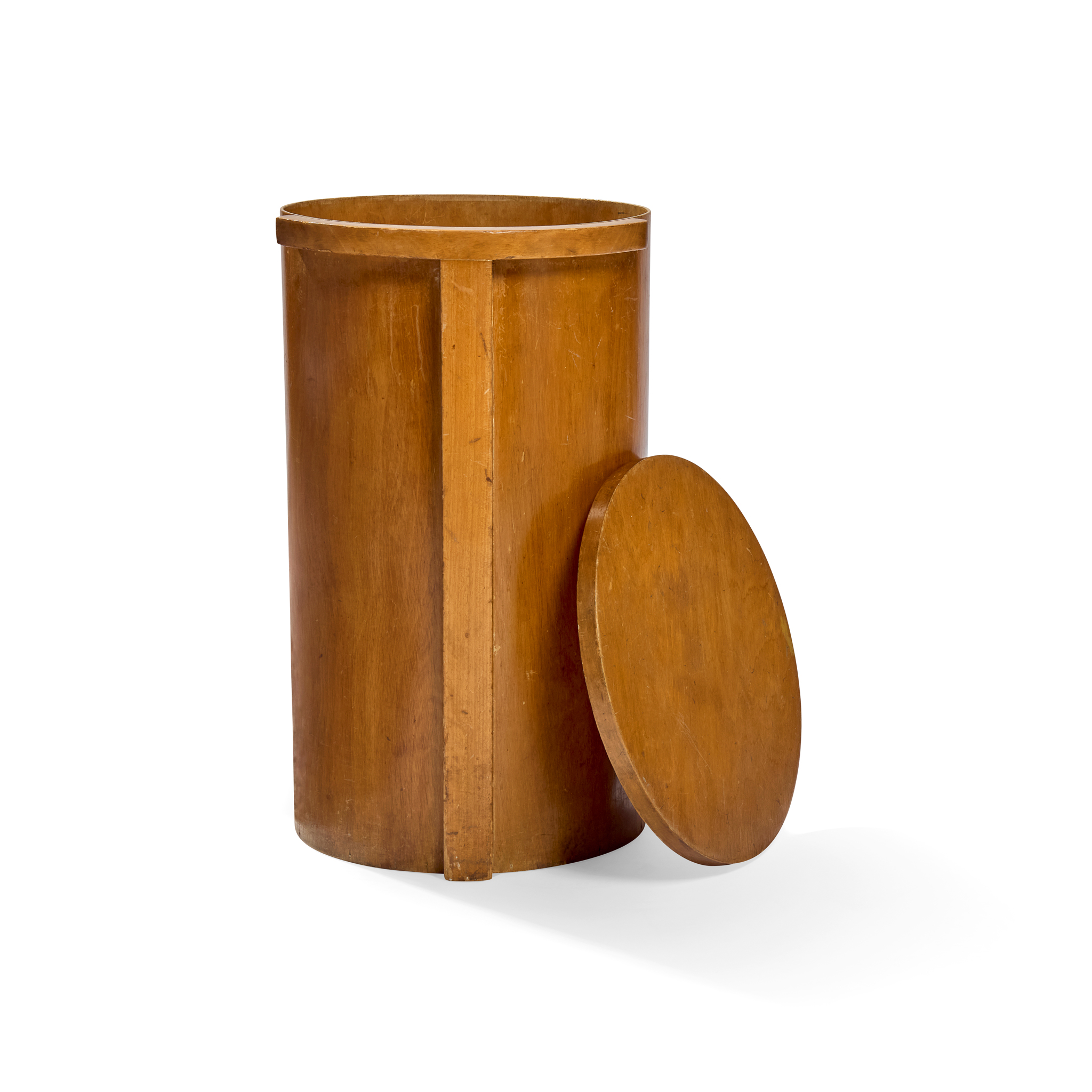
WASTE PAPER CYLINDER / STOOL, c.1935
Auction: 30 October from 10:00 GMT
Description
birch plywood
Dimensions
52.2cm high, 32.7cm diameter (20 ½in high, 12 7/8in diameter)
Provenance
Private Collection, U.K.
Footnote
Literature:
Furnishing Trades Organiser Publication, 1935, for similar example illustrated of a waste paper cylinder without lid in a library;
Deese, Martha, Gerald Summers & Marjorie Butcher: Makers of Simple Furniture 1931-1940, Hatje Cantz, Berlin, 2024, p.340, for similar example of waste paper cylinder without lid.
The waste paper cylinder is a well-documented design by Gerald Summers; however, examples incorporating a fitted lid are previously unrecorded, making this an exceptionally rare variant. The addition of the lid transforms the design into a versatile dual-purpose object, allowing it to function equally as a small table or stool.
Research has demonstrated that the method of construction is entirely consistent with Summers' wider body of work. The lid is secured by a recessed plywood disc that fits precisely within the cylinder, employing the same ingenious solution found on Summers' centre pedestal table, where a plywood disc beneath the upper tier slots securely into the cylindrical pedestal in much the same manner as a cork fitting into a bottle. This distinctive constructional detail provides compelling evidence that the lid was conceived as an original element of Summers' design, rather than a later adaptation, further illustrating his continual refinement of existing forms to enhance both functionality and economy of manufacture.
The adaptation also reflects Summers' characteristic approach to design. Throughout his career he continually revisited existing models, refining them to improve practicality while simplifying manufacture. The transformation of the cylinder into a dual-purpose waste paper basket and stool with a fitted lid is entirely in keeping with this philosophy, illustrating his enduring interest in creating versatile, economical furniture through intelligent engineering rather than unnecessary complexity.
We would like to thank Martha Deese for her assistance in cataloguing this work.