Lot 40
ERNEST BRANDER MUSMAN (BRITISH 1888-1972) FOR GORDON RUSSELL LTD.
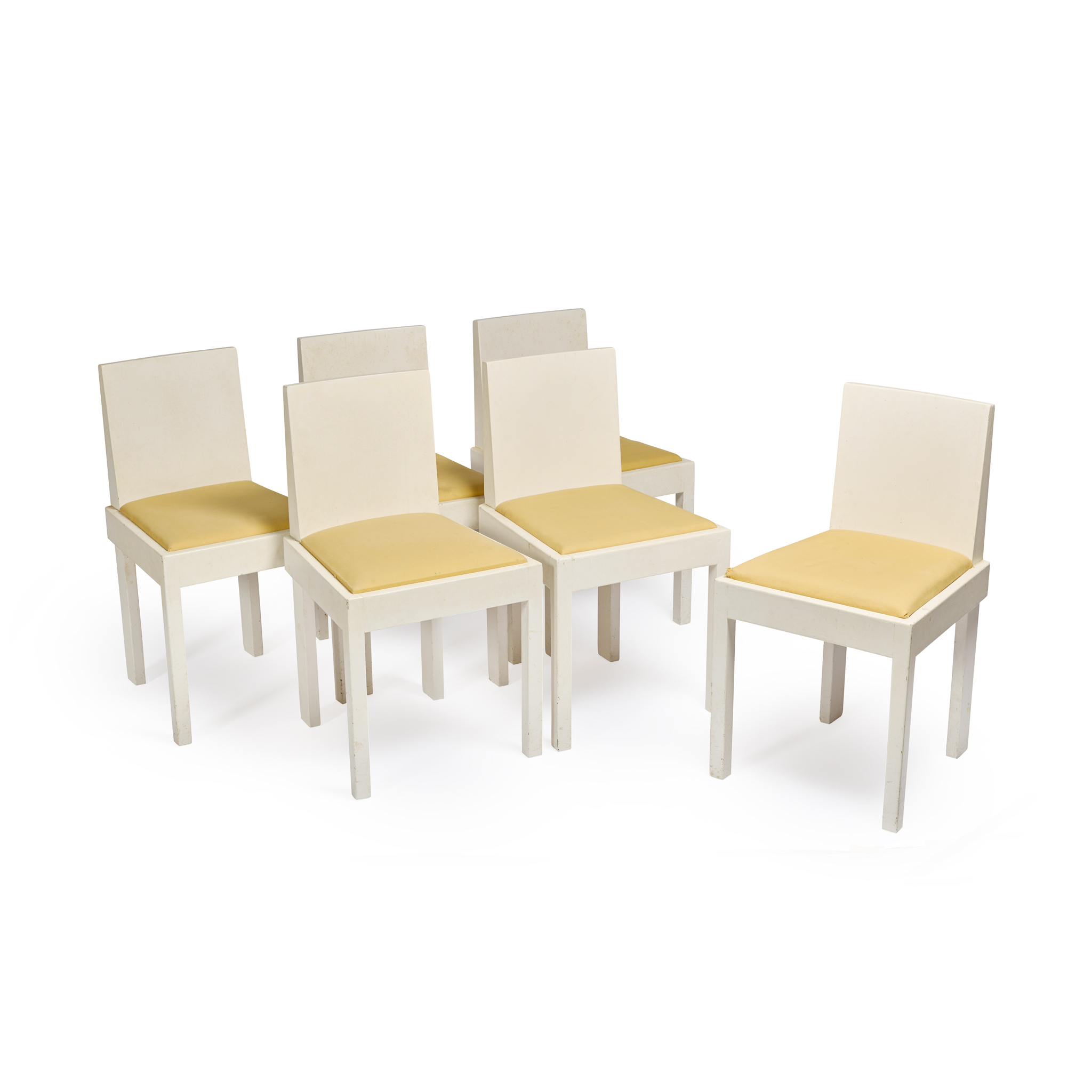
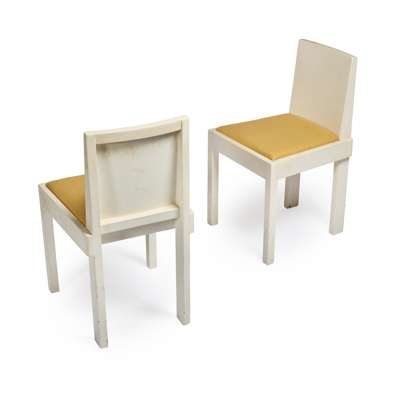
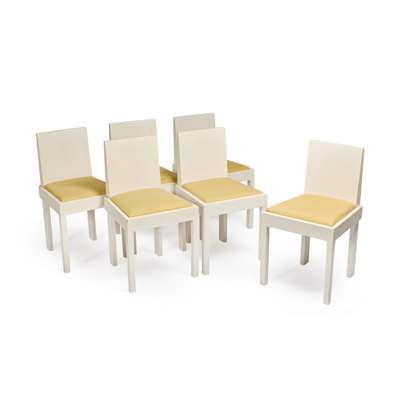
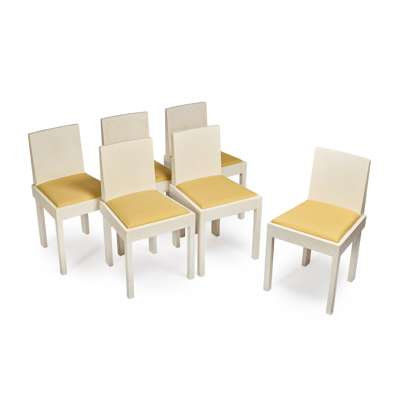
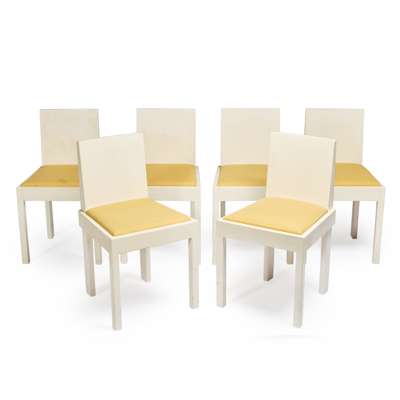
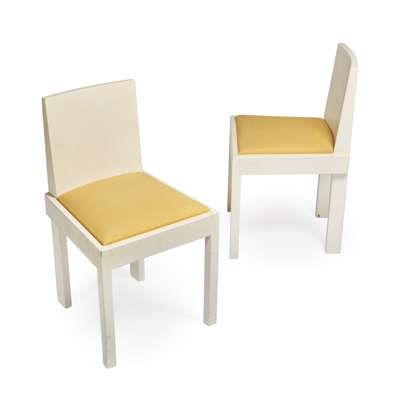
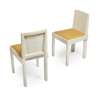
SET OF SIX CAFÉ CHAIRS, c.1933



Auction: 30 October from 10:00 GMT
Description
white painted wood with drop-in upholstered seats
Dimensions
76cm high, 43cm wide, 44cm deep (30in high, 17in wide, 17 ¼in deep) (6)
Provenance
Acquired by Dorothy Whitney Elmhirst, c.1934 for flat at 42 Upper Brook Street, London;
The Dartington Hall Trust, Devon.
Footnote
Literature:
Design for To-Day, June 1933, p.iii, similar examples illustrated in advertisement;
Architecture Illustrated, December 1934, p.197, illustrated in the dining room of Elmhirsts' London flat, at 42 Brook Street, London.
These chairs were designed and manufactured by Gordon Russell Ltd. in collaboration with the architect Ernest Brander Musman for the clubroom of the Ace of Spades roadhouse on the Kingston By-Pass, one of the defining examples of Britain's emerging modern roadside architecture of the early 1930s. Musman was an influential architect and designer whose work embraced the modern ideals of architecture, interiors and furniture as a unified whole. His collaboration with Gordon Russell on the Ace of Spades club produced an interior that combined contemporary aesthetics with practical, well-crafted furnishings, reflecting the progressive spirit of inter-war British design. The chair was advertised by Gordon Russell in the June 1933 issue of Design for To-Day and can be identified in contemporary photographs of the Ace of Spades, as well as in surviving British Pathé film footage of the building.
The present chairs were acquired by Leonard and Dorothy Elmhirst for the dining room of their London residence at 42 Upper Brook Street, remodelled by the architect Serge Chermayeff in 1933–34. They are illustrated in the feature on the house published in the December 1934 issue of Architecture Illustrated, where they formed part of one of the most refined and forward-looking domestic interiors of the period.
The chairs were subsequently transferred by the Elmhirsts to Dartington Hall, where they remained as part of the furnishings of the estate. Their provenance establishes a fascinating journey from one of Britain's most iconic modern commercial interiors, to the Elmhirsts' London home, and finally to Dartington, placing them firmly within the story of progressive British architecture, design and patronage during the 1930s.