Lot 161
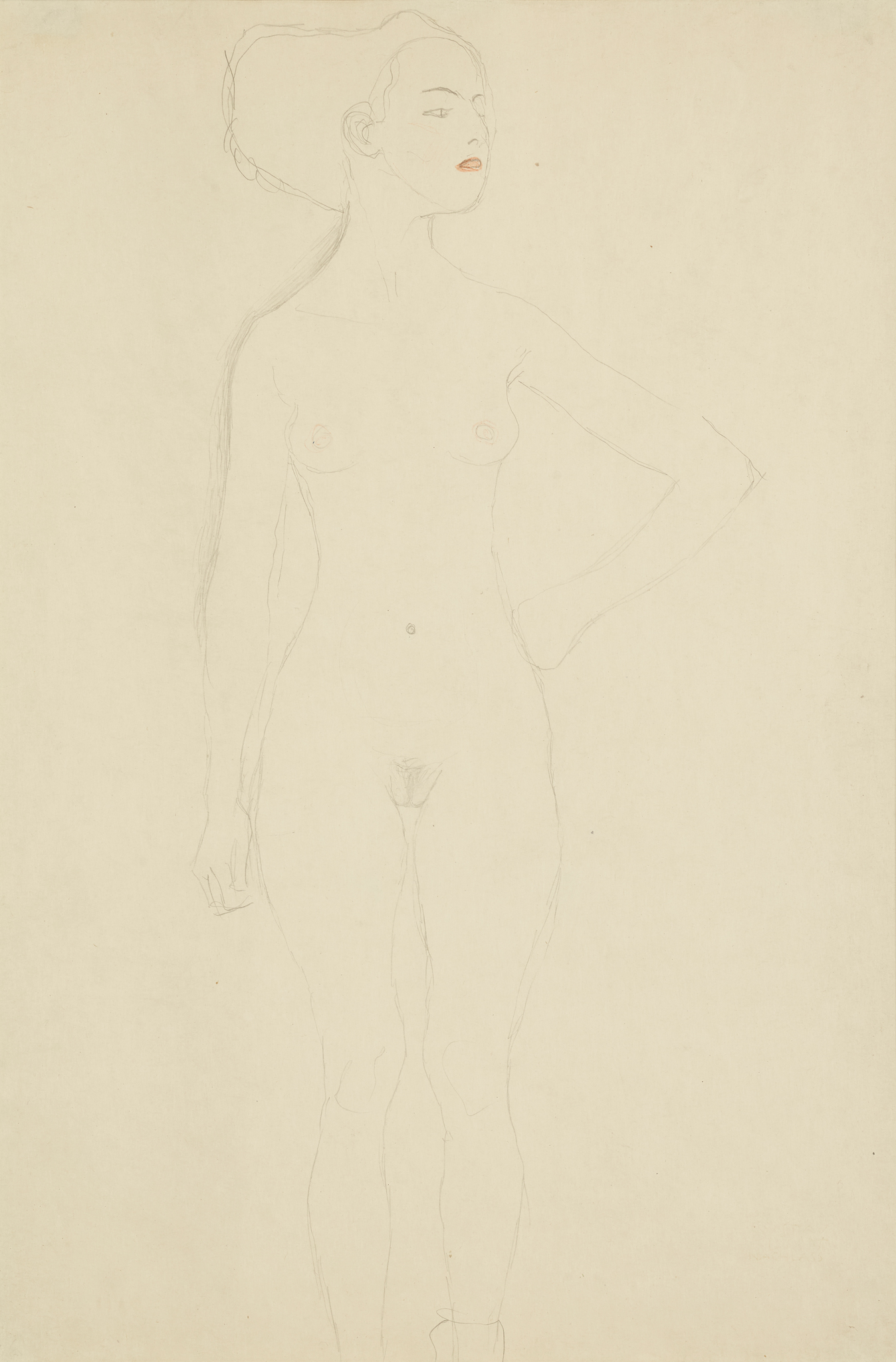
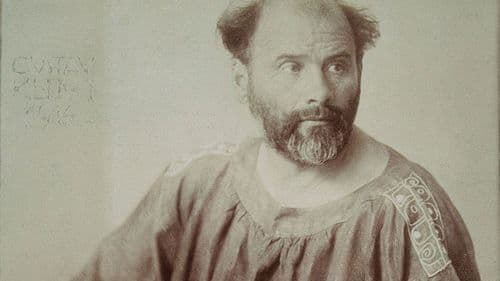
GUSTAV KLIMT (AUSTRIAN 1862-1918)
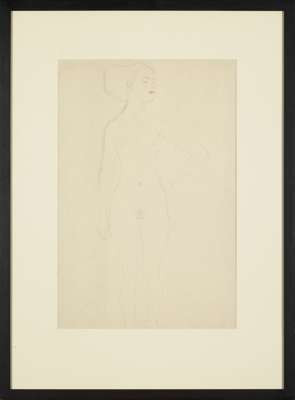
STANDING GIRL [FRONTAL STEHENDER MÄDCHENAKT, DEN LINKEN ARM IN DIE HÜFTE GESTÜTZT], c.1906-7

Auction: MODERN MADE | Lots 1 - 422 | Fri 01 May at 10am
Description
stamped with estate stamp (faded) (lower right), pencil and coloured crayon on paper
Dimensions
55cm x 36cm (21 ½in x 14 ¼in)
Provenance
Marlborough Fine Art, London (stock no. 35091.1), where acquired by the present owner.
Footnote
Exhibited:
Mathildenhöhe, Darmstadt, 3. Internationale der Zeichnung, Sonderausstellung Gustav Klimt und Henri Matisse, 1970, no. 64 (illustrated).
Literature:
Breicha, Otto, Gustav Klimt, Mazzotta, Milan, 1981, fig.79;
Strobl, Alice, Gustav Klimt, Die Zeichnungen – 1912-1918, Verlag Galerie Welz, Salzburg, 1982, vol. II, no. 1575, illustrated p.120.
Standing Girl is a classic example of Klimt’s drawing from the first decade of the 20th century, with its jagged but sure line that captures both the nervous energy of the sitter and the tension between artist and model. As with his great contemporary, Egon Schiele, Klimt presents the naked rather than the nude. The Academic life class is taken out of its gilded halls of idealised female perfection and into the backstreets and garrets of the city where real life teems. This sense of being naked rather than nude is accentuated here through the red lipstick, that stands stark as the focus of the drawing. It is a symbol of the worldly: this is no eternal goddess but a real woman.
In Standing Girl, the model’s face is beautifully drawn, with an emotional precision, the hair rendered almost as an abstract shape to keep our attention on the eyes and the arch of the eyebrows, the curve of the nose, the set of the chin. The body is a little looser, it has a lassitude that speaks of a real person standing for too long in the cold, the hand on the hip evoking impatience – less classical contrapposto and more a desire to be done. In Klimt, like Schiele, we see the unidealised bodies of the urban poor, working class or penniless bohemian, all angular bones and jutting vertebrae. It’s what makes their work feel so modern, so real.
In 1970, this drawing was included in a major exhibition of both Klimt and Matisse’s drawings at the Mathildenhöhe in Darmstadt, itself the architectural embodiment of the mad, syncretic spirit of the Vienna Secession and its dramatic expression of the modern. These two great masters of 20th century art couldn’t be more different. Matisse’s world of calme, luxe et volupté, in particular in his later years, situates modernity ‘elsewhere’, in a universalist dreamscape of pared-down classicism and Orientalism. The simple as modern. Klimt, on the other hand, situates modernity in the here and now, in complexity, in a lust for life. In Standing Figure our eye is also drawn to the very bottom of the work, to what appears to be a rolled-down stocking, or perhaps the top of a boot – this hint of the clothed reinforcing her nakedness, the raw and the cooked. Our model doesn’t live in Matisse’s Arcadia. She will get dressed, take her fee and step out into the streets of the modern world.