

Lot 89
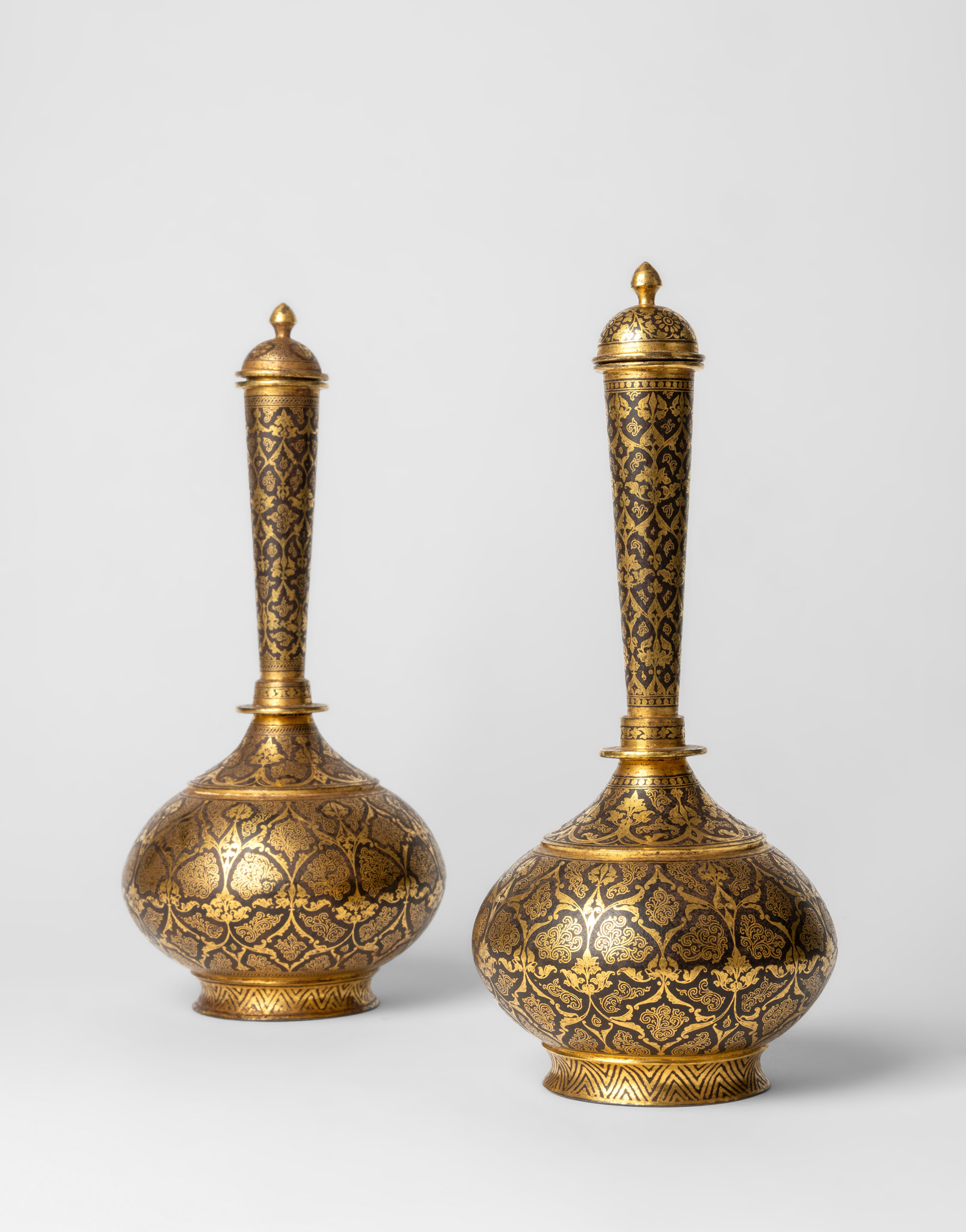
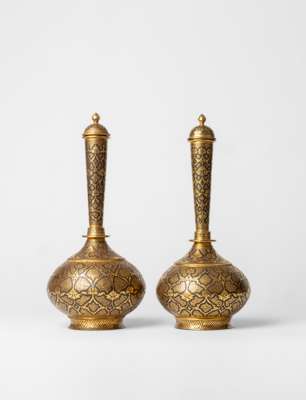
A PAIR OF SUPERB GOLD KOFTGARI STEEL SURAHIS
INDIA, SIALKOT, 19TH CENTURY
Auction: 09 December 2026 from 14:00 GMT
Description
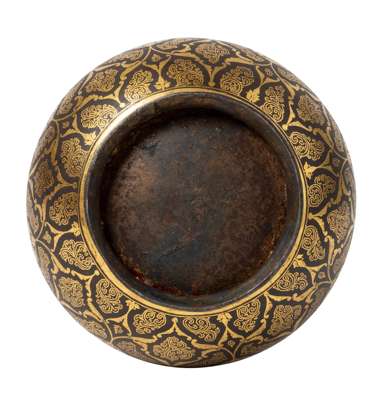
each of compressed globular form on splayed feet with long slightly flaring necks, the stoppers of domed form with bud finials, profusely decorated in gold overlay with a lattice of split palmettes filled with foliate interlace, the feet with chevron designs
Dimensions
each 30.5cm high
Footnote
During the eighteenth century, Sialkot was an important centre of metalworking and weapons manufacture. Its artisans produced swords, daggers, shields, armour and other military equipment, often embellished with intricate gold and silver decoration. The development of koftgari was closely associated with the patronage of regional rulers, military elites and, particularly towards the end of the eighteenth and beginning of the nineteenth centuries, the Sikh ruling establishment. The demand for richly decorated arms and armour provided an important source of employment for specialist craftsmen.
The technique of koftgari, also known as Indian damascening, had its origins in Persian metalworking traditions and became established in northern India through centuries of cultural and artistic exchange. It involved the application of gold or silver wire, and sometimes gold leaf, onto an iron or steel surface. The name derives from the Persian word koft, meaning to beat or hammer, describing the characteristic process by which the precious metal was worked into the prepared surface.
For a similar pair, see Sir George Watt, Exhibition Catalogue, Indian Art at Delhi, 1902-1903, plate 11-A (figs 8 and 4), p. 47.