

Lot 86
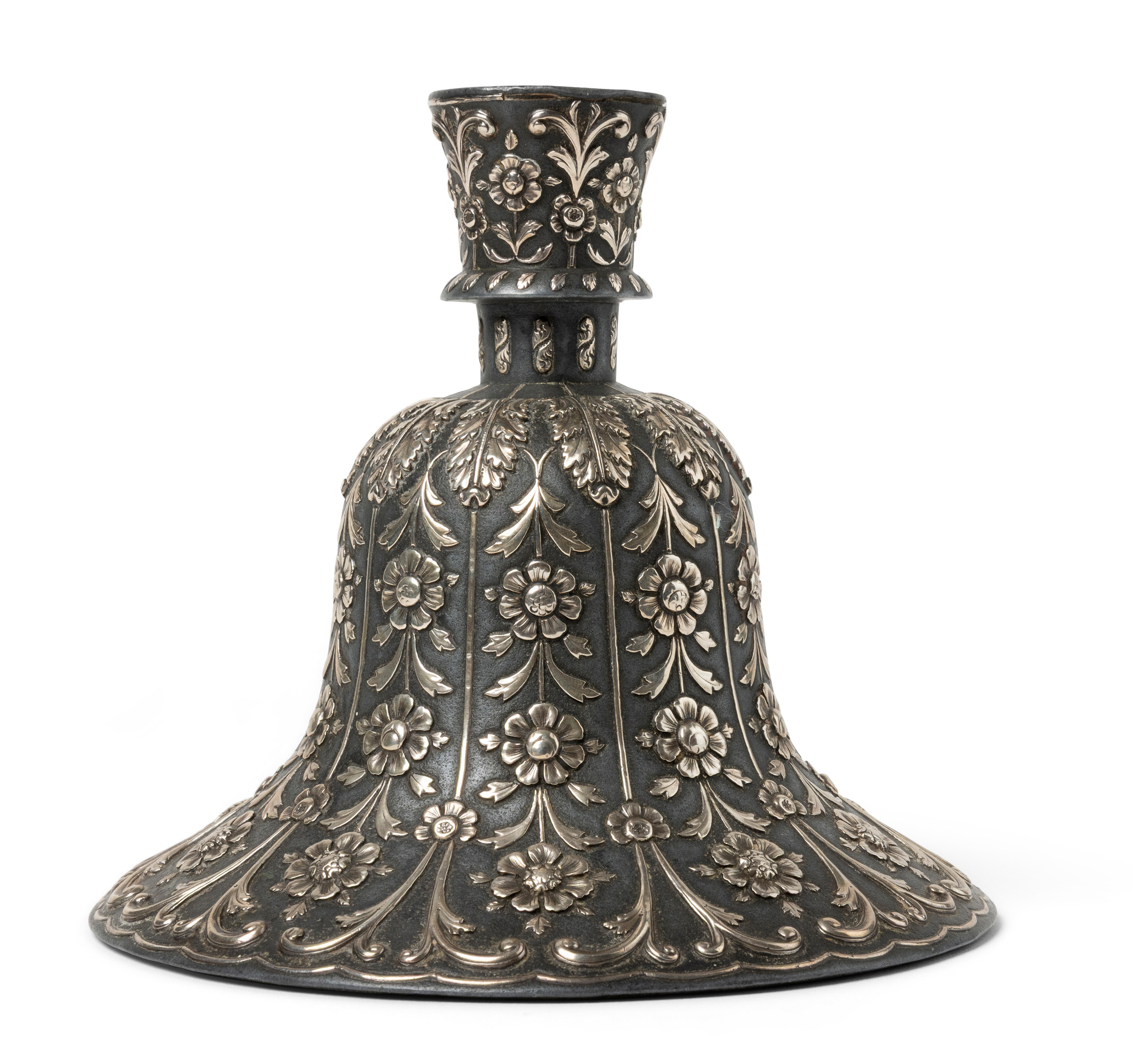
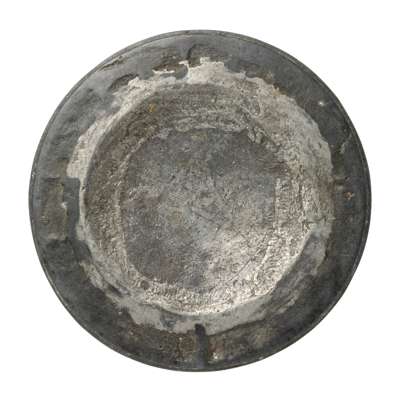
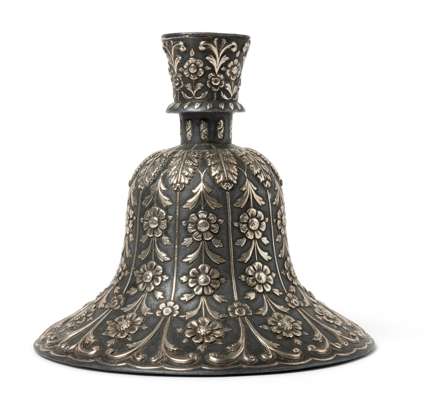
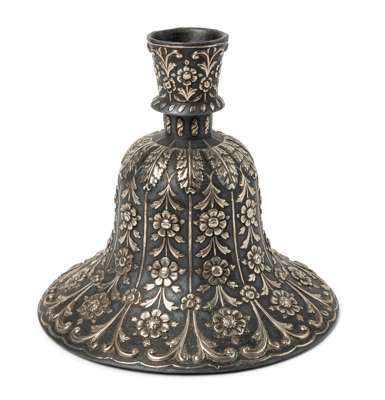
A BIDRI BEGUM'S HOOKAH BASE
INDIA, LUCKNOW, LATE 18TH/EARLY 19TH CENTURY
Auction: 09 December 2026 from 14:00 GMT
Description
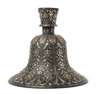
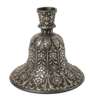
of elegant bell-shaped form rising from a slightly flared foot to a slender neck with everted rim, the body and neck densely decorated in silver with vertical panels of flowering plants issuing from leafy stems, alternating with scrolling foliate motifs, the lower register filled with elaborate scrolling arabesques and flowerheads within a scalloped border, the neck similarly ornamented with formal floral sprays
Dimensions
14cm high, 15.5 diameter
Provenance
Private UK collection.
Footnote
This finely worked example belongs to the Lucknow (Awadh) school of Bidri. Production of bidri in Awadh is thought to have begun around 1770, and by the early nineteenth century the craft was well established in Lucknow. The present piece is executed in the distinctive zarbuland (or zarnishan) technique for which Lucknow became celebrated: raised, repoussé and chased silver floral and foliate elements set against the blackened ground, producing a rich, heavy and thick-bodied effect that is one of the identifying features of the city’s output. The dense arrangement of upright flowering plants and scrolling borders is characteristic of the floral style favoured by Lucknow craftsmen.
Its relatively compact, dainty proportions suggest it was made for use by a begum within the zenana rather than for the more robust floor-standing farshi bases preferred in formal male gatherings. This is certainly one of the works of the master craftsmen of Lucknow.