

Lot 83
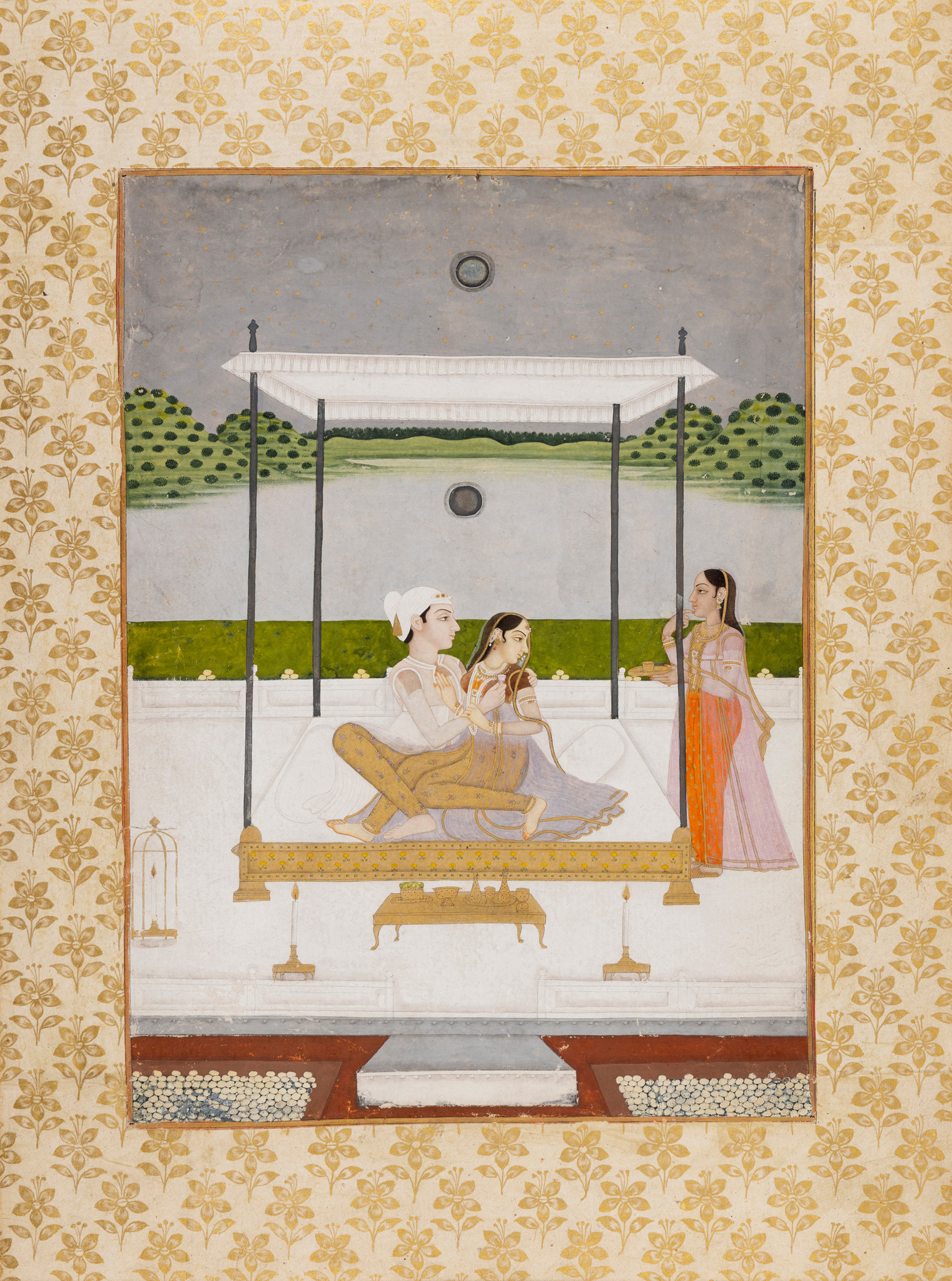
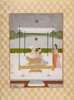
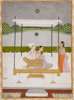
A COUPLE EMBRACING ON A MOONLIT TERRACE
INDIA, OUDH, CIRCA 1750
Auction: 09 December 2026 from 14:00 GMT
Description
gouache on paper heightened in gold, mounted on to a gilt-floral album page, depicting a young prince and his consort embracing on an elevated canopied bed on a white marble terrace, a female attendant stands to the right holding a fan, overlooking a dense row of trees against a dark evening sky, the moon reflected in the large lake behind with a distant landscape behind, with a gold-speckled inner border
Dimensions
image 34cm x 25.6cm
Provenance
Formerly, in a private UK collection.
Acquired by the present owner from Rosebery's, 14 June 2023, lot 42.
Footnote
This finely executed miniature captures a classic theme of Late Mughal courtly romance, portraying a prince and his beloved sharing an intimate moment on a moonlit terrace. The composition is typical of the artistic renaissance that flourished in the provincial courts of North India - particularly Lucknow and Faizabad in the Oudh region - following the migration of imperial artists away from Delhi in the mid-18th century.
The painting heavily derives its aesthetic language from the celebrated style of Nidha Mal (active c. 1735–1775), an imperial artist under Emperor Muhammad Shah who later brought his refined courtly style to the Nawabs of Oudh. The idealised profiles of the figures, characterised by elongated almond eyes, sharp features, and thin, graceful limbs, are closely aligned with the romantic idioms popularised by Nidha Mal’s circle. The artist utilises stark, theatrical contrasts to enhance the nocturnal mood. The cool, austere architecture of the white marble terrace and the crisp textile canopy frame the couple, isolating them from the dark, brooding sky and the neatly manicured shrubbery beyond. This spatial arrangement - placing the central figures on a raised platform flanked by open vistas and attended by a solitary maidservant - is a visual convention designed to convey both luxury and absolute privacy.
The attention to detail in the translucent muslin garments (jama) worn by the prince, the rich textile folds of the lady’s sari, and the finely detailed architectural elements indicate a workshop of considerable sophistication, deeply rooted in the refined traditions of Late Mughal painting.
For another moonlit scene in the San Diego Museum of Art, formerly in the Edwin Binney 3rd collection, see accession number 1990.411.