

Lot 75
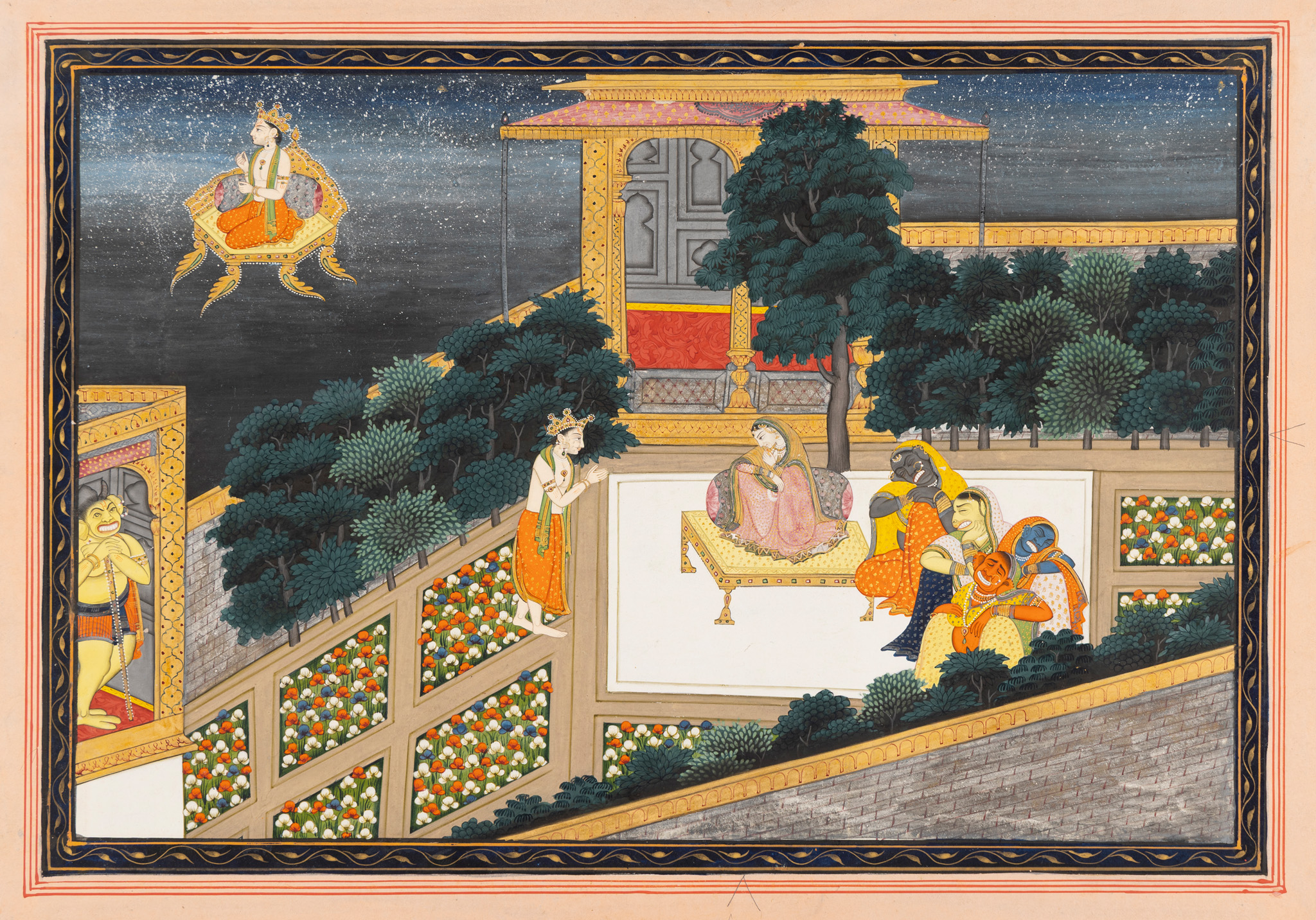
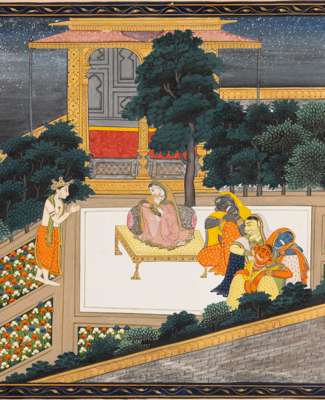
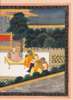
AN ILLUSTRATION FROM A RAMAYANA SERIES: INDRA VISITS SITA IN RAVANA'S GARDEN ‡
INDIA, PUNJAB HILLS, KANGRA, GULER, CIRCA 1820


Auction: 09 December 2026 from 14:00 GMT
Description
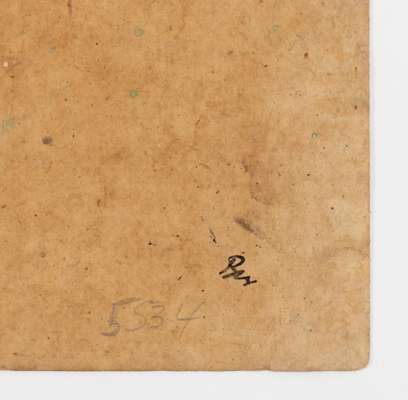
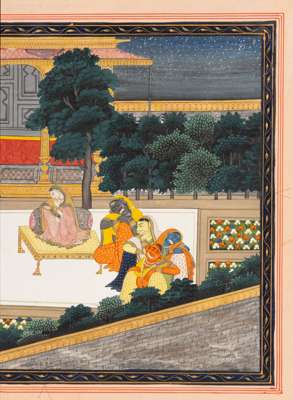
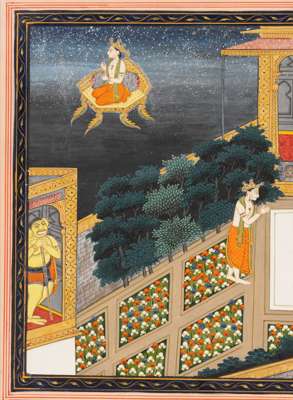
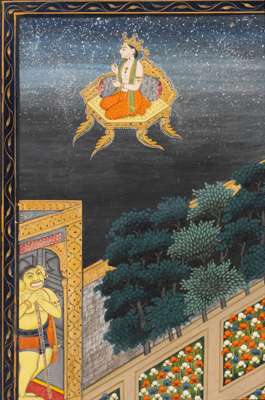
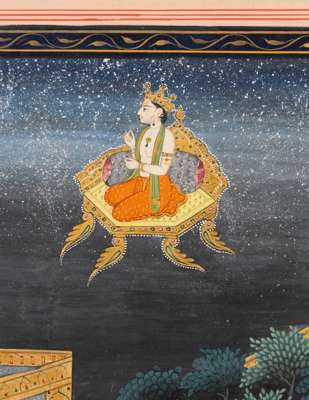
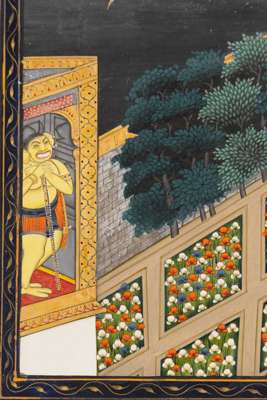
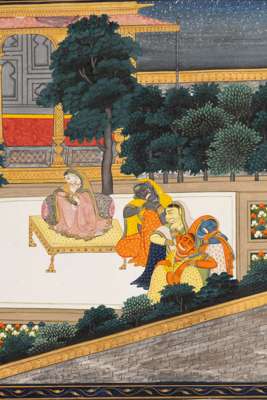
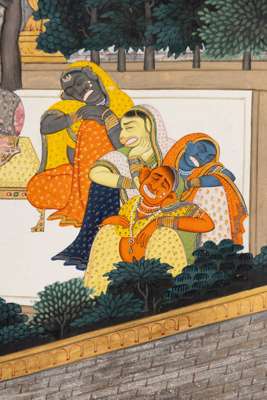
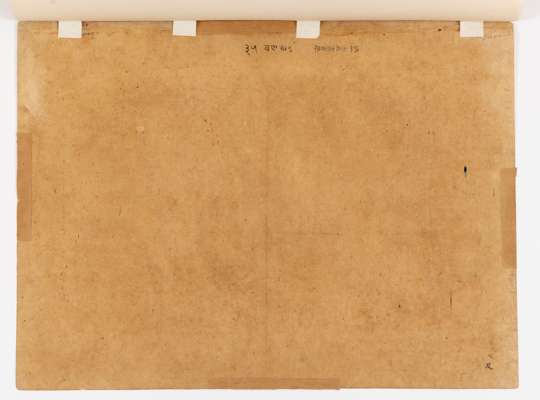
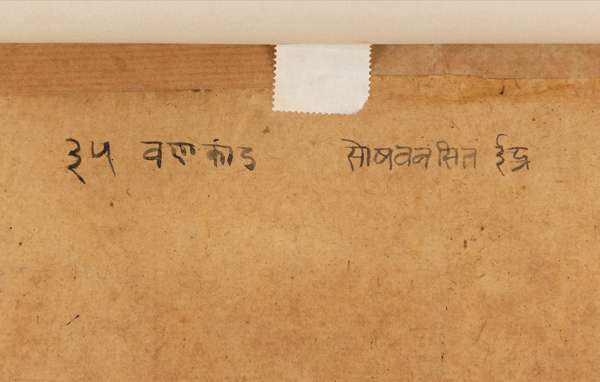
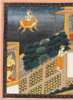
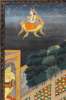
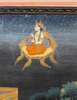
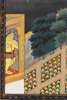
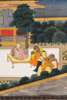
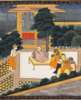
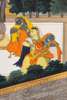
gouache on paper heightened with gold, all under a star-lit sky, illustrating a crowned Indra wearing a gold-speckled bright orange dhoti and a green sash around his neck, above left he is seated on his gold celestial throne, below he is seen in the garden standing facing the terrace with his hands together in reverence towards Sita, who is seated against a bolster on a square throne, dressed in a pink sari with a gold and green veil over her head and shoulders, behind her are four Rakshasis or demonesses who have fallen asleep, to the left of the image stands a demon-guard who is leaning on his staff and watching upwards, all set within palace walls with a tree-lined garden, the landscaped garden with several flower beds with blue, red and white flowers, a palace summer house behind, within a wavy gold and dark blue border, three red margin lines, verso with a no. 35 and a line of nagari script in black ink
Dimensions
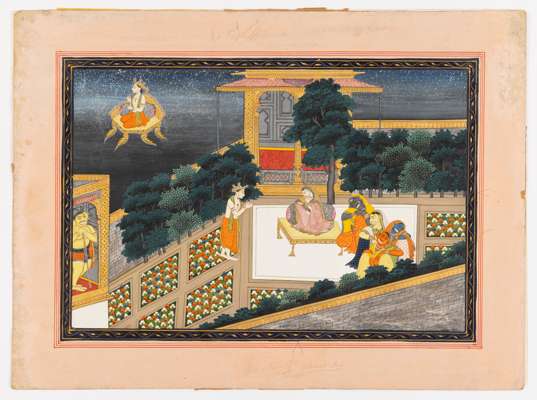
folio 39.5cm x 53.7cm, image 27.3cm x 41.2cm
Provenance
R. E. Lewis Inc, San Francisco.
Formerly a private collection, Santa Barbara, California.
Private American Collection.
R. E. Lewis had an excellent reputation in sourcing high quality Indian miniature paintings. The company was active from 1952-1999.
Footnote
This extraordinary painting brings to life a dramatic episode from the Ramayana, the great Indian epic recounting the adventures of Rama and the abduction of his beloved wife, Sita, by the demon king Ravana. Set within Ravana’s magnificent garden, the scene evokes the moment when Indra, king of the gods, employs his divine powers to subdue the demonesses guarding Sita, enabling him to visit the beautiful and sorrowful princess.
The composition is a triumph of narrative storytelling. The richly ornamented palace architecture, carefully laid-out garden, and luxuriant flowering beds establish an atmosphere of royal splendour, while the dark, star-speckled sky lends the scene a sense of mystery and enchantment. The principal figures are arranged with remarkable ingenuity, their gestures, expressions, and vivid costumes guiding the eye through the unfolding drama. Indra’s celestial presence, set apart from the earthly scene, reinforces the supernatural dimension of the episode and the intervention of divine power in the human world. In stark contrast to the distorted figures of the demonesses, Sita is resplendent in her soft-coloured robes and graceful demeanour, placing her at the centre of this captivating painting.
All these aspects point to the style of Guler in Kangra. An earlier depiction of the same scene dated to circa 1775-1780 and attributed to Guler, is in the Philadelphia Museum (see accession number 1977-11-1).
For further illustrations from the same series, see Los Angeles County Museum of Art, accession number M.2006.128; Christie's, Arts of India, 26 May 2016, lot 73; Bonhams, Islamic and Indian Art, 25 October 2021, lot 268 and 25 October 2007, lot 454; Sotheby's, Art of Imperial India, 8 October 2014, lot 323 and Important Indian Miniatures from the Paul F. Walter Collection, 14 November 2002, lot 86. All these paintings share the same borders.