

Lot 5
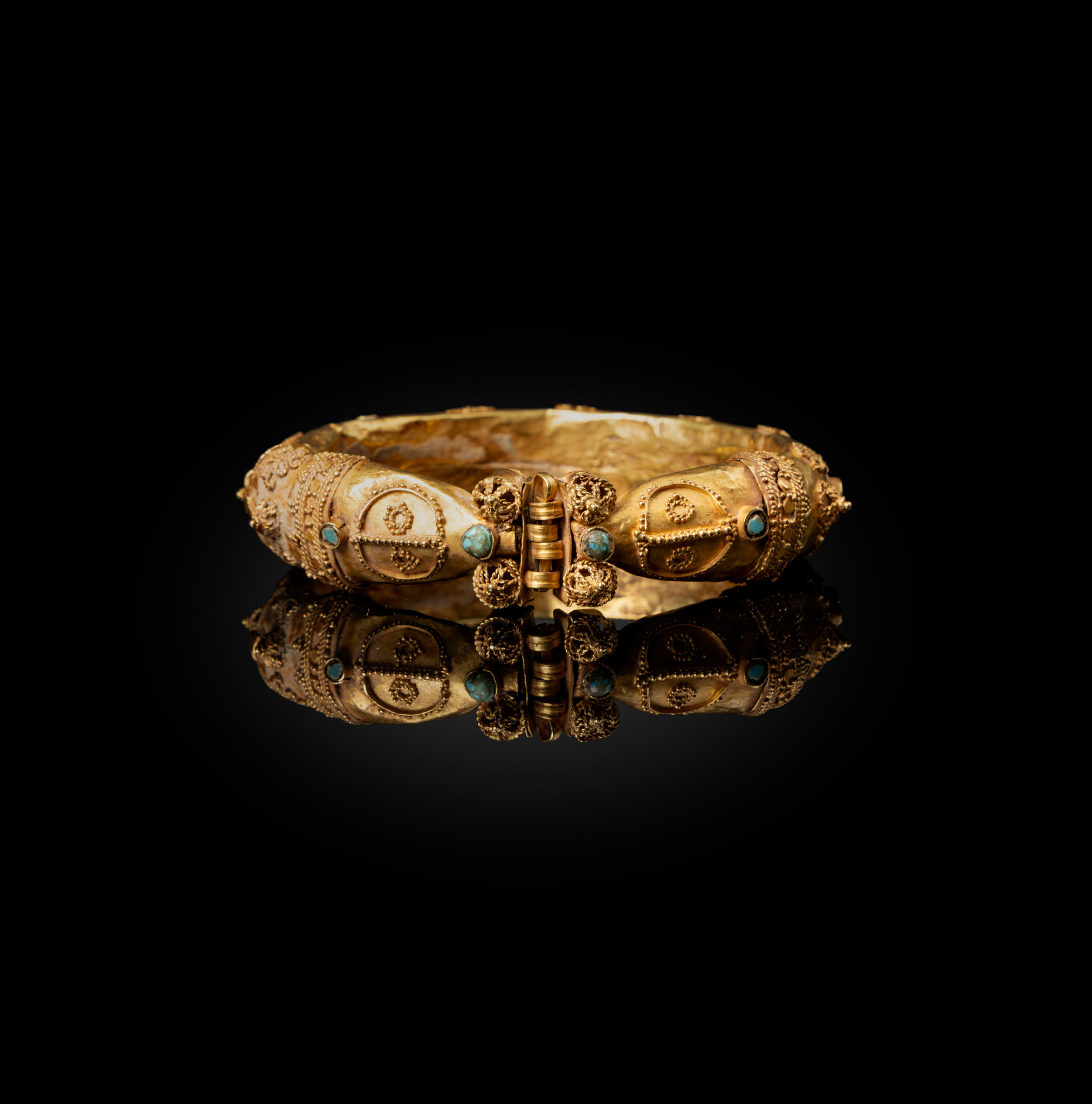
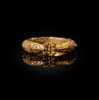
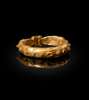
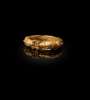
A FINE SELJUK GOLD BRACELET OR ARMLET
PERSIA, 12TH/13TH CENTURY
Auction: 09 December 2026 from 14:00 GMT
Description
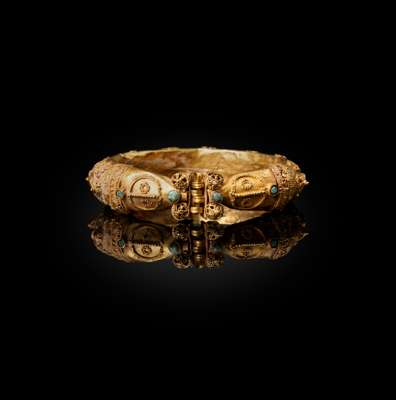
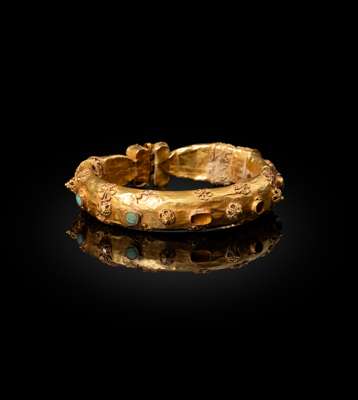
of oval form, composed of hollow gold wrapped around a resin interior, soldered together forming a seam on the inside of the bracelet, the rounded exterior applied with symmetrical designs of finely applied filigree forming delicate raised floral rosettes and medallions, some rosettes inset with turquoises, the clasp attached with four little cylindrical elements, the two tapering ends at the clasp resembling dragon heads
Dimensions
8.7cm diameter
Provenance
Formerly, the collection of Mr. D. S., since 2008.
Footnote
This very attractive wrist ornament is a fine example of Seljuk-period jewellery from Iran and its surrounding regions. The granulated and twisted wire decoration is executed to a very high standard, and an unusual feature of the former is the dragon heads which form each of the ends. These have been simplified to the extent that they are simply two small, circular ‘eyes’ set within a larger circular ‘face’, but they are still clearly recognisable.
What makes this bracelet unambiguously a product of 11th-13th century Iran is the use of the reflexive spiral technique for the clasp. This feature is found exclusively on Persian jewellery, including bracelets, anklets, armlets, and earrings. Each end of a hoop has a strip of metal laid across it, with the end of the strip bent back on itself and then rolled away from the hoop. The spirals are then soldered to either side of the hoop, creating pairs of large bosses to either side of a clasp, which in the case of bracelets were often then decorated with granulation and filigree elements. Although the use of a strip of spiralled sheet metal at the end of bracelet shanks is relatively common, the doubled-back design is diagnostic of early medieval Iran. Close parallels for the present piece tend to be silver rather than gold, such as a bracelet in the Metropolitan Museum of Art (inv. no. 48.98.13, see Keene, M., and Jenkins, M., Islamic Jewelry in the Metropolitan Museum of Art, The Metropolitan Museum of Art, New York: 1983, p. 43 no. 18).
Archaeological evidence for this exists from the Sayram-Su Hoard, dated to before 1040, and a bracelet found with mid-11th century coins at Sodra Byrummet in Sweden. Although it was originally believed that the use of the reflexive spiral design was purely of the first half of the 11th century, evidence now suggests that the technique was used into the 13th century (see Ogden, J., and Spink, M., The Art of Adornment. Jewellery of the Islamic Lands, Nour Foundation in association with Azimuth Editions: 2013, pp. 173-174, 261).