

Lot 44
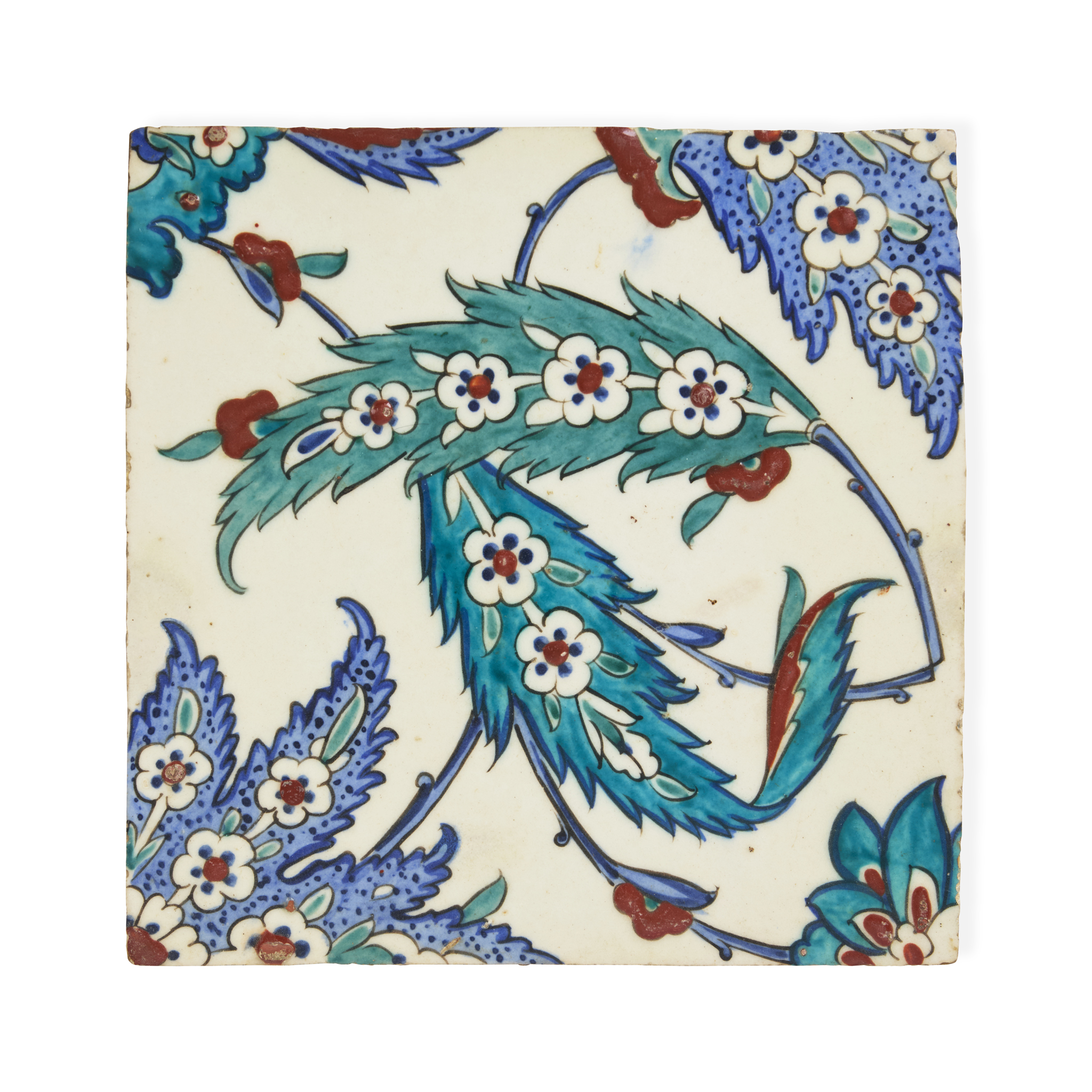
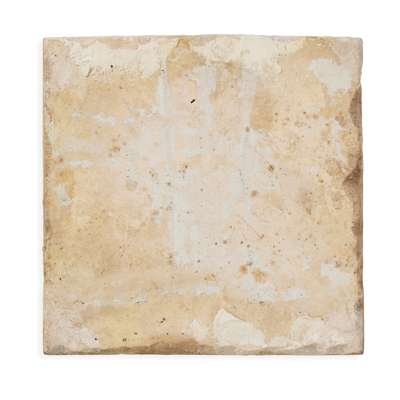
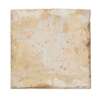
AN IZNIK POTTERY TILE DECORATED WITH 'SAZ' LEAVES
OTTOMAN TURKEY, SECOND HALF OF 16TH CENTURY
Auction: 09 December 2026 from 14:00 GMT
Description
of square form, decorated in red, blue, green and black outline on a white ground under a transparent glaze, with two interwoven saz leaves, corners with part-khatai blossoms filled with prunus flowers
Dimensions
24.6cm square
Provenance
Greek private collection since the 1960s.
Footnote
The saz leaf is an important motif frequently used by the artists employed in the Ottoman court studio. The first representative of the saz style at the Ottoman palace was Şahkulu, an artist brought from Tabriz by Sultan Selim I (r. 1512-1520). This style was a departure from classical miniature painting, characterised by pictures drawn with a brush in black ink, featuring long pointed fronds known as the ‘saz leaf’. Paintings in the saz style create the impression of a thick forest with intertwined curved leaves and khatai blossoms. In fact, the word saz was used to mean ‘forest’ in the early Turkish Dede Korkut stories dating to the 10th or 11th century.
An identical tile from the same collection was sold in these rooms (see, Islamic & Indian Art, 10 December 2025, lot 3). A closely related Iznik tile with similar decoration is in the Victoria and Albert Museum, London (see inv. no. 696B.1883).