

Lot 144
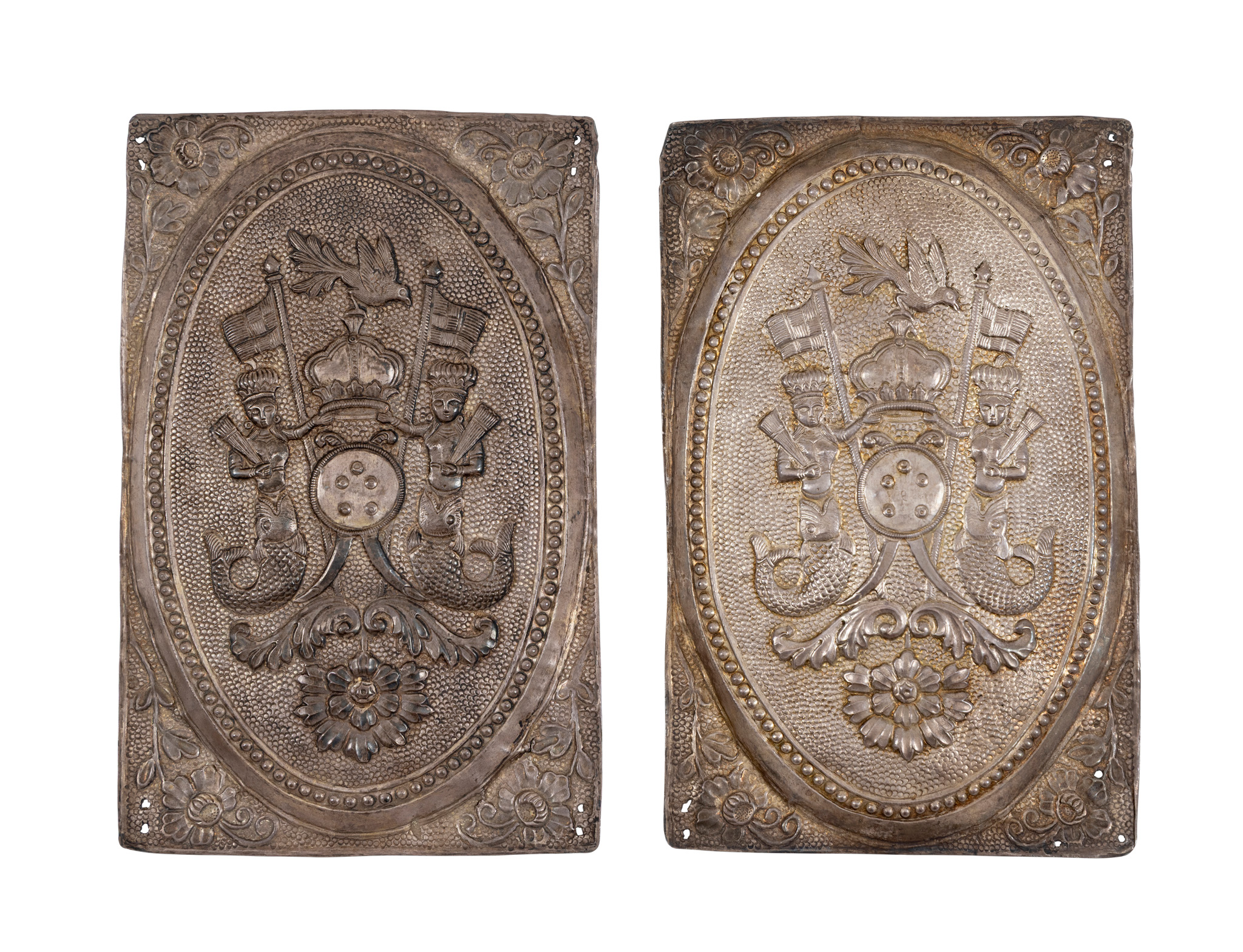
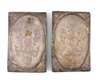
A PAIR OF PLAQUES WITH THE COAT OF ARMS OF THE LAST NAWAB OF OUDH
INDIA, LUCKNOW, 19TH CENTURY
Auction: 09 December 2026 from 14:00 GMT
Description
repoussé silver, of rectangular form with raised oval section featuring the Nawab's emblem, comprising an Indian shield with five knobs, with two swords behind, beneath the royal crown of Oudh topped by a small bird, upheld by two mermaids with morchhals (fans) and royal pennons
Dimensions
each 23cm x 15cm (150g)
Footnote
The Nawabs of Oudh (or Awadh) were a wealthy dynasty of Persian Shia origin that ruled a fertile region in northern India from 1722 until British annexation in 1856. Initially appointed as provincial governors by the Mughal Empire, they grew practically independent as Mughal power declined, eventually declaring themselves kings in 1819. From their capital of Lucknow, they presided over a magnificent cultural golden age, heavily patronizing art, poetry, and unique architecture. Their reign ended abruptly when the British East India Company deposed the final Nawab, Wajid Ali Shah, under the pretext of misgovernance a deeply unpopular move that became a major catalyst for the Indian Rebellion of 1857.