

Lot 127
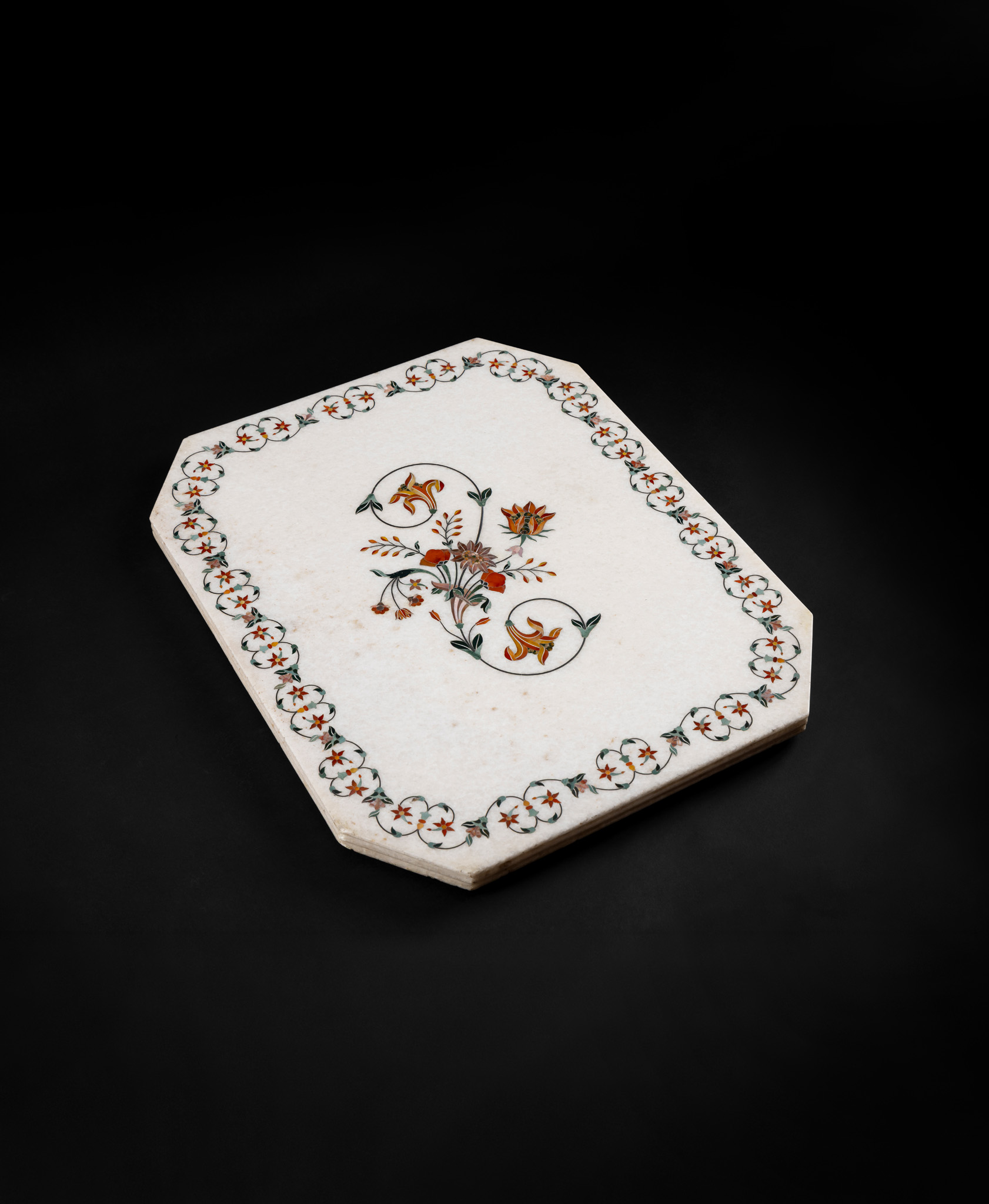
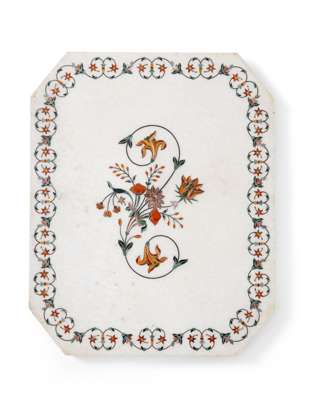
A PIETRA DURA INLAID MARBLE SLAB COLLECTED BY THE SUPERINTENDENT OF THE TAJ MAHAL AND ITS REPAIRS, COLONEL POWNOLL PHIPPS (1780-1858), IN 1818
INDIA, AGRA, CIRCA 1818
Auction: 09 December 2026 from 14:00 GMT
Description
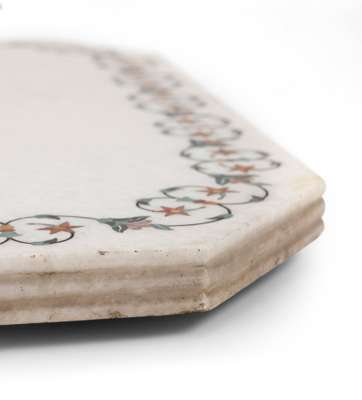
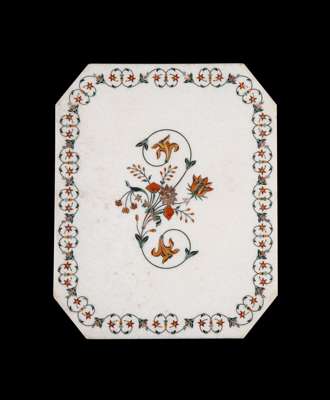
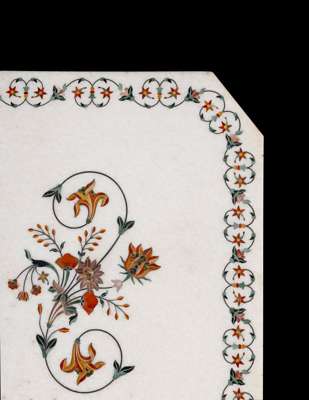
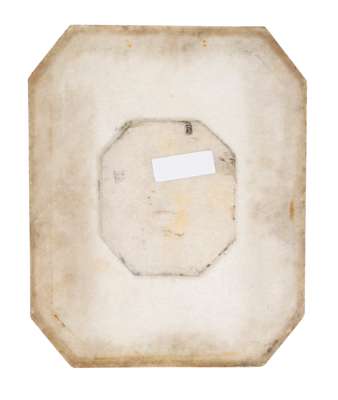
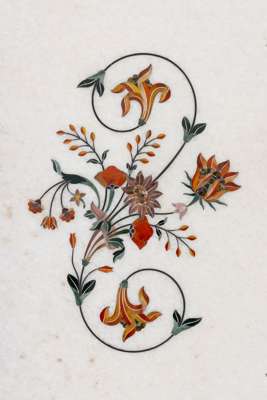
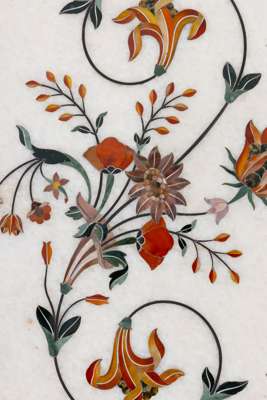
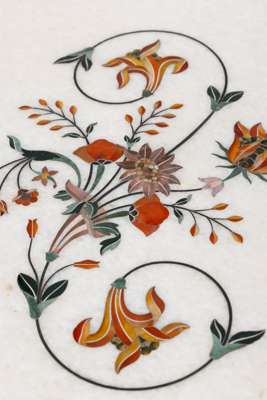
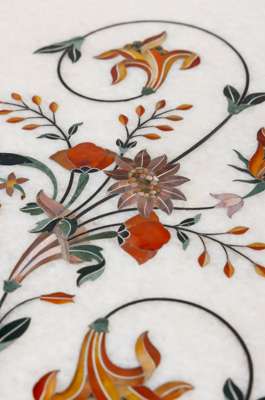
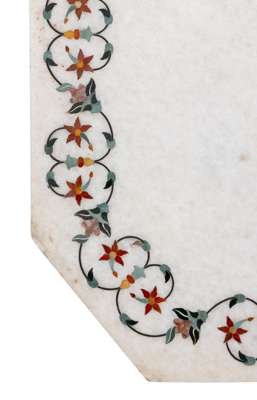
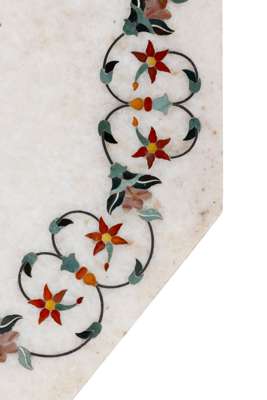
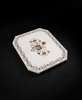
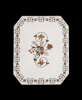
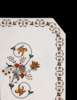
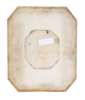
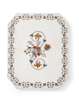
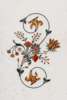
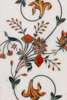
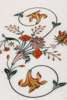
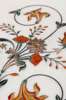
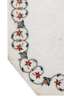
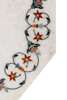
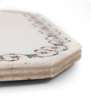
the marble panel cut as a rectangle with chamfered corners, carved and inlaid with polished and flattened agate, jasper, chalcedony and other semi-precious stones, the decoration forming a central delicate and stylised floral scroll, the border with a continuous design of an arabesque of florets and leaves, the sides cut with a triple ridge, the reverse undecorated with a raised central circular area; the marble slab is accompanied by a vintage black and white photograph of the Taj Mahal and two letters (one printed by the grandson of Colonel Pownoll and one handwritten by the Marquess of Bath)
Dimensions
55.8cm x 45.2cm x 3cm
Provenance
Colonel Pownoll Phipps (1780-1858).
Thence by descent to Piers A. C. H. Phipps (1941-2015).
This marble slab was one of two that Colonel Pownoll Phipps collected from the Taj Mahal in 1816 at the end of his tenure as superintendent of the repairs of the buildings in and around Agra. His son's memoirs quote that his father found them in a ‘souterrain’ at the Taj Mahal (see P. W. Phipps, The Life of Colonel Pownoll Phipps, London 1894, pp.99-100), and that he thought they were intended for the repairs to the Taj Mahal.
Colonel Pownoll Phipps was born in Devon, England, in 1780. Hailing from a line of soldiers since the early 17th century, he joined the East India Company as a cadet in the Bengal Army in 1799. After seeing action against Bonaparte’s troops in Egypt, Phipps returned to India where he quickly rose through the ranks, becoming Fort-Adjutant and Barrack-Master at Agra in 1809 where he would remain for the next seven years. During his time in this greatest of Mughal cities, he was responsible among other things for the care of the Taj Mahal and other historic buildings. He took this job most seriously and was at times called upon to prevent damage by Europeans looking for keepsakes. As his son wrote, “he was once sent for to the Taj, where, in spite of the remonstrances of the sentry, an English lady was insisting on picking agates out of the marble with a steel fork.” In 1816 he was chosen by the Governor General of India to become Superintendent of Building in the Lower Provinces, which meant leaving Agra for Kolkata. His interest in the art and architecture of India remained, however, and he maintained “a staff of very skilful native draughtsmen” who made detailed images of the buildings under his care. He and his family returned to Britain in 1823, and he died there in 1858.
Footnote
The decoration of the slab is of very fine quality - the design of the floral border is taken from the border around the edge of the upper flat surface of the cenotaph of Shah Jahan in the Taj Mahal, carved and worked after Shah Jahan’s death in 1666. The central scroll on this panel is very similar to the left hand scroll on top of the same cenotaph, with some elaboration and the addition of an extra floret.
Drawings of the tombs and cenotaphs in the Taj Mahal were being produced in considerable quantities by the early 19th century, both for visitors and as notes of record for the British administrators and officials, such as Colonel Pownoll Phipps. One of the well-known artists in Agra producing architectural drawings in the early 19th century was Sheikh Latif, who was also known as a stone-worker. (Mildred Archer, Company Paintings. Indian Paintings of the British Period, London: Victoria and Albert Museum, 1992, p. 130).
A watercolour of the cenotaph top, made for Colonel Pownoll Phipps, is in the Victoria and Albert Museum (inv. no. IM.177-1920), and shows the border and the central scroll clearly (Susan Stronge (ed), The Great Mughals. Art, Architecture and Opulence, London: Victoria and Albert Museum, 2024, p. 276, figs 231a and 231 c. See also Mildred Archer, Company paintings. Indian Paintings of the British Period, London: Victoria and Albert Museum, 1992, p. 133). This drawing was given to the museum by Colonel R.W. Phipps. The description in The Great Mughals catalogue quotes from the biography of Colonel Pownoll Phipps, written by his son, describing the drawings made for the colonel (Stronge, ibid, pp. 277-9).
A model of the cenotaph of Mumtaz Mahal is in the Gilbert Collection and was exhibited at the Great Mughals exhibition in 2024 (Stronge, ibid, pp. 272-3, no. 228a & b). Divia Patel, in the catalogue note, observes that models and replicas were created as documents of record, as aids for repair and reconstruction (p. 273). As this panel was found in a storeroom at Agra and had not been sold when it was made to a tourist, it is very probable that it was one of these documents of record, made for Pownoll Phipps for use by his successors. At the time there was very real concern that the tombs would be wrecked by souvenir-hunting tourists taking the inlays as mementos.