

Lot 100
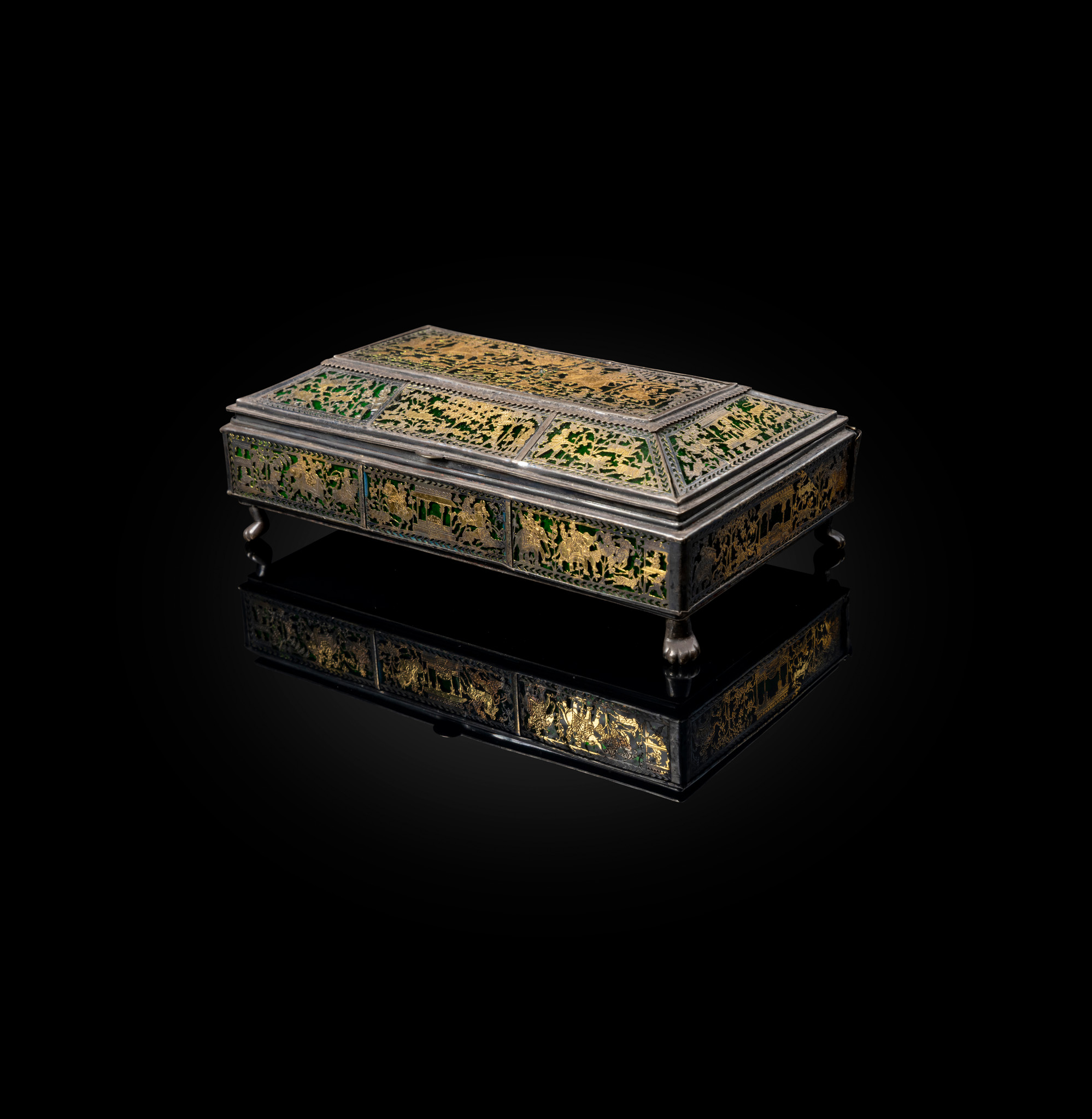
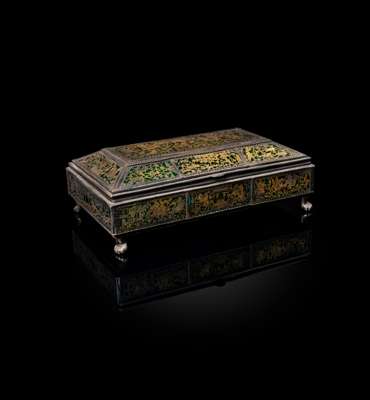
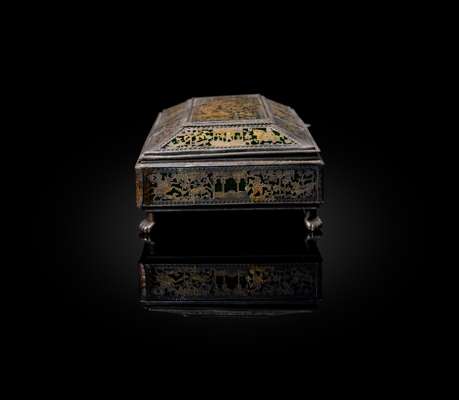
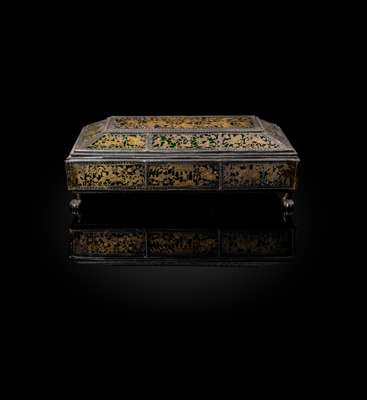
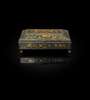
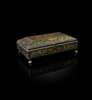
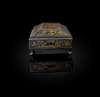
A SUPERB PRATAPGARH GOLD, COLOURED-GLASS AND SILVER-GILT BOX
INDIA, RAJASTHAN, EARLY 19TH CENTURY
Auction: 09 December 2026 from 14:00 GMT
Description
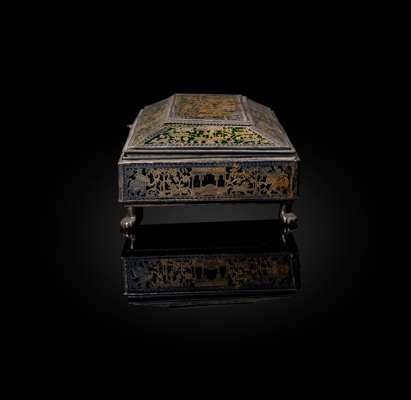
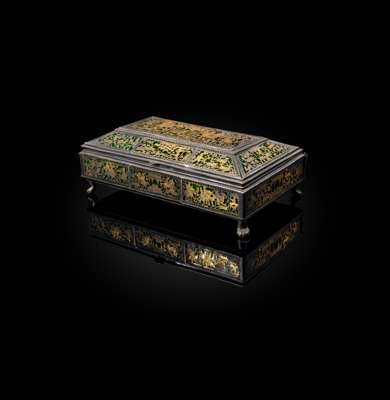
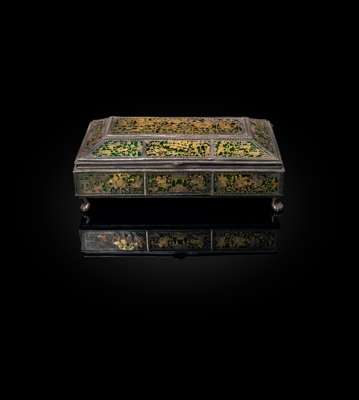
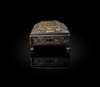
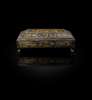
rectangular on claw feet, with stepped hinged lid, the green-stained glass profusely fused with gold leaf, the cover decorated with elephant hunting scenes, the sides decorated with further courtly and hunting scenes
Dimensions
6cm x 18.5cm x 10.6cm
Provenance
Formerly in a private UK collection.
Halls, Fine Art Auction, 24 March 2010, Lot 73; acquired by the present owner.
Footnote
Pratapgarh was a small Rajput principality founded by Raja Pratap Bahadur Singh in the seventeenth century. The region, which came under British control in 1818, became the birthplace of thewa, a distinctive jewellery-making technique that emerged in the second half of the eighteenth century and remains the hallmark of its jewellery production today. Thewa involves the intricate application of finely worked gold sheets onto a coloured glass surface, traditionally green, to create elaborate compositions depicting mythological and religious subjects, as well as secular scenes, particularly those of hunting. The craft flourished during the Victorian period, when Pratapgarh jewellery was exported to Europe, especially Britain, where it was acquired as a souvenir and prized for its distinctive artistry.