

Lot 80
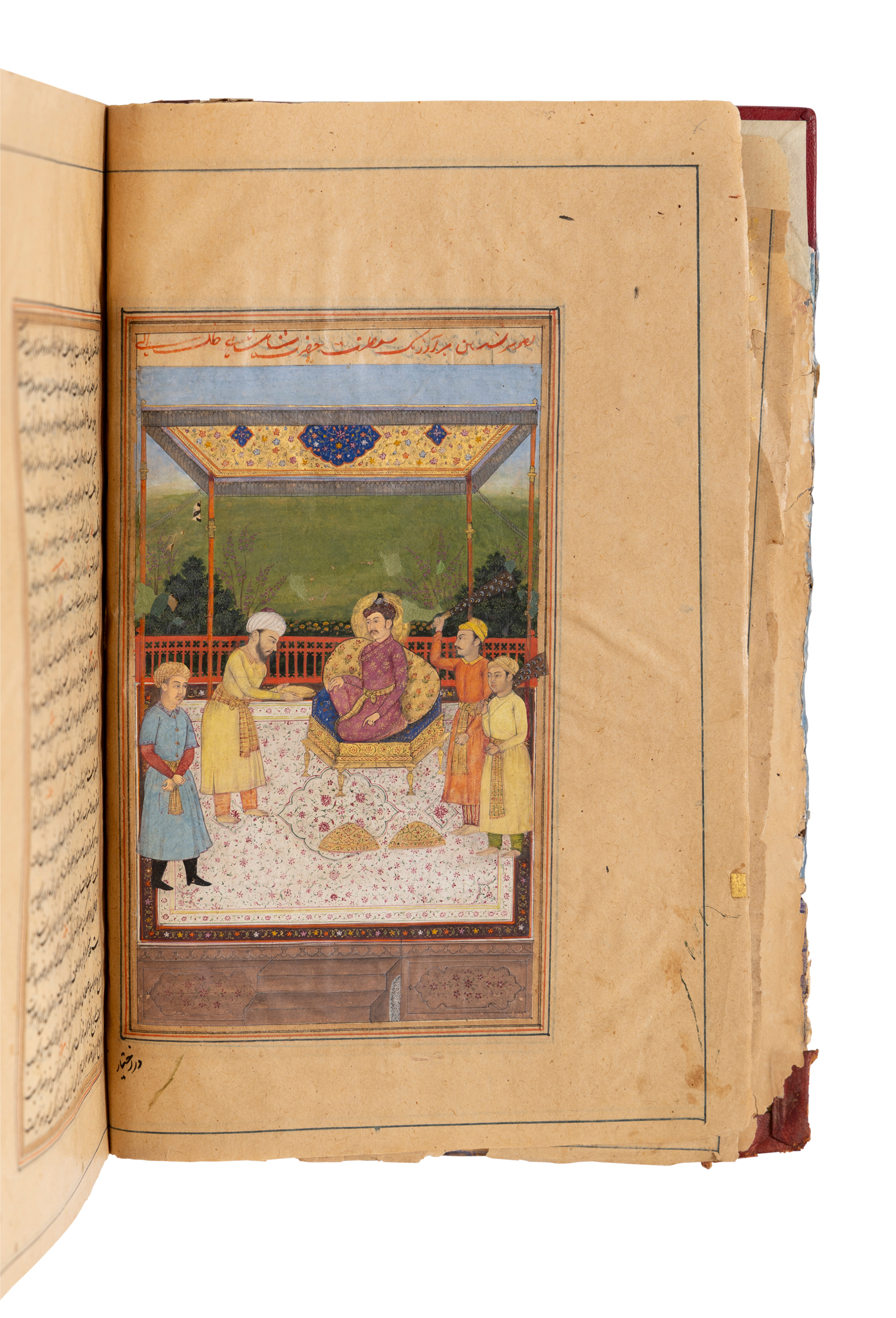
A LATE MUGHAL ILLUSTRATED COPY OF THE AKBARNAMA FROM THE ROYAL LIBRARY OF BAHAWALPUR
INDIA, DELHI, 25 MUHARRAM REGNAL YEAR 45 OF SHAL ‘ALAM II/ AD 17TH MAY 1803
Auction: 10 June 2026 from 14:00 BST
Description
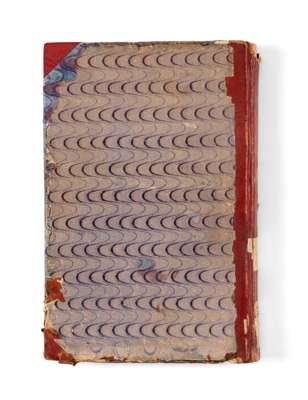
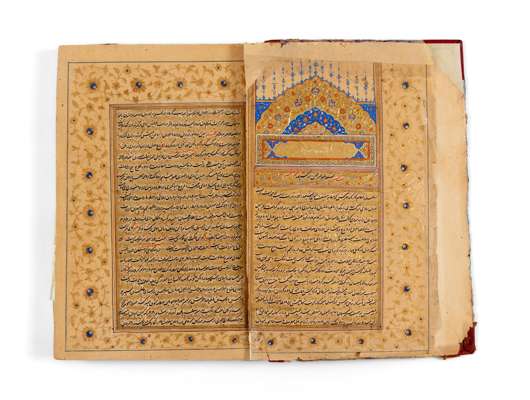
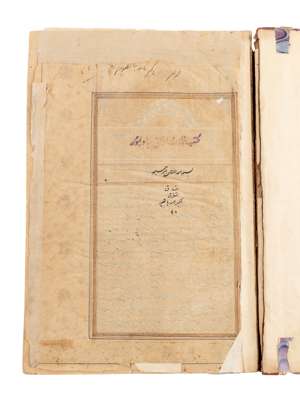
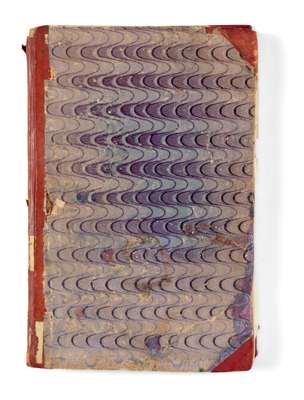
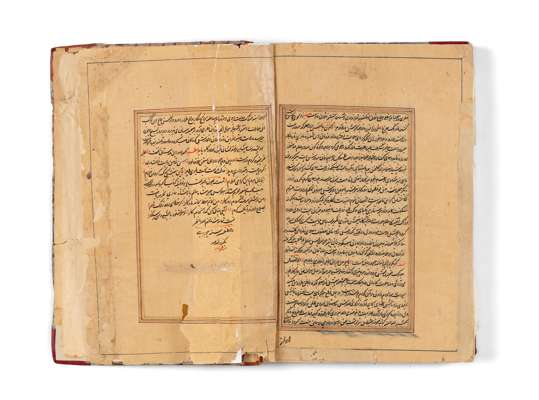
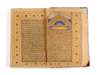
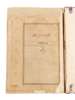
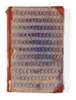
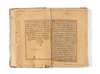
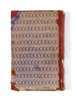
comprising the history of Mughal Emperor Akbar reaching as far as his 17th regnal year, Persian manuscript on paper, 213 leaves, 21 lines to the page written in elegant nasta’liq script in black ink within gold, red and blue margins with black rule, blue rule outer margins, important words and punctuation picked out in red, occasional marginal notes in black nasta’liq, 8 miniature paintings in gouache heightened with gold, opening bifolio with gold and polychrome illumination, floral scrolls in the margins and text in cloud bands on gold ground, colophon dated ‘Tuesday 25 Muharram, Regnal year 45 of Shah ‘Alam II’, the inside folio with the stamp of the library of Sultani in Bhawalpur, later leather binding with marbled cover
Dimensions
Folio 32.4cm x 20.3cm
Provenance
The Royal Library of Bahawalpur.
Christie's, Arts of the Islamic & Indian Worlds, 17 April 2007, lot 168.
Private UK collection.
Footnote
This manuscript is an important example of the late-Mughal book arts and the continuous interest by the Mughal emperors in their predecessors even as their power decreased. It was also previously part of the Kutubkhana-yi Sultani in Bahawalpur (modern Pakistan), a princely library founded and patronised by the nawabs who ruled over the state.
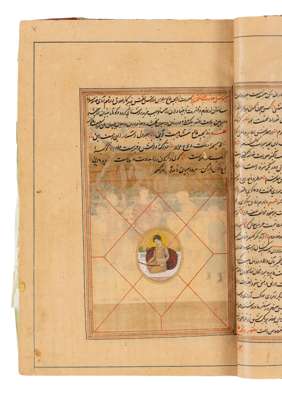
The Akbarnama, composed by the Mughal vizier Abu’l Fazl ‘Allami (1551-1602) is the official chronicle of the rule of the third Mughal emperor Akbar (r. 1556-1605). The text is divided into three books, of which this is the first. The first book presents Akbar’s horoscope and the Indian and Greek astrological theories upon which it is based, followed by a history from Adam through the Timurid line to Akbar himself, including a year-by-year description of Akbar’s reign from his accession to the 17th year of his reign, 1572 [see Eaton, R.M., "AKBAR-NĀMA" in Encyclopaedia Iranica, published December 15, 1984: https://doi.org/10.1163/2330-4804_EIRO_COM_5004]. Several illustrated copies of the Akbarnama, all of which are dispersed, survive from the late 16th or early 17th century. These include the ‘First’ Akbarnama which is largely divided between the Golestan Palace and the Victoria & Albert Museum, the ‘Second’ between the British Library and the Chester Beatty Library, and the ‘Third’ between the Khalil Collection Cleveland Museum of Art, and other collections [York Leach, L., “Pages from an Akbarnama” in Crill, R., Stronge, S., and Topsfield, A. (eds.), Arts of Mughal India: studies in honour of Robert Skelton, Mapin Publishing: 2004, pp. 42-55].
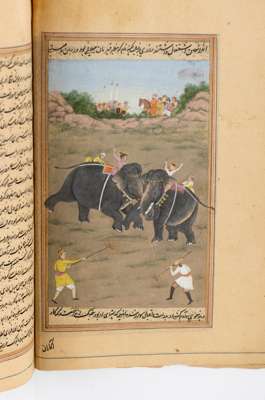
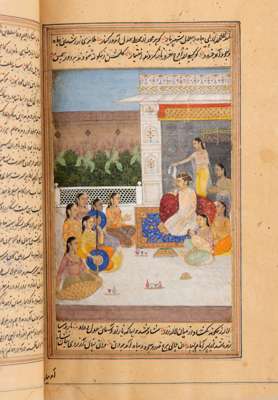
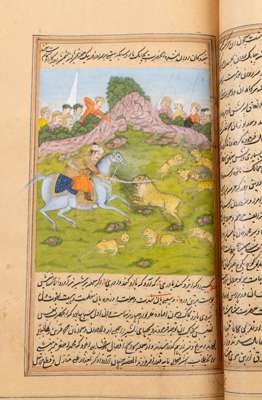
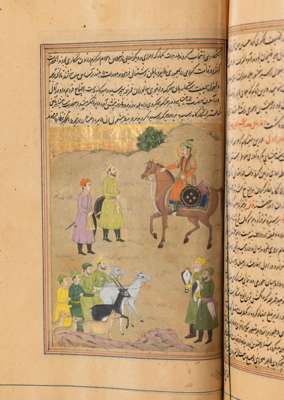
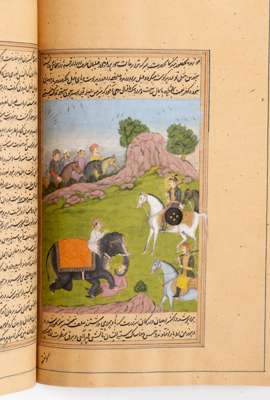
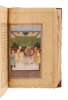
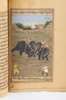
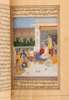
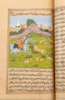
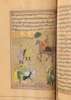
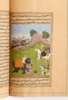
The paintings in the present manuscript are bright and jewel-like, showing all the signs of the artistic revival which took place during the 18th century following the death of the austere Aurangzeb (r. 1658-1707). As one scholar has described it, the artists of the Delhi workshops were “increasingly aware of spatial conventions and perspective. By doubling the picture plane and folio size, they could now accommodate elaborate background settings filled with Mughal pavilions, stylized interior views, and luxurious gardens. Additionally, artists used vibrant hues to simulate atmospheric conditions and create a striking contrast against brilliant white architecture” [Roy, M., “The Revival of the Mughal Painting Tradition during the Reign of Muhammad Shah” in Dalrymple, W., and Sharma, Y. (eds.), Princes and Painters in Mughal Delhi, 1707-1857, Asia Society: 2012]. Of particular note are the depiction of Akbar’s charging elephant Lakhna subduing its foe (p. 113), and the beautiful celebrations for the birth of Prince Salim enlivened with vivid lapis highlights on the instruments, carpet, and cups (p. 507).
The colophon of this manuscript places it within the rule of the 17th Mughal emperor Shah ‘Alam II (r. 1759-1806). He ascended the throne at a time of great turmoil and faced repeated attacks from Sikhs, Afghans, Marathas, and his own rebellious officers as well as the British East India Company. In the year that the manuscript was produced the latter captured Delhi and reduced the emperor, who had already been blinded by his enemies 15 years earlier, to a puppet ruler. His misfortunes gave rise to the satirical saying Sultanat-e-Shah Alam, az Dihli ta Palam (‘the Sultanate of Shah ‘Alam extends from Delhi to Palam’, the latter being a suburb of Delhi). It is quite possible that a copy of the text associated with the period of the Mughal Empire’s greatest heights would have reminded Shah ‘Alam II and his court of better times in the face of political decline [for the life and times of this ruler, see Datta, K., Shah Alam II and the East India Company, World Press Private: 1965]. That a fine manuscript such as this could be made at such a time is a testament to the survival of Mughal traditions in the book arts.
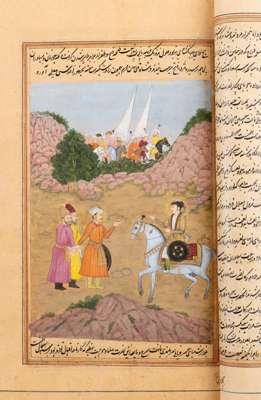
The miniature paintings include:
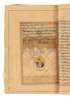
1. Seated Akbar (small image)
2. Akbar enthroned
3. Shah Quli Khan brings Hemu as prisoner before Akbar (p.62)
4. Akbar on the elephant Lakhna subduing another elephant (p.113)
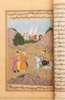
5. Akbar kills a tiger (p. 222)
6. Akbar arranges for the great hunt at the beginning of the 12th year of his reign (p. 416)
7. Ali Quli Khan is trampled by an elephant (p. 433)
8. Celebrations for the birth of Prince Salim (p. 507)