

Lot 71
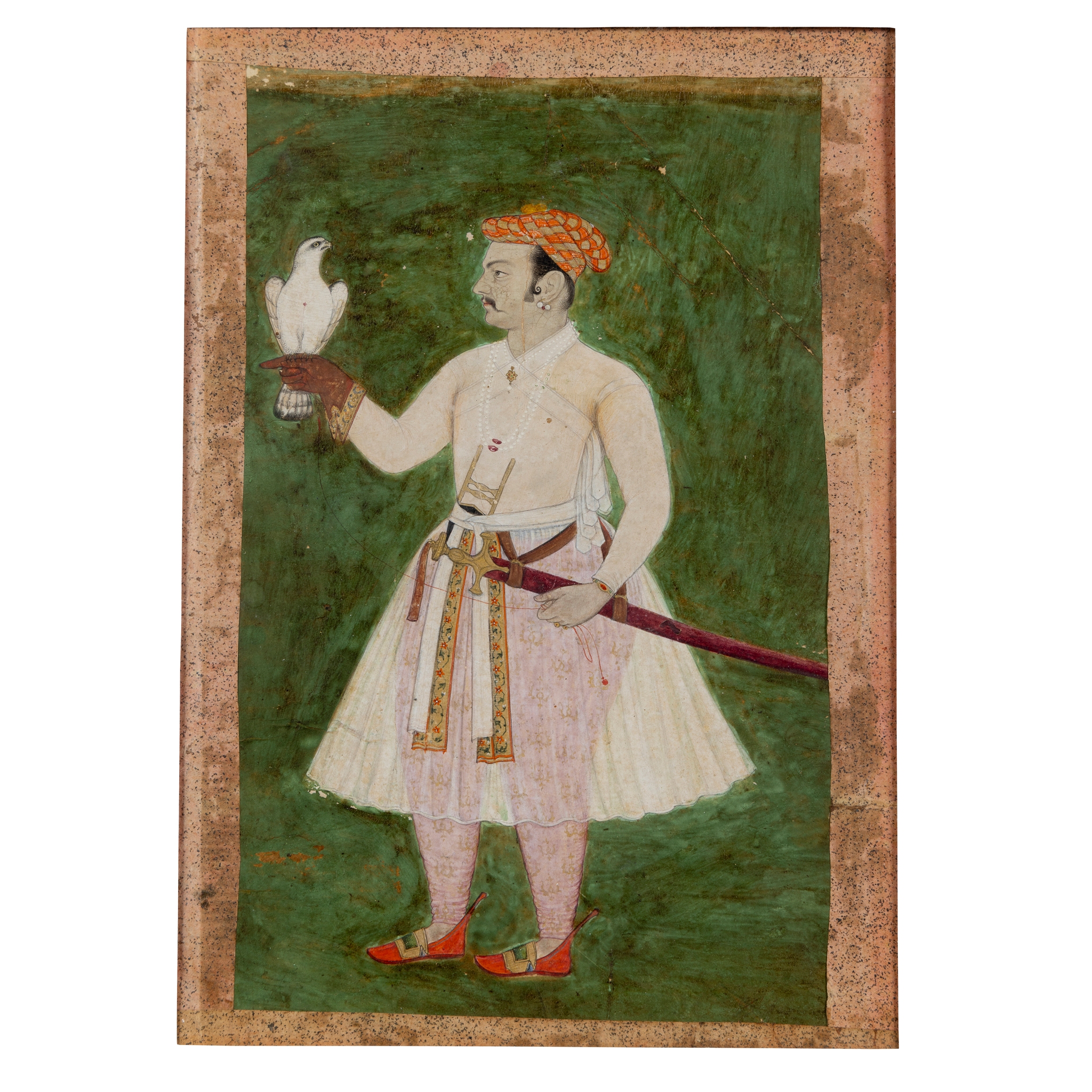
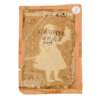
A MUGHAL FALCONER, POSSIBLY THE EMPEROR JAHANGIR
INDIA, RAJASTAN, FIRST QUARTER 17TH CENTURY
Auction: 10 June 2026 from 14:00 BST
Description
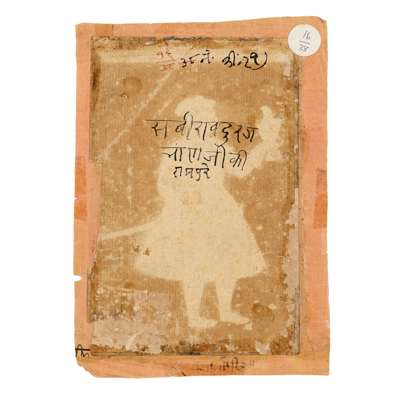
gouache on paper heightened in gold, within a light red and green border, depicting a Mughal noble (possibly Jahangir), dressed in a transparent white jama over red pantaloons, a gold katar is tucked into his patka, orange and gold turban, holding a sword in his left hand and a falcon is sat on a brown glove on his right hand, verso inscribed with a Mewar Royal Collection inventory number 16/38, mounted, glazed and framed
Dimensions
Folio 20cm x 14.2cm; image 16cm x 10cm
Provenance
Formerly, Mewar Royal collection.
Footnote
Falconry was important to Mughals because it embodied their royal identity, Central Asian heritage, and political culture. It signalled nobility and kingship, preserved their nomadic Turko‑Mongol traditions, and served as a prestigious diplomatic practice through the exchange of prized birds. It shaped courtly life and inspired Mughal art, while also functioning as a form of military‑style training during hunts. Falconry also reflected the emperors’ scientific curiosity, as they studied, bred, and cared for raptors with remarkable attention.