

Lot 64
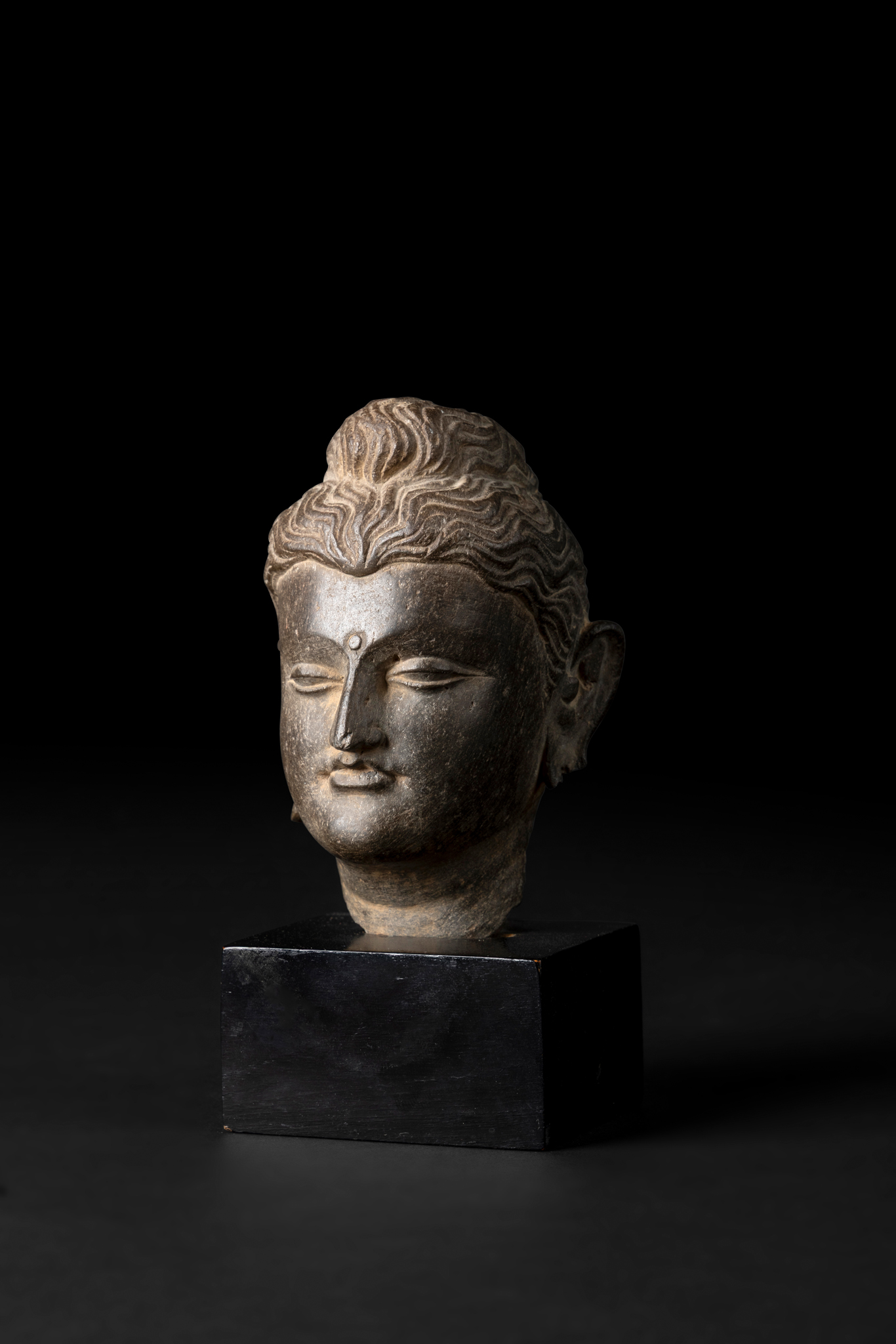
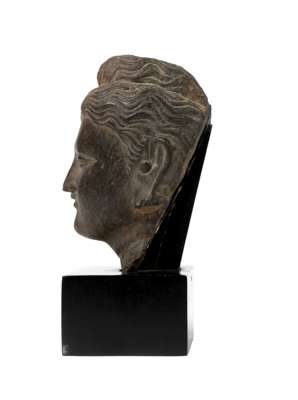
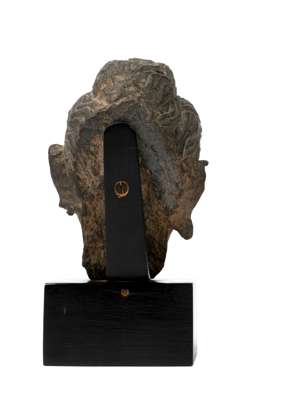
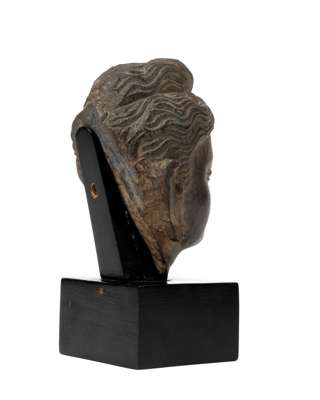
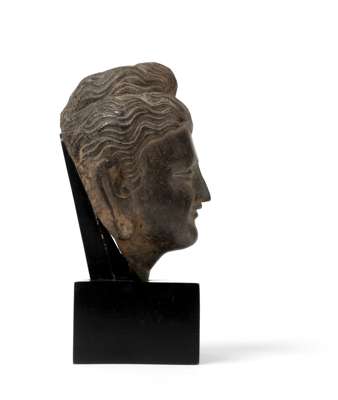
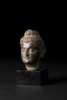
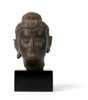
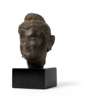
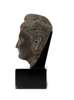
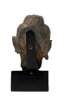
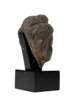
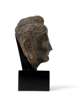
A FINE GRAY SCHIST HEAD OF BUDDHA
NORTHWESTERN INDIA, GANDHARA, 2ND/ 3RD CENTURY



Auction: 10 June 2026 from 14:00 BST
Description
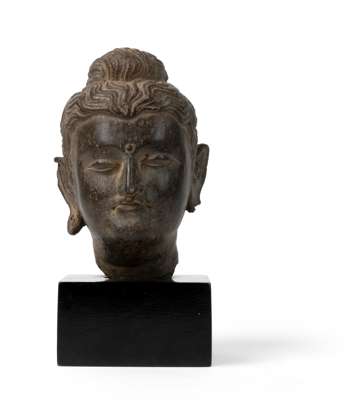
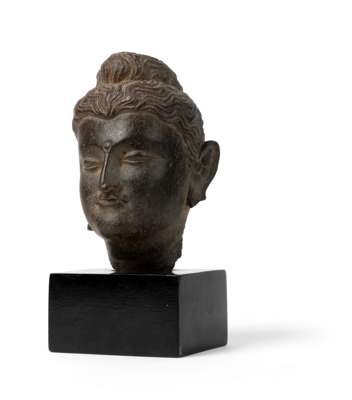
very finely carved with gentle bow-shaped mouth, straight nose and almond shaped eyes, centered by a raised urna, long pendant earlobes with piercings, hair in wavy locks over the prominent ushnisha
Dimensions
12cm x 7.5cm x 6cm
Provenance
The collection of the late Victor Taylor (1910-1985), thence by descent, for the past 80 years.
Accompanied by a letter from the collector's grandson.
Footnote
The collector, Victor Taylor (1910-1985), was a man whose life was shaped by curiosity and a lifelong passion for collecting. During the Second World War he served overseas in several European countries. On his return he recalled moments of camaraderie including football matches with German and French soldiers. He also brought with him keepsakes such as a sailor’s valentine which captivated his wife and young family. His fascination with antiques was already well‑formed, and the Gandharan pieces he acquired were guarded treasures.
After the war, Taylor joined Beaties as a buyer and eventually rose to director. He specialised in antiquities, travelling across the UK to source British porcelain and other collectible pieces for the store. His expertise in ceramics became widely respected, and his personal collection grew into something both extensive and deeply studied. Taylor retired in the 1970s, after which he and his wife moved to the Brecon Beacons, spending their retirement between Wales and winters in Málaga: a quieter chapter for a man who had spent a lifetime seeking out the world’s objects and the stories behind them.
Gandhara
This piece represents a beautiful example of the Graeco-Buddhist style; such statues were commonly seen in the religious precincts of Gandhara, the birthplace of some of the most iconic and important works of Buddhist art.
Ancient Gandhara, nestled in the snowy speaks and lush valleys of the Hindu Kush, was a meeting place between East and West. The region’s strategic position encouraged successive waves of foreign invaders, whose cultures were aptly adopted and re-contextualised by the local population. This dynamic multiculturalism brought forth sculpture of incredible sophistication, melding the complex nontheistic world of Buddhism with the idealism of the Hellenistic art of the Greek settlers, who had been first lead into the region by Alexander the Great. This Indo-Greek population remained in contact with the Mediterranean world throughout antiquity, and through them the precepts of Buddhism became known to philosophers like Phyrro and Onesicritus, and even to early Church Fathers like Clement of Alexandria. This syncretic relationship also produced the first anthropomorphic depictions of the Buddha – who had previously been represented only in symbols, like the Bodhi tree or the empty chair – and so represents an important turning point in the history of Asian art, the impact of which would spread as far as Thailand and Japan.