

Lot 93
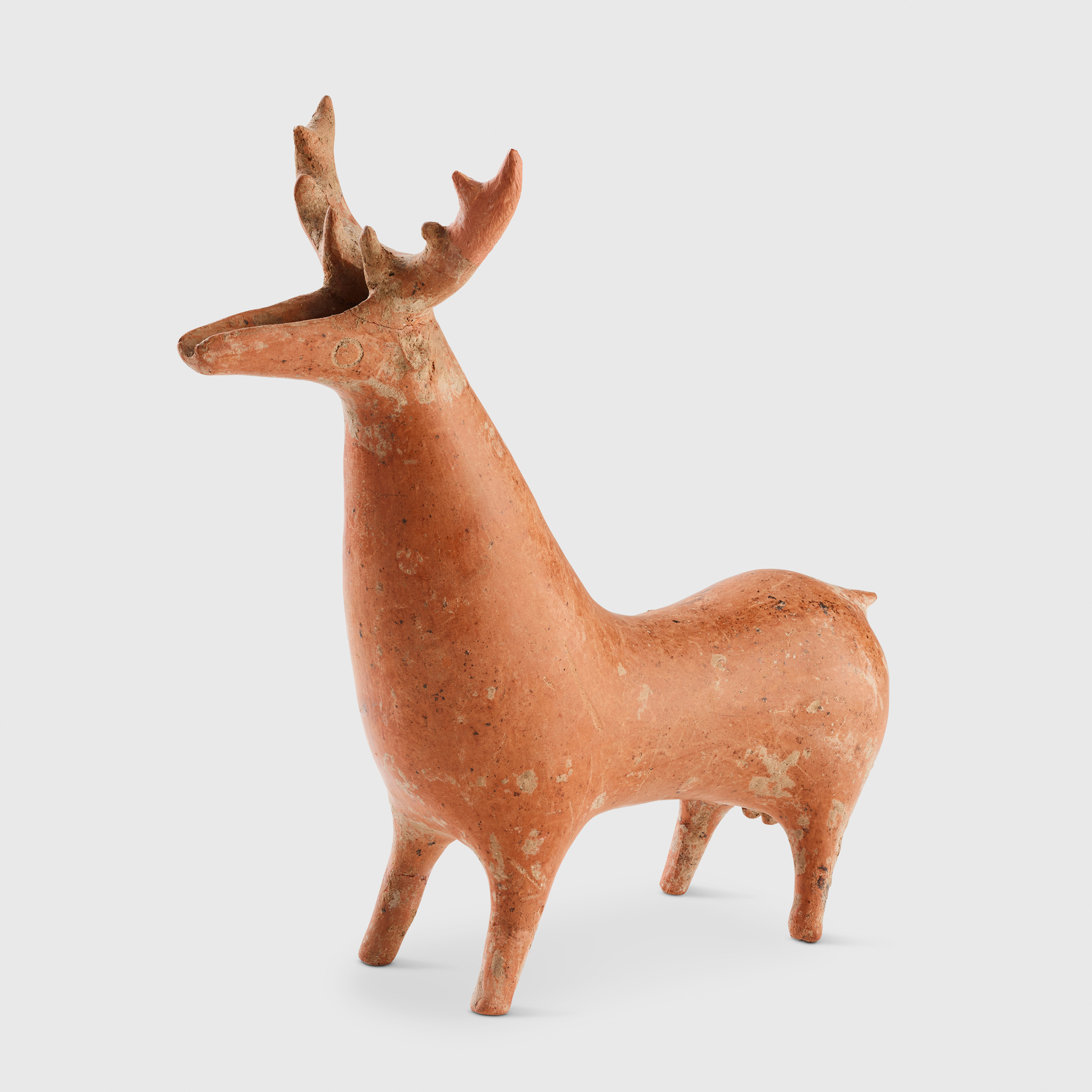
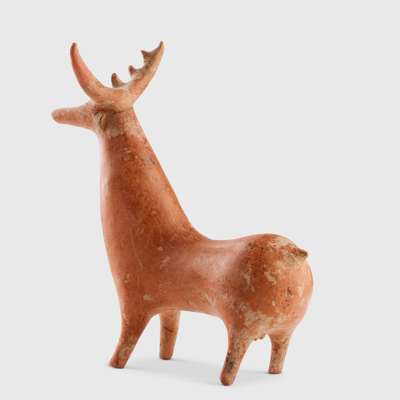
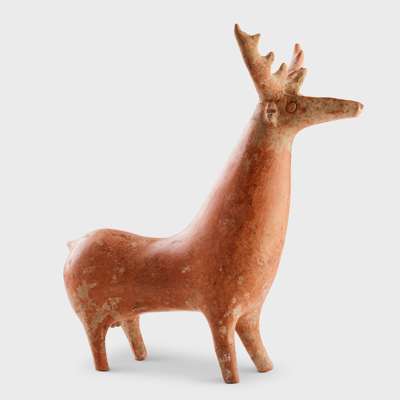
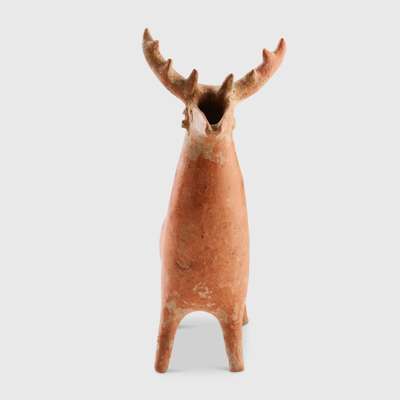
AMLASH STAG RHYTON ‡
WESTERN ASIA, C. EARLY 1ST MILLENIUM B.C.

Auction: 26 November 2026 from 14:00 GMT
Description
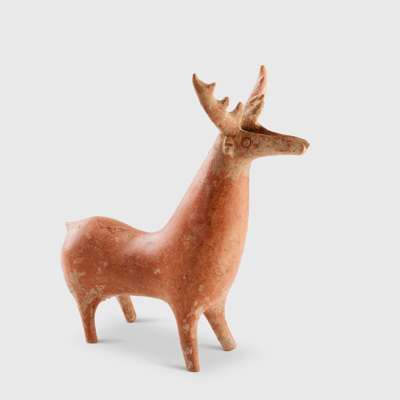
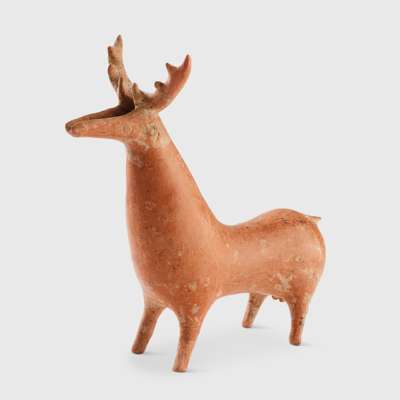
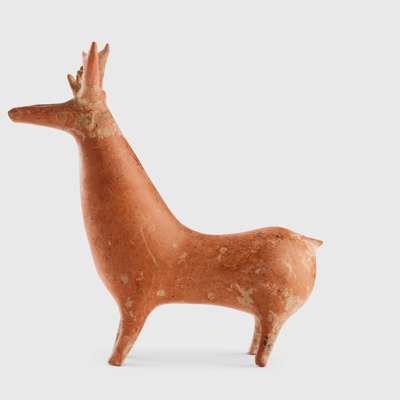
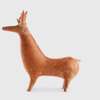
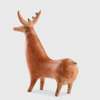
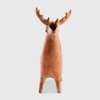
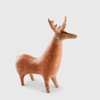
terracotta, modelled as a stag with four tines on each antler, the hollow interior exposed at the top of the head, which forms the pouring spout, the body is bulbous with an elegantly sloping back, supported by four slender legs, with a small pointed tail
Dimensions
26cm wide
Provenance
Previously in the Private Collection of Mr. Sadighi, bought from Iran to Berlin in the early 1980s
Private Collection of Mr L, Munich
Private collection, London
Footnote
For a similar example, please see: The Asian Art Museum of San Francisco, accession number B62P9+.
The antlered stag was a popular motif in ancient Iran, particularly in the ceramic art of the Amlash culture, which emerged during the early first millennium B.C. in an area south of the Caspian Sea. As no written records for this area survive, the significance of the animal remains unknown. However, comparisons with neighbouring cultures suggest possible associations with religious belief, fertility and strength. In second-millennium B.C. Anatolia, for example, the stag was closely associated with the worship of major deities, raising the possibility that it held a similar significance to the Amlash.
Amlash ceramics attracted considerable interest among collectors and museums following their appearance in the late nineteenth and early twentieth centuries. Their simplified forms appealed to modern artists, who admired their reduction of familiar subjects to essential shapes. Pablo Picasso, known for his longstanding fascination with bulls and bullfighting, owned several bull-shaped libation vessels of Amlash type. His ceramic Standing Bull (1947) provides an interesting comparison, similarly reducing the animal to a few distinctive features.