

Lot 75
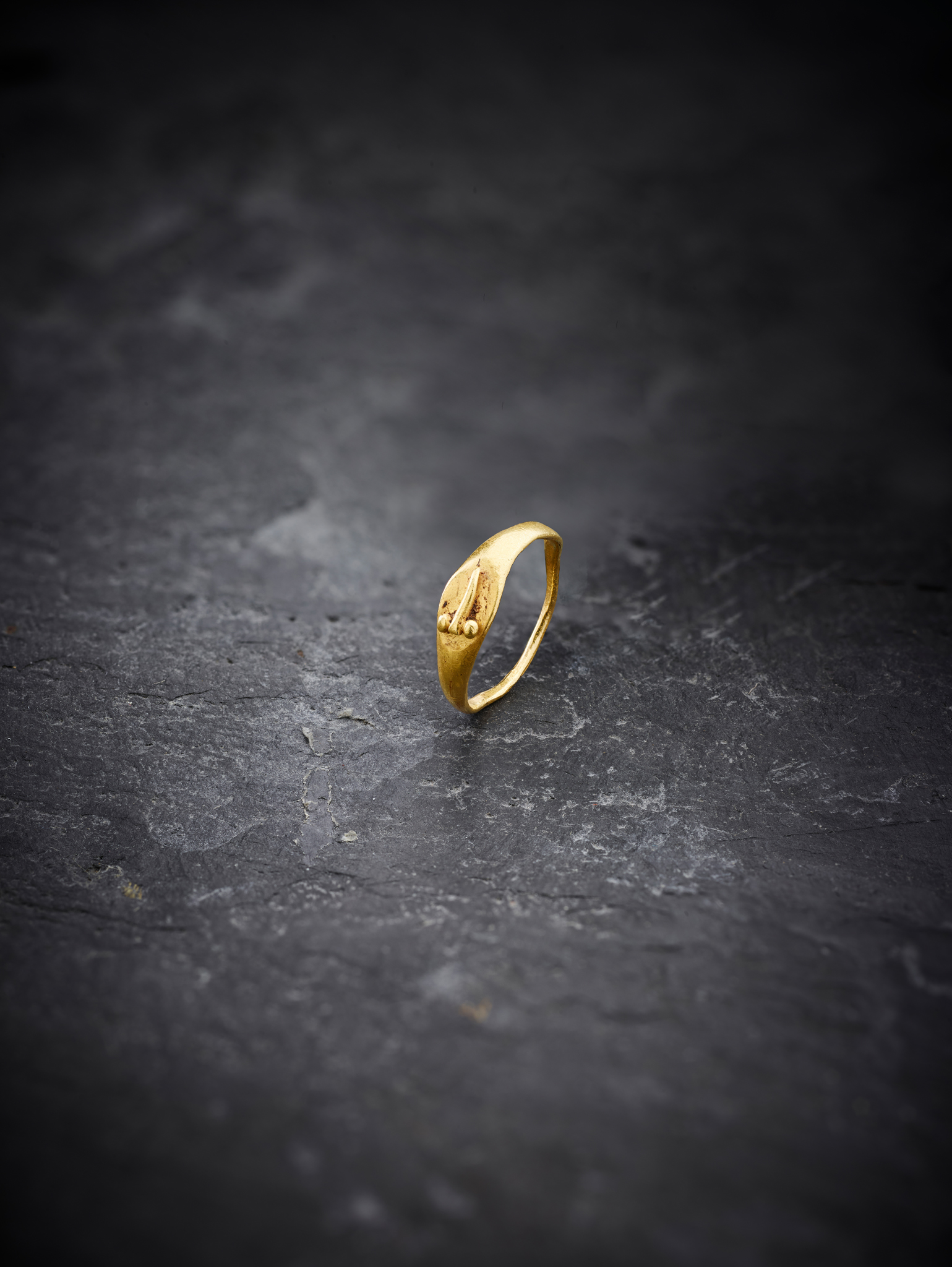
ROMAN ITHYPHALLIC GOLD RING
C. 1ST CENTURY B.C.

Auction: 26 November 2026 from 14:00 GMT
Description
solid gold ring, the bezel decorated with the image of a phallus
Dimensions
UK: B US: 1
Provenance
Acquired by Stanley J. Seeger (1930–2011) from Wartski, London, 1st June 2011, accompanied by original invoice;
Thence by descent.
Footnote
In Rome, the symbol of the erect phallus was one of protection, with gods such as Fascinus and Priapus depicted with large erect phalli. It was believed that this image embodied the attributes of these deities, such as fertility, abundance, health, and protection from evil spirits. Resultantly, a large number of artistic forms made use of this phallic iconography, including women’s hair pins, windchimes, and wall paintings. The small size of the ring suggests that it could only have been worn by a child. This is supported by Pliny the Elder writing in the AD 70s about the use of apotropaic symbols to protect those most at risk, namely infants, from the harmful effects of the ‘evil eye’ or the oculus malus.
“and this, although infants are under the especial guardianship of the god Fascinus, the protector, not of infants only, but of generals as well, and a divinity whose worship is entrusted to the Vestal virgins, and forms part of the Roman rites. It is the image of this divinity that is attached beneath the triumphant car of the victorious general, protecting him, like some attendant physician, against the effects of envy”
Pliny the Elder, Naturalis Historia, XXVIII.7