

Lot 50
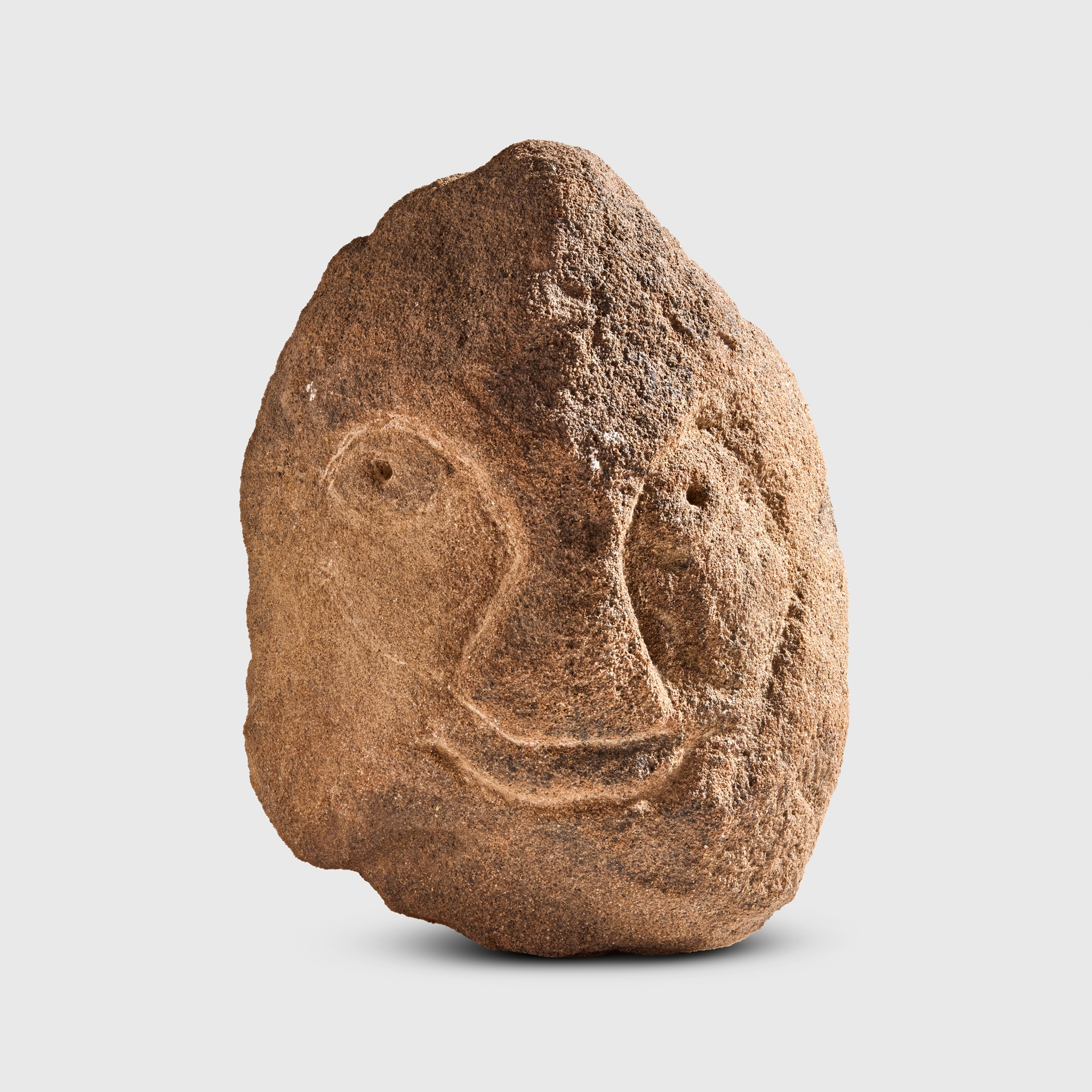
RED SANDSTONE CELTIC HEAD
DERBYSHIRE, ENGLAND, C. LATE FIRST MILLENNIUM B.C. OR LATER
Auction: 26 November 2026 from 14:00 GMT
Description
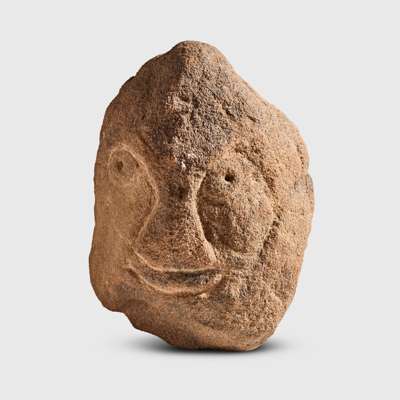
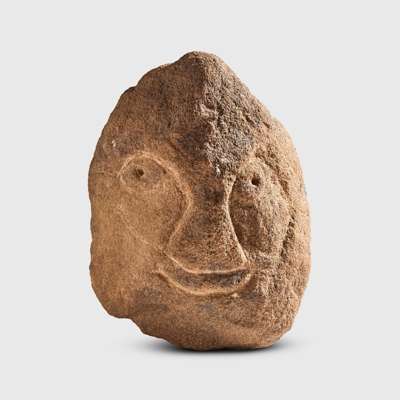
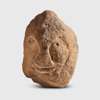
carved red sandstone, presenting an abstract and asymmetrical face, with almond eyes and carved pupils, a bulbous nose and wide smile
Dimensions
16cm tall
Provenance
Originally uncovered whilst fieldwalking in Glossop, Derbyshire prior to the early 1950s and kept in the collection of the local landowner;
Subsequently acquired by a local solicitor in the Glossop area c. early 1950s and thence by descent;
Private collection, United Kingdom, acquired in 2004 at an estate sale of the above.
Footnote
“The images of gods, grim and rude, were uncouth blocks, formed of felled tree trunks. Their mere antiquity and the ghastly hue of the rotten timber struck terror. The people never resorted thither to worship at close quarters, but left the place to the gods.”
Lucan, Pharsalia, late first century A.D.
Stone votive heads are perhaps the most enigmatic of all the art produced by the Iron Age peoples of Britain, Ireland and continental Europe, often termed “Celts”. Frequently found near bodies of water, their function is not clear, suggestions have included their use as surrogates in head hunting societies, cult foci, or as venerated objects of healing. The ubiquity of the head motif sculpted in stone or carved in metal suggests that the ancient Britons held it in special reverence, likely believing it to be the centre of the soul.
The present example is notably schematic and abstract in its execution, its simplified features and restrained treatment of the human face is characteristic of the more early and stylised tradition of native stone carving. Comparable examples can be seen in the British Museum (acc. nos. 2013,8017.149 and 2013,8017.150). It is carved from red sandstone, a material common among the native sculptural traditions of northern England, particularly in the region surrounding Hadrian’s Wall.