

Lot 43
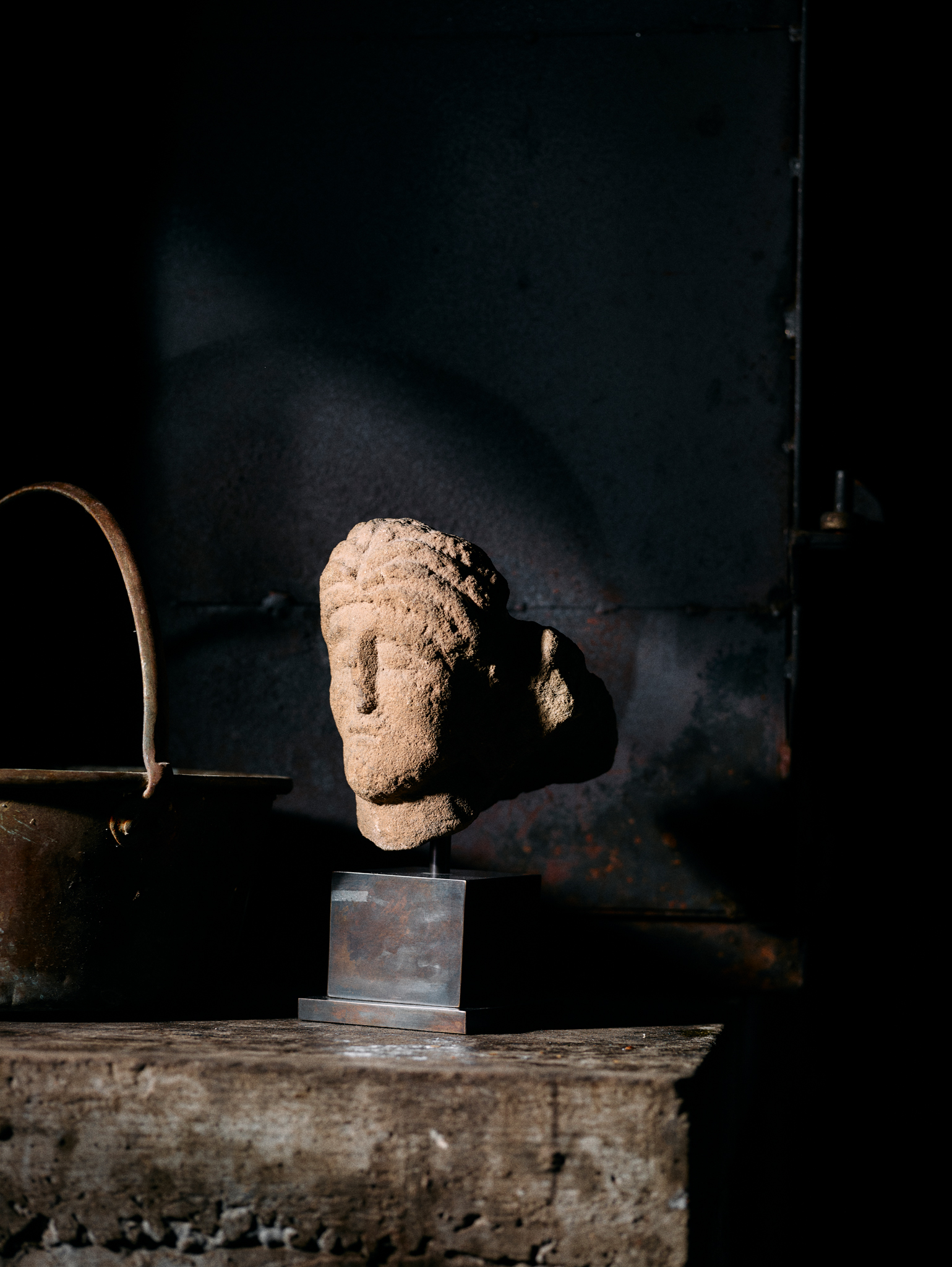
ROMANO-CELTIC SANDSTONE HEAD
BRITAIN, LIKELY NORTHERN ENGLAND, EARLY FIRST MILLENNIUM A.D.



Auction: 26 November 2026 from 14:00 GMT
Description
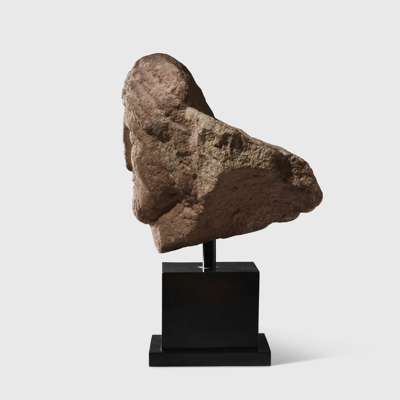
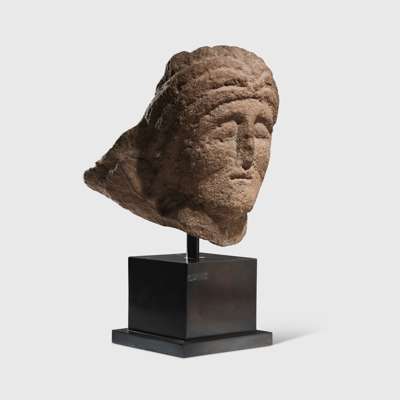
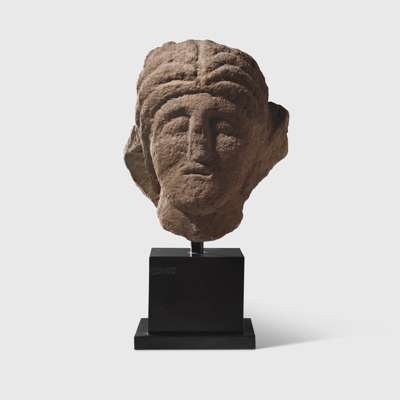
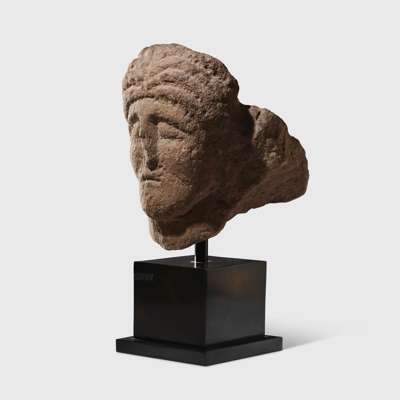
carved sandstone, likely an architectural fragment, depicting the head of a woman with hair parted down the middle, with downturned eyes and a downturned mouth; attached behind her head is a large sandstone block, raised on a bespoke mount
Dimensions
20cm tall
Provenance
Collection of Stanley and Ingrid Clapham, London, probably acquired 1950s and thence by descent
Footnote
For comparable examples, see the terracotta votive heads recovered from Magna Roman Fort, Northumberland: one during excavations in 2025 and an earlier example discovered in the late nineteenth century and published in Archaeologia Aeliana, Second Series, Volume XIII (1889).
Celtic art has its roots in the ancient traditions of Bronze Age Europe, yet developed a distinctive style of its own. Far from primitive, it is often abstract in character, with a mysterious quality quite unlike the more naturalistic art of the Greek and Roman worlds. Once regarded as unusual and even unsettling, Celtic art is now recognised as one of the most distinctive artistic traditions of Western and Central Europe.
The present example depicts a head with a subtle smile, the elaborate coiffure being a particularly distinctive feature. This comprises four clearly defined strands, drawn to either side of the face, an unusual attribute which bears a striking resemblance to the hairstyles of two terracotta votive heads discovered at Magna Roman Fort, along the line of Hadrian's Wall. The similarities between the examples extend beyond the coiffure, particularly in the treatment of the facial features and the subtle expression. The close association between the two Magna heads has led to the suggestion that they may depict the same female figure, possibly a local goddess or deity who held particular significance for the inhabitants of the fort. Further evidence supporting a northern borderland origin for the present example is provided by its material, red sandstone of a type widely used throughout the region, particularly along the line of the Wall.