

Lot 34
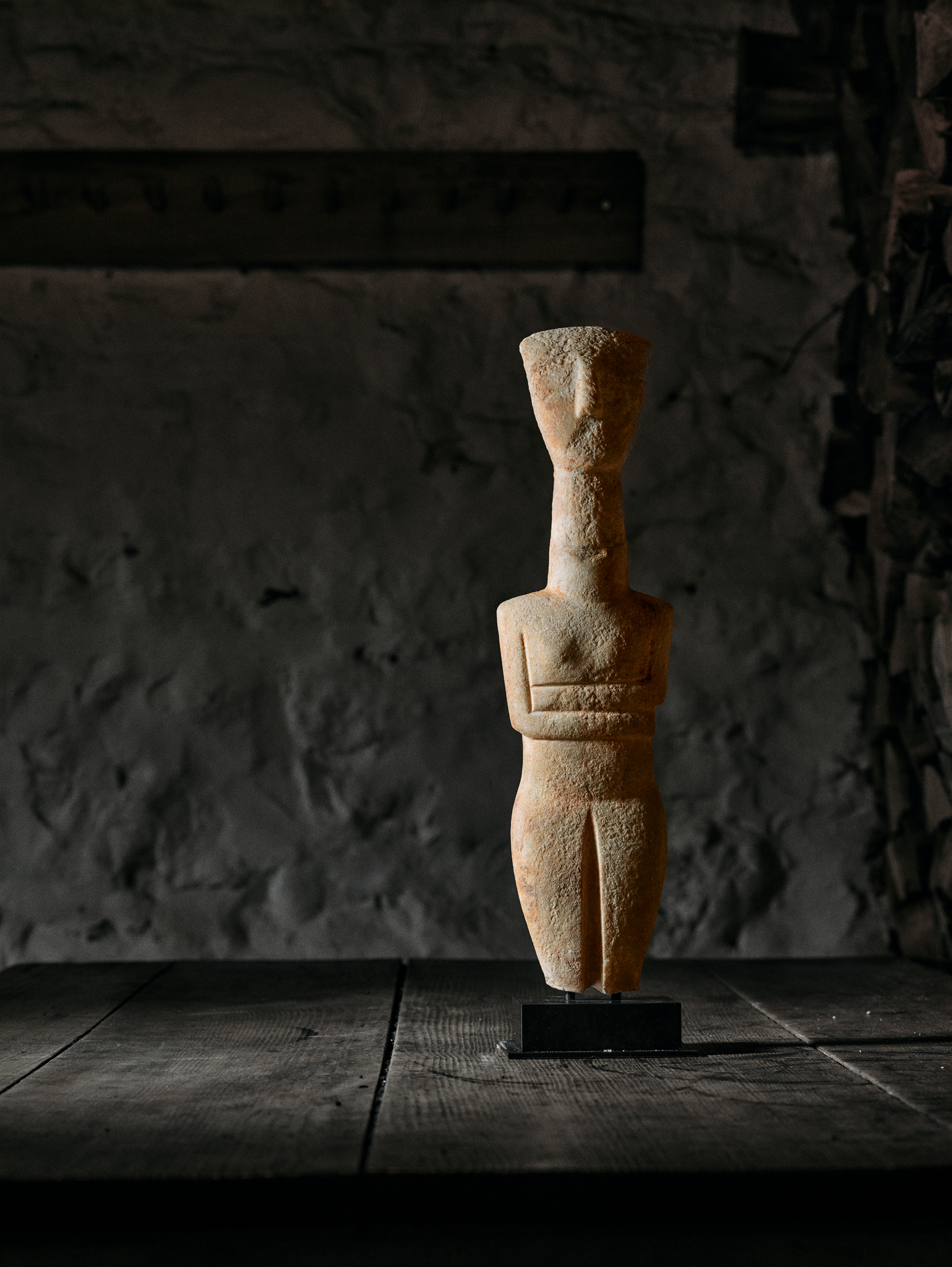
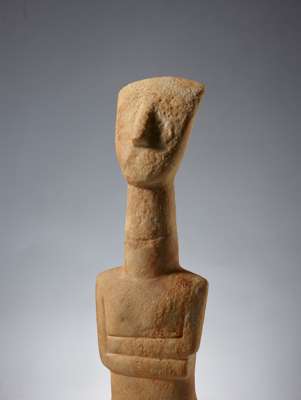
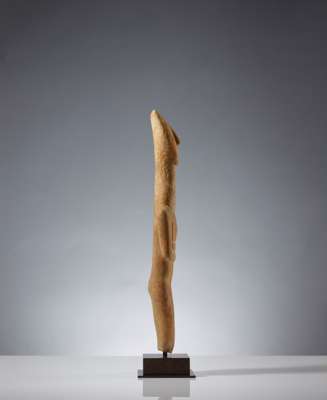
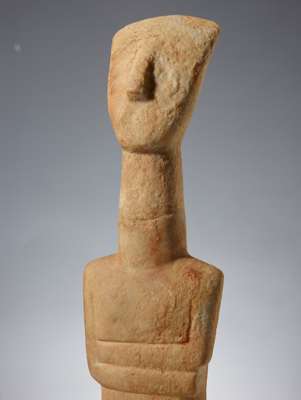
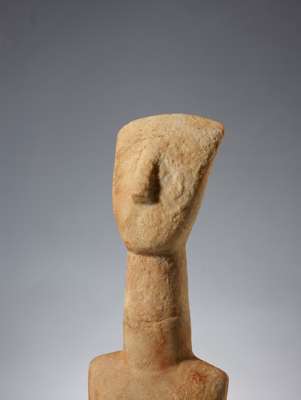
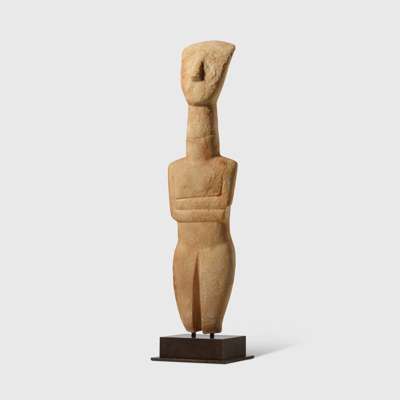
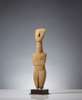
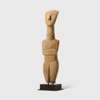
CYCLADIC MARBLE IDOL ‡
CYCLADES ARCHIPELAGO, C. 2500 - 2300 B.C. OR LATER




Auction: 26 November 2026 from 14:00 GMT
Description
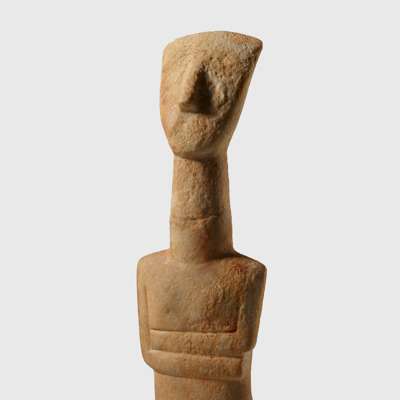
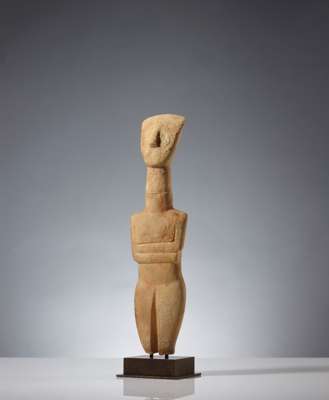
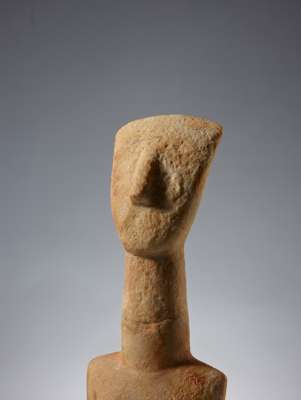
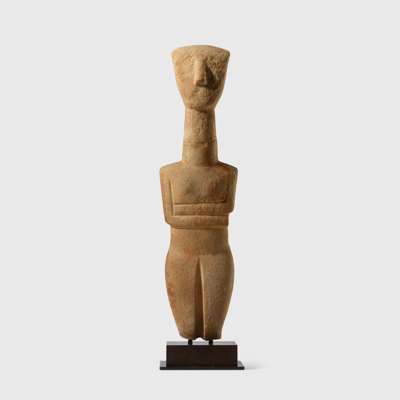
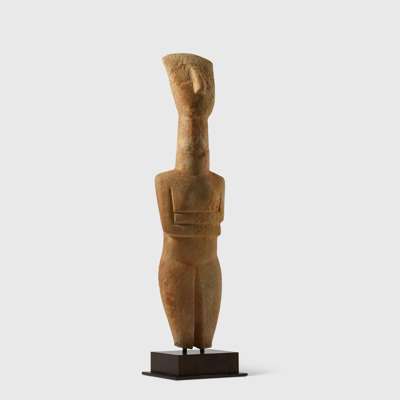
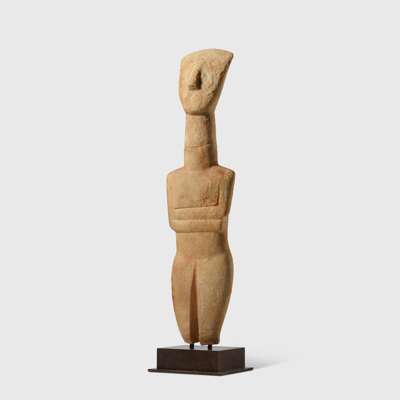
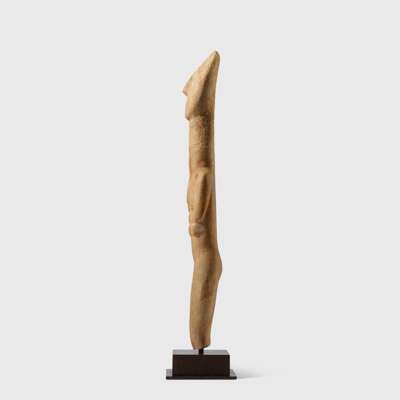
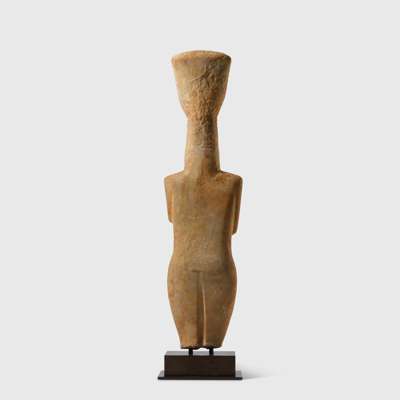
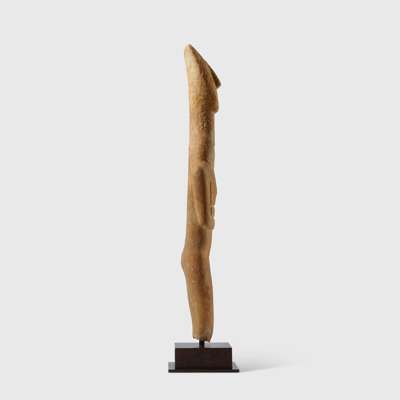
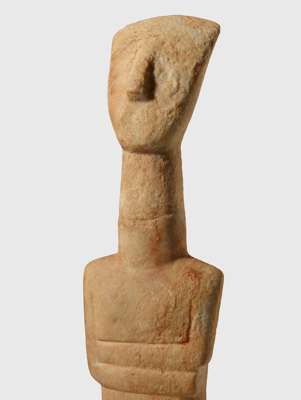
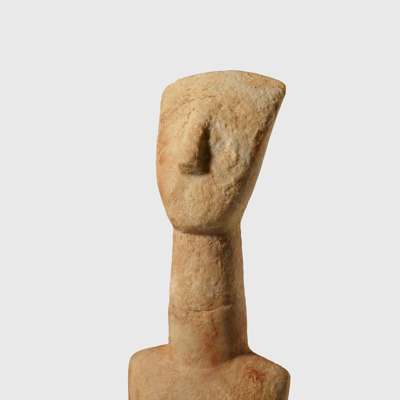
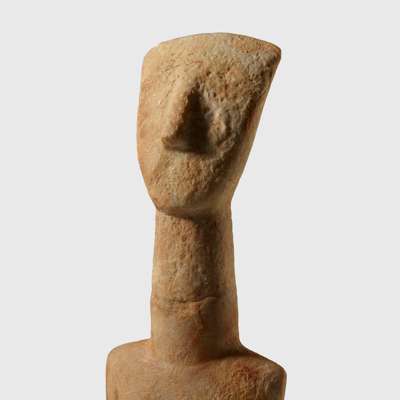
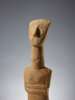
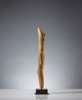
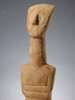
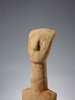
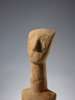
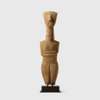
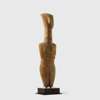
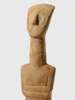
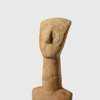
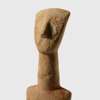
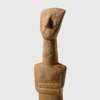
carved marble, the bodily proportions reduced to an abstract minimalism, the arms folded across the chest, the shoulders angled, a long neck leading to a head with smooth facial plane and a convex form, bending back as if gazing upwards, with gently rounded chin and central rectangular nose, raised on a bespoke mount
Dimensions
58.4cm tall
Provenance
Previously in the Private Collection of Georges Frédéric Keller (1899-1981), Davos and New York.
Fine Antiquities, Christie’s, London, 13-14 December 1983, Lot 277, pp. 42-43.
Private Collection, Rhineland, Germany, acquired from the above sale, accompanied by purchase invoice.
Footnote
Published:
Fine Antiquities, Christie’s, London, 13-14 December 1983, Lot 277, pp. 42-43.
The Cyclades, an archipelago in the southwestern Aegean, comprises thirty-nine small islands and many more islets. In ancient Greek they were referred to as the kyklades, envisioned as a circle (kuklos) around the sacred island of Delos, home to the most sacred temple of Apollo.
In the fourth millennium B.C. a distinctive culture emerged in the islands which ran for over two thousand years. Sitting at a favourable location in the Aegean sea and rich in mineral resources, in particular iron ores and copper, the inhabitants of the Cyclades benefitted from the trade in these raw materials at a time when metallurgy was developing rapidly across the Mediterranean. Existing largely tangentially with the great civilisations of the Minoans and Mycenaeans, Cycladic people are counted among the three major Aegean cultures.
It was the Cycladic people who produced the very first masterpieces of Greek marble sculpture. “Idols” such as the present example were spread throughout the archipelago, with the tradition of carving such figures lasting for well over one thousand years. Their exact use is unclear, some resemble fertility figures encountered across the Near East. Others have been interpreted as images of the deceased or servants for the afterlife. It is clear however that they were used in both funerary contexts and day-to-day ritual life, as some have been found with ancient repairs.
Though they are today notable for their minimalist appearance, scientific analysis has shown that the surface of the marble would originally have been painted with mineral-based pigments, azurite for blue and iron ores or cinnabar for red. Many of the figures show a remarkable similarity in their proportions, suggesting that the production of these idols was regulated using a type of early compass.
The sense of abstraction offered by ancient Cycladic art stimulated many of the great twentieth century artists, including Brancusi, Modigliani, and Picasso. The present piece is a wonderful example of the type, though carved over four thousand years ago its geometric appeal remains distinctly modern.