

Lot 26
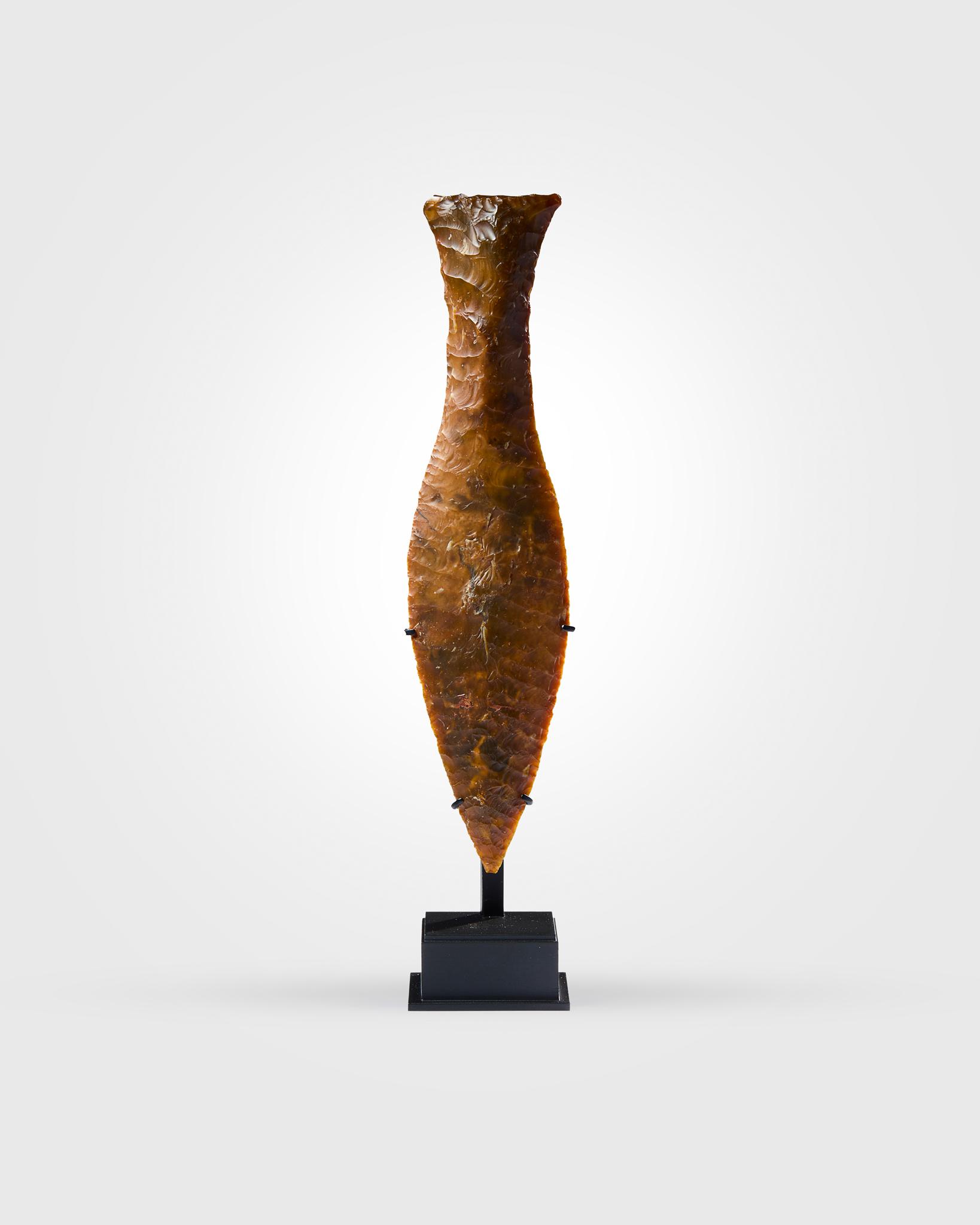
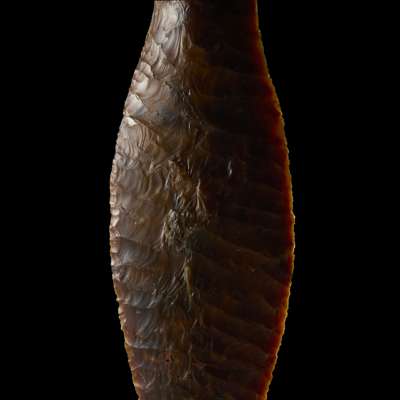
NEOLITIHIC FLINT DAGGER OF "FISHTAIL" TYPE
TYPE V. SOUTHERN SCANDINAVIA, C. 2400 - 1800 B.C.


Auction: 28 May 2026 from 13:00 BST
Description
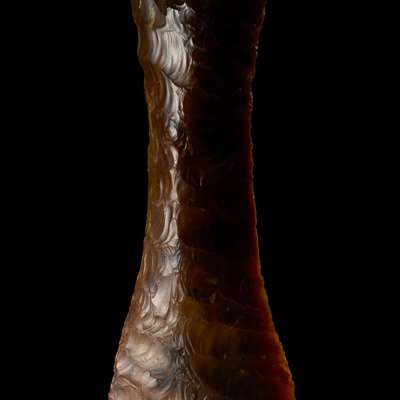
knapped caramel and brown flint, with central “stitching”, an elongated leaf shaped blade and thin handle terminating in a fish-tail butt, raised on a bespoke mount
Dimensions
18.1cm long
Provenance
Private collection, Denmark, formed mid-20th century, subsequently in a Belgian private collection
Footnote
This fine blade is an example of the remarkable heights achieved by flint workers in late Neolithic Scandinavia. It dates to c. 2400 – 1800 B.C., aptly named the “Dagger Period”, an era where much of the rest of Europe had already adopted metallurgy.
Though fashioned from flint, daggers such as these were inspired by contemporaneous European metal counterparts. During this period, Scandinavia lacked a sustainable supply of copper ore to support a metallurgical industry, so communities were traditionally thought to have lacked the ability, rather than the will, to produce copper daggers. However, recent studies have found that the delicate finishing could only have been completed with the aid of a metal-tipped tool. As such, it appears that the continued use of flint as a medium was made through choice as opposed to necessity. Indeed, even as bronze became very popular, the production of these beautiful flint daggers continued well into the Bronze Age.
The common consensus is now that these daggers were a symbol of status. Used to demonstrate prestige or given as gifts. Microwear analysis on these items reveals that they were unlikely to have been used for practical purposes. Rather, the wear was found to be consistent with frequent removal from a protective sheath.
They are widely considered to represent the very pinnacle of a European flint working industry that dated back tens of thousands of years.