

Lot 19
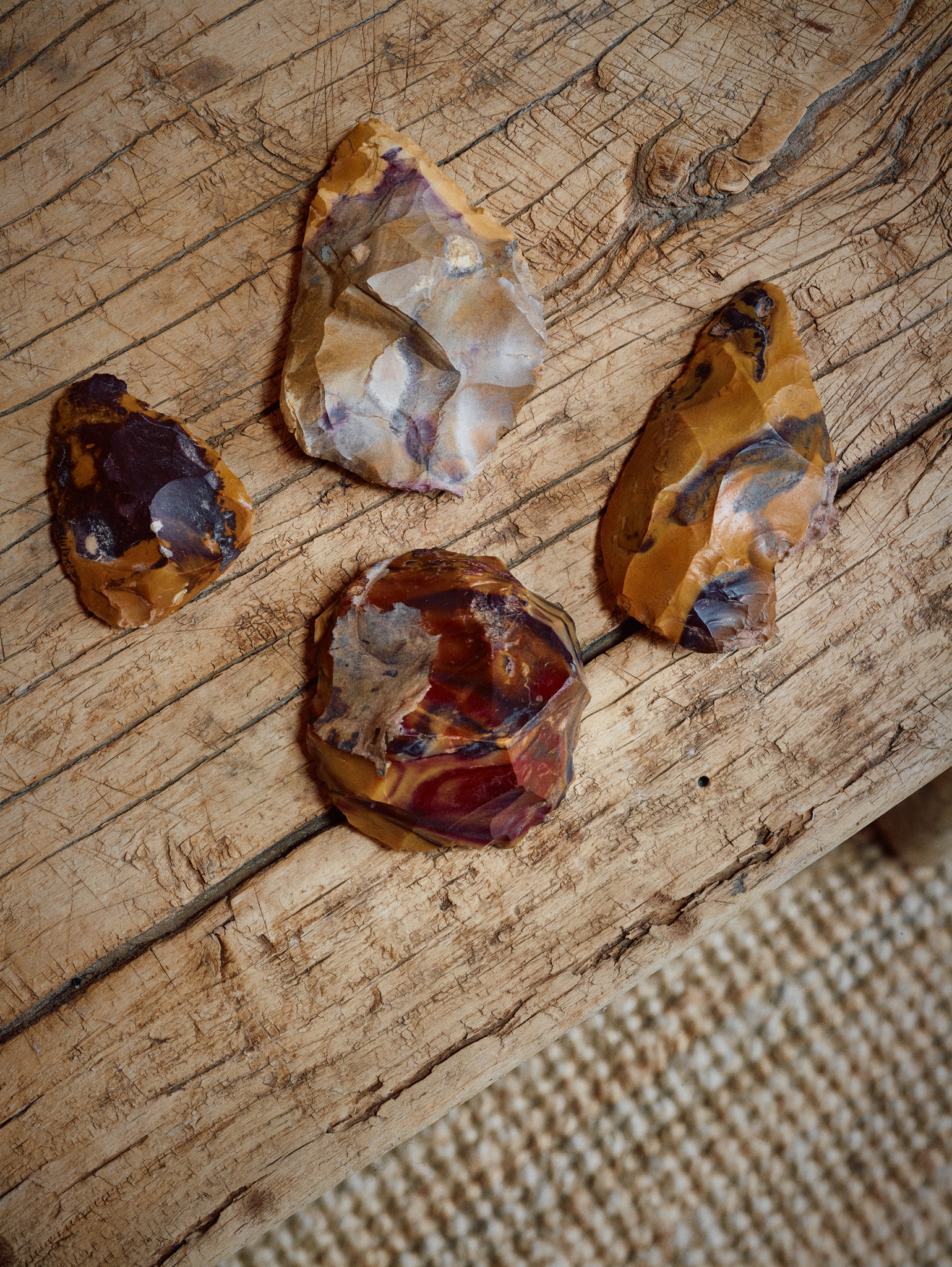
NEANDERTHAL JASPER TOOLS
MIDDLE PALEOLITHIC, FONTMORE, CENTRAL FRANCE, C. 300,000 - 40,000 B.P.
Auction: 28 May 2026 from 13:00 BST
Description
knapped jasper, a collection of four bifaces, ranging from 5.3 to 10.2 cm long, each displaying a vibrant hue (4)
Dimensions
largest 10.2cm long
Provenance
Private collection, Belgium
Previously in the Tony Berlant Collection, United States
Footnote
The present group of four biface tools comes from the Fontmort area of France and was made by Neanderthals (Homo neanderthalensis), the closest extinct relatives of modern humans. Far from crude implements, the stone was carefully knapped into balanced, functional forms. Such tools reflect a high level of technical skill and planning, produced through controlled sequences of flaking that created sharp, symmetrical edges suitable for cutting, scraping and butchery tasks.
Rather than isolated objects, these handaxes formed part of a broader cultural system in which Neanderthals engaged deeply with the properties of stone. As noted in Before Art, “even though flint was readily accessible and equally practical, jasper was the material of choice at the site of Fontmore”. Archaeologist L. Pradel further observes that Neanderthals “were able to grasp the harmony of a beautiful geometric tool” and may also have been “struck by the admirable multicoloured, ever-changing patterns of Fontmore jasper” (ArtAncient, 2023).
Together, these objects suggest that early stone tool production was not solely functional, but also involved perception, selection, and a sensitivity to material qualities that foreshadows later developments in visual culture and design.