

Lot 12
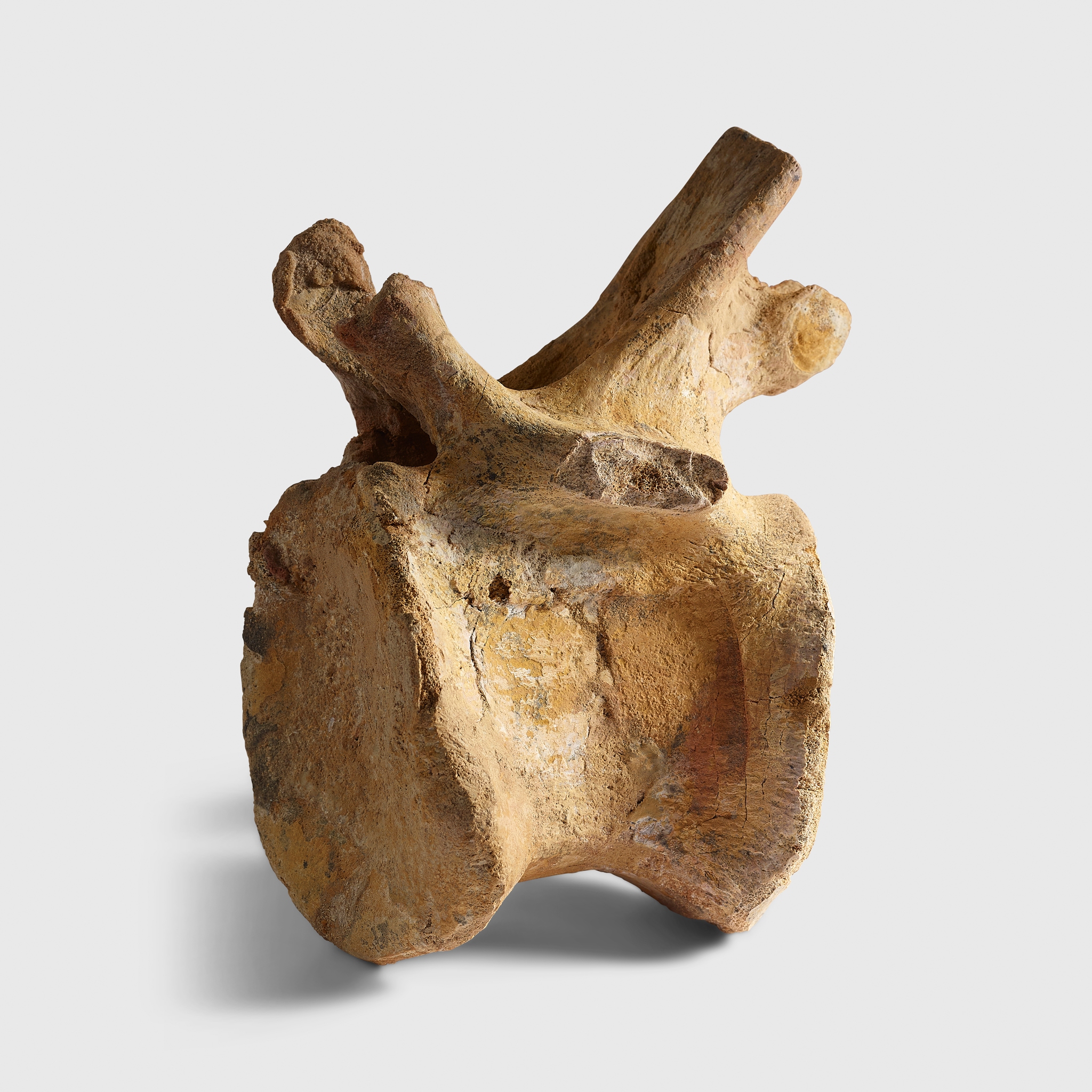
DINOSAUR VERTIBRAE, SPINOSAURUS AEGYPTIACUS
TEGANA FORMATION, CRETACEOUS PERIOD, KEM KEM BASIN, MOROCCO, 96 - 93 MILLION YEARS B.P.
Auction: 28 May 2026 from 13:00 BST
Description
a large vertebrae from the enormous Cretaceous therapod, spinosaurus aegyptiacus
Dimensions
24cm diameter
Footnote
This sculptural piece, a vertebrae from Spinosaurus aegyptiacus, represents one of the largest known carnivorous dinosaurs, distinguished by its elongated crocodile-like skull and the tall sail formed by neural spines along its back. It lived during the Late Cretaceous within the Kem Kem Beds of North Africa, a landscape of extensive river systems, floodplains and coastal lagoons. This rich environment supported an abundance of fish, turtles and crocodilians, as well as other large predatory dinosaurs, creating a highly competitive ecosystem. Unlike most theropods, Spinosaurus is widely believed to have been semi-aquatic, spending much of its time in and around water. Its conical teeth, dense bones and possibly paddle-like tail suggest adaptations for hunting fish and moving efficiently through rivers. The function of its distinctive sail remains debated, though it may have been used for display, thermoregulation or species recognition.