

Lot 196
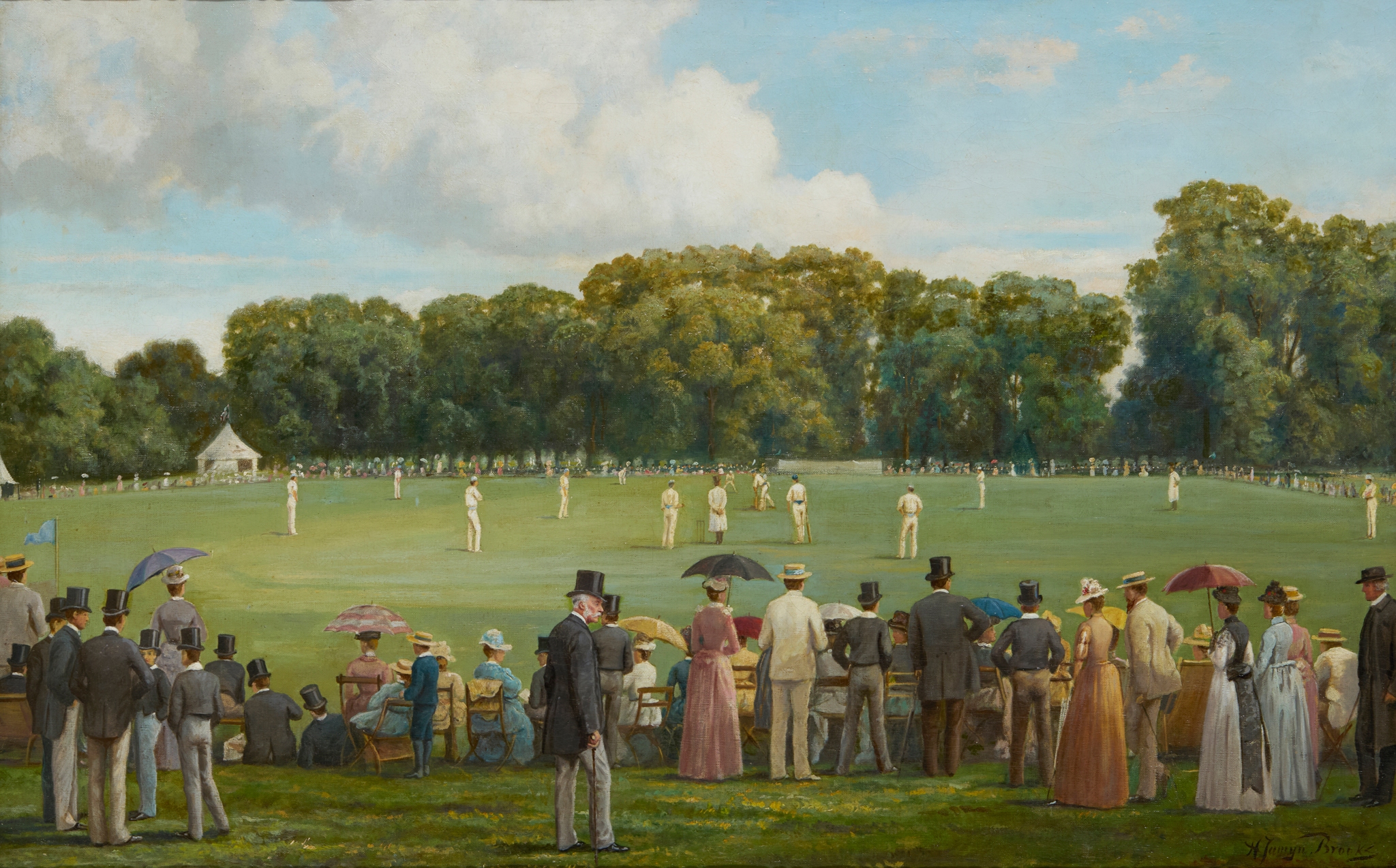
HENRY JAMYN BROOKS (BRITISH 1865-1925)
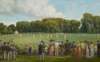
A CRICKET MATCH BETWEEN ETON AND WINCHESTER
Auction: Five Centuries Day One | Wed 9th September | Lots 1 to 255
Description
Signed, oil on canvas
Dimensions
59cm x 94cm (23.25in x 37in)
Footnote
Henry Jamyn Brooks depicts one of the most celebrated fixtures in the Victorian public-school calendar. The annual cricket match between Winchester College and Eton College was far more than a sporting contest; it brought together two of England's oldest public schools in a display of tradition, sportsmanship and institutional identity. First played in 1826, the fixture quickly became one of the most prestigious events in the Victorian sporting calendar. Cricket was regarded as an essential part of a young gentleman's education, cultivating leadership, discipline and fair play. Between 1832 and 1854, the matches formed part of a celebrated series at Lord's Cricket Ground before returning to the two schools, where the fixture remained one of the defining traditions of Victorian school life. Fittingly, 2026 marked the bicentenary of the first match, with Winchester and Eton commemorating the anniversary with a return to the traditional two-day format.
The scene sits comfortably within Henry Jamyn Brooks' wider body of work. Best known for his depictions of public meetings, receptions and ceremonial occasions, Brooks earned a reputation as a chronicler of Victorian life, recording the institutions and social gatherings that shaped nineteenth-century Britain. Brooks possessed a remarkable ability to capture not only accurate likenesses of his sitters but also the atmosphere and energy of an occasion, as demonstrated in his work on the Private View of the Old Masters Exhibition, Royal Academy, 1888. His carefully observed compositions often include identifiable figures, reflecting his skill in documenting both the personalities and the occasions that defined Victorian public life. Rather than concentrating solely on the action unfolding on the pitch, Brooks gives equal attention to the elegantly dressed spectators, reminding us that the match was as much about the society gathered around it as the cricket itself. The picture is more than a sporting scene; it is a document of Victorian life, capturing the atmosphere, customs and traditions of nineteenth-century England with remarkable immediacy. The composition was subsequently reproduced as contemporary prints, extending its reach beyond the original canvas.