

Lot 436
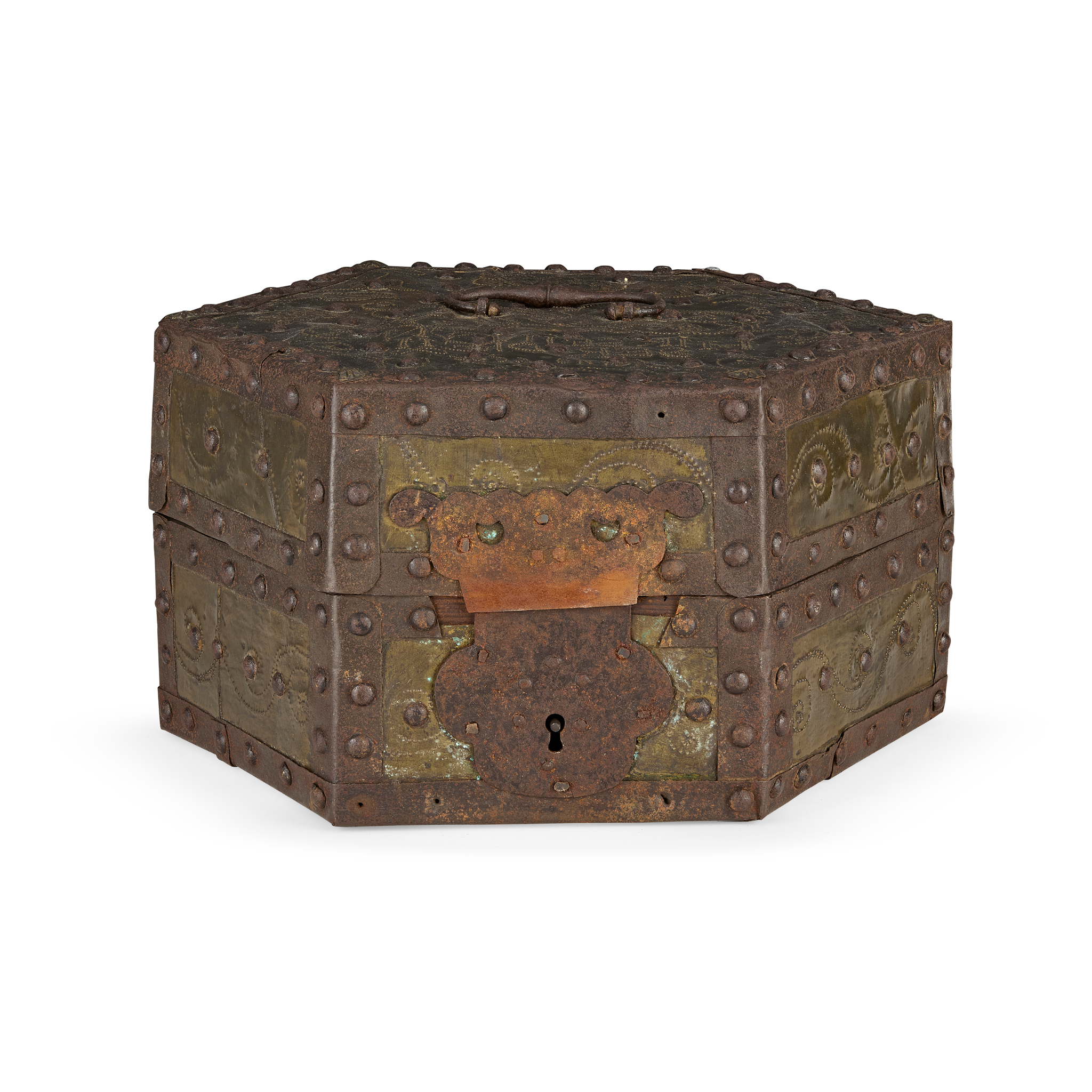
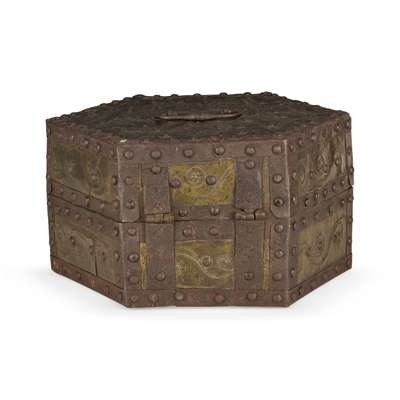
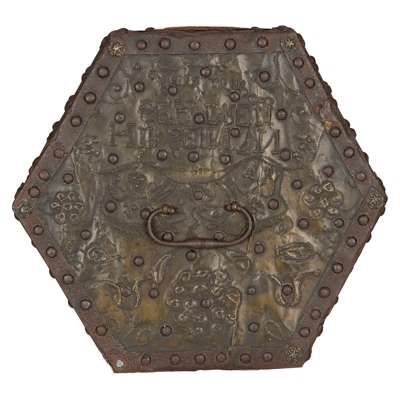
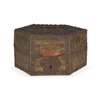
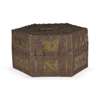
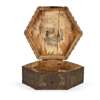
DUTCH HEXAGONAL CASKET
DATED 1686
Auction: Five Centuries Day Two | Thurs 14th May | Lots 298 to 596
Description
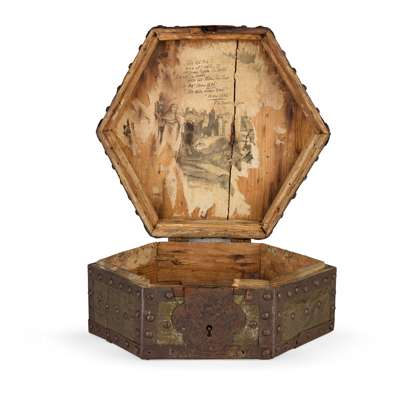
the wooden body applied with sheets of brass finely embossed with designs depicting flowers, animals and scrolls, and also the initials ‘Z A’ within animals, and the inscription ‘ HIR SEIN VN / SER DREII / ANNO 1696’, the edges applied with riveted iron banding, the hinged lid with a swing handle, with a lock plate and key, the interior with the remnants of a print bearing an inked inscription ‘This old Box I found at Owston. It contained papers. The Dutch inscription reads “Here let there be three of us” “Anno 1686” P. B. Davies-Cooke’
Dimensions
17cm high, 31.5cm wide, 29cm deep
Provenance
The inscription inside the lid suggests that the box has come from the collection of the Davies-Cooke family, who owned Owston Hall, Doncaster, South Yorkshire. The inscription reads: ‘This old Box I found at Owston. It contained papers. The Dutch inscription reads “Here let there be three of us” “Anno 1686” P. B. Davies-Cooke.' P. B. Davies is most likely Philip Bryan Davies-Cooke (1832-1903). He inherited the estate from his father, Philip Davies-Cooke. The grounds of the Neo-Classical house included a kitchen garden, parkland, pleasure grounds and an arboretum, with design input from landscape architect Humphrey Repton. When he inherited the estate he also inherited debt. Coal reserves were found at Owston in the early 1900s. This provided revenue, but the family invested the funds in their other estate, Gwysaney, in Wales, instead. By the 1930s Owston had been converted into a golf club. In 1946 large parts of the estate were sold off to cover death duties. In 1979 Owston Hall and the remaining parkland were sold.