Lot 408
DAME LAURA KNIGHT R.A. (BRITISH 1877-1970) §
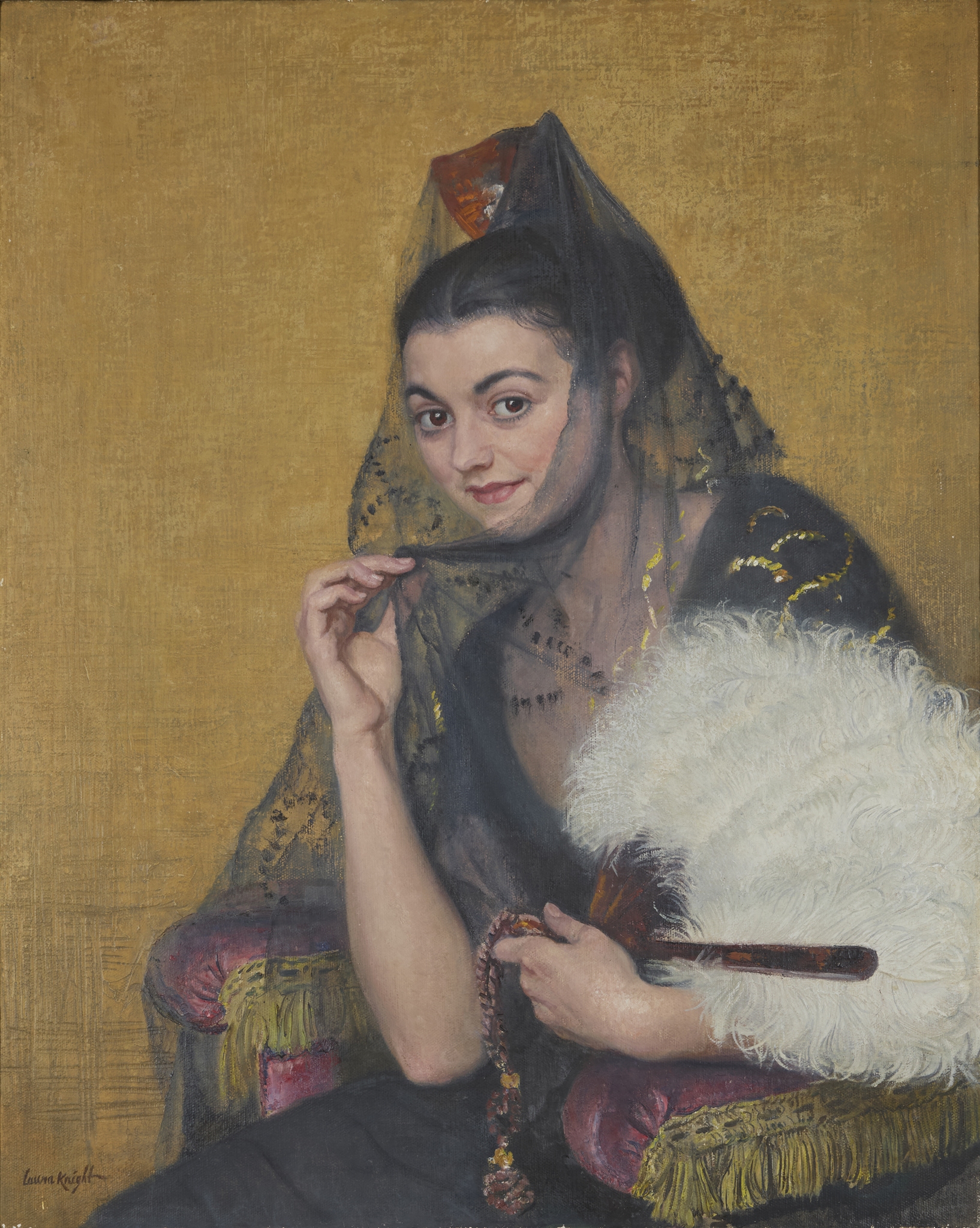
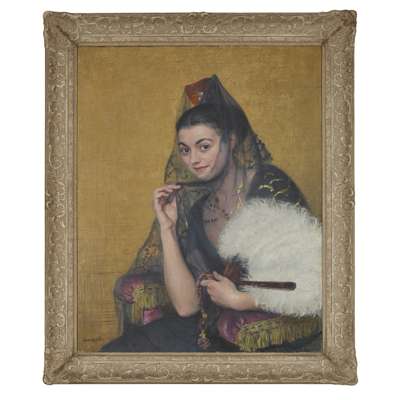
THE WHITE FEATHER
Auction: Five Centuries Day Two | Thurs 14th May | Lots 298 to 596
Description
Signed lower left, oil on canvas
Provenance
Exhibited: Royal Academy, London 1951 No. 183.
Catalogue Raisonne of the works of Dame Laura Knight under Catalogue No. 0672.
We are grateful to John Croft for his assistance in cataloguing this lot.
Footnote
Dame Laura Knight (1877–1970) was one of the leading British painters of the twentieth century. She had a long and varied life as an artist, and her career spanned over seventy years. In 1936, she became the first woman elected as a Royal Academician for over a century, as well as being only the third woman ever to be elected a full member of the Academy. An inspiration to many, Knight’s vast career encompassed multiple decades and subject matters. The variety within her work makes her career difficult to define, as she painted coastal scenes, the ballet, the theatre, the circus, Romany women, Second World War propaganda, and landscapes, to list just a few.
Knight was also considered a notable portrait artist, using portraiture to capture contemporary life and culture. In this example, Knight depicts a detailed portrait of a young woman seated against a warm, golden background. The sitter faces the viewer with a soft, knowing expression; her slightly raised eyebrows and direct gaze create a sense of mystery and charm. The sitter delicately lifts a sheer black veil with one hand, partially framing her face. The veil enhances this sense of mystery and is somewhat theatrical, a recurring theme in Knight’s work, reflecting her fascination with performance and costume.
Her clothing is elegant yet understated: a dark dress adorned with subtle gold accents. She holds a large white feather fan, its texture richly rendered and contrasting with the transparency of the veil. While working backstage at theatre sets, Knight would paint not only people but also objects, including prop baskets filled with ostrich feathers, costumes on mannequins, and dressing tables covered with stage make-up. She would often incorporate such props into her portraits, as seen with the white feather here. The softness of the feather and the delicate handling of fabric highlight Knight’s skill in capturing different materials.
Knight deliberately chose a plain background in direct contrast to the sitter’s rich clothing, which cleverly focuses the viewer’s full attention on the sitter herself. The sitter remains unknown, which is fitting, as it adds to the mystical quality of the work. She may be dressed for an occasion, or perhaps she is embodying the role of an actress before going on stage.
Laura Knight was an incredible pioneer from the very early stages of her career, and her success continues to be celebrated today. In 1965, she became the first woman to have a retrospective exhibition at the Royal Academy and more recently, in 2013, the National Portrait Gallery in London hosted Laura Knight: Portraits.