

Lot 57
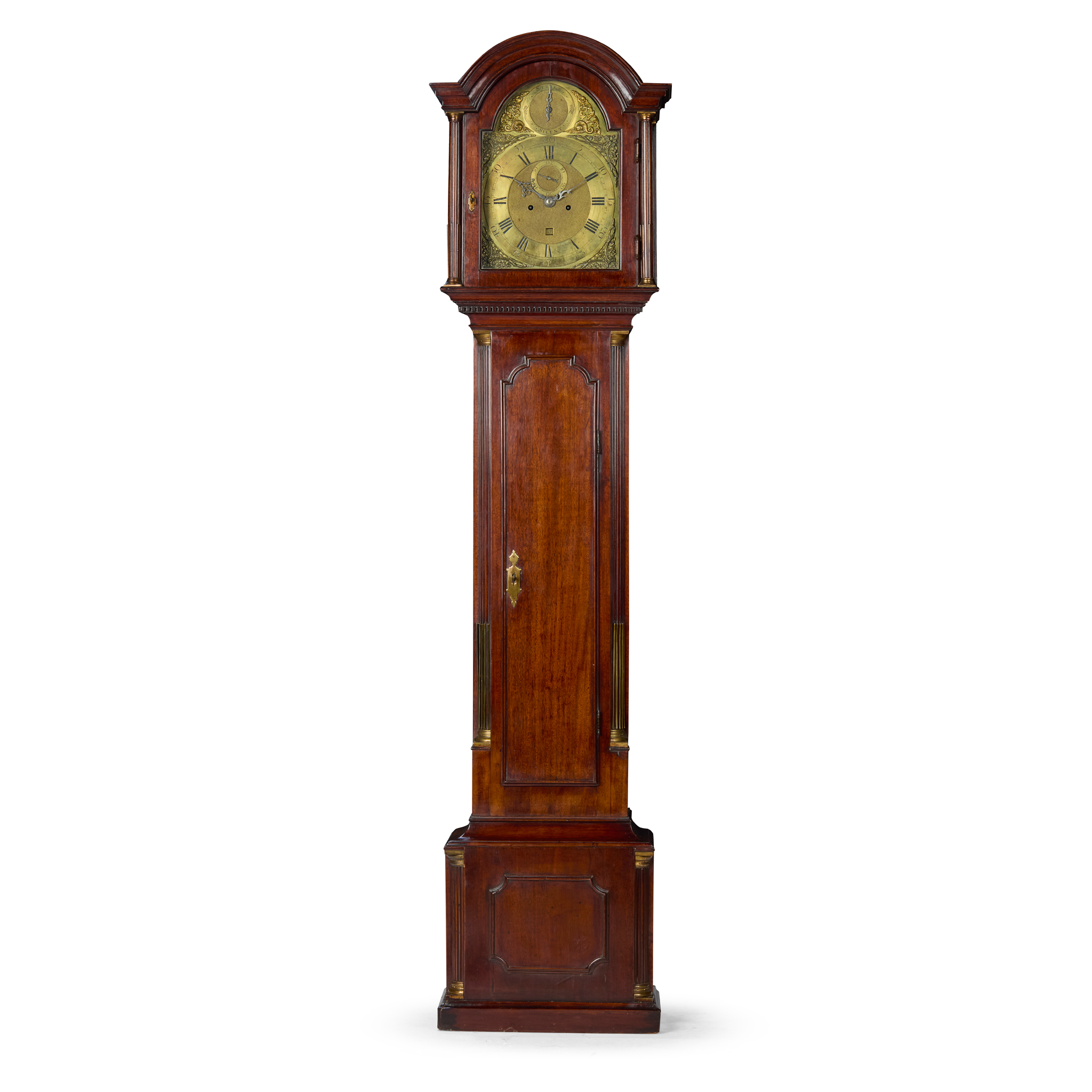
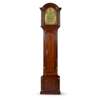
EARLY GEORGE III MAHOGANY LONGCASE CLOCK, JOHN ELLICOTT, LONDON
CIRCA 1760-1770
Auction: Day One | Wednesday 18 Feb at 10am | Lots 1 to 352
Description
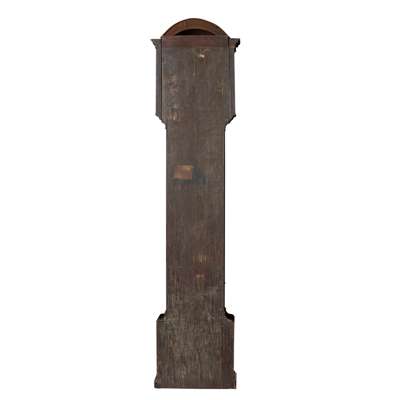
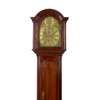
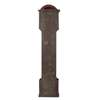
the signed 11 inch breakarch brass dial with Roman numerals and Arabic five minute markers, the matted centre with subsidiary seconds dial and date aperture, pierced floral and c-scroll spandrels, the arch with ‘Strike/Silent’ dial flanked by pierced dolphins, the moulded breakarch case with glazed bridge hinged door flanked by brass stop-fluted freestanding Doric columns, with double glazed panels to the sides, over a long shaped arch trunk door with moulded edge flanked by brass stop-fluted quarter Doric columns on a similar plinth base, the twin train weight driven five pillar movement with anchor escapement striking to a bell
Dimensions
219cm high, 47cm wide, 29cm deep
Footnote
John Ellicott (London, 1706–1772) was one of the foremost English clock and watchmakers of the 18th century. The son of Cornish clockmaker John Ellicott (d. 1733), who had been admitted to the Clockmakers' Company in 1696, he established his own reputation through both scientific and horological innovation. Operating from Austin Friars Street and later Swithin's Alley by the Royal Exchange, Ellicott was elected a Fellow of the Royal Society in 1738 and maintained a private observatory at his Hackney residence. He was particularly noted for his work on temperature-compensated pendulums and for his early use of the cylinder escapement. His refined workmanship earned him the appointment of Clockmaker to George III. In 1760, his son Edward joined the firm, and during their partnership the clocks produced were signed simply Ellicott, London from circa 1760 to 1769. From 1769 to 1788 this was changed to John Ellicott and Son.